
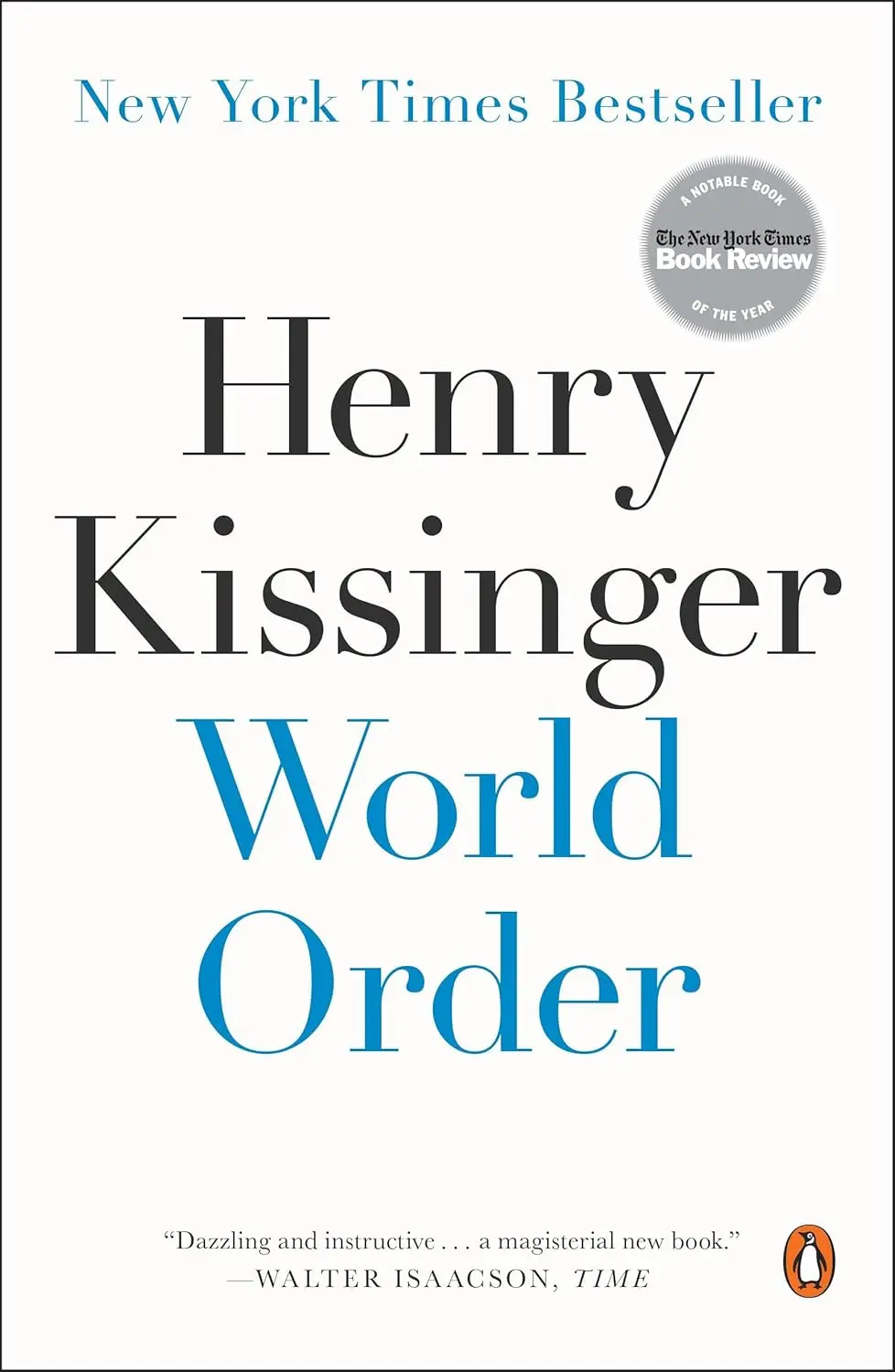
There has never been a true world order. That is the opening premise of this book, and Kissinger builds his argument from there with a sweep that covers the 1648 Peace of Westphalia, the rise of the Islamic political tradition, China’s centuries-long view of itself as the center of civilization, and America’s attempt to export democratic ideals as a universal framework.
Kissinger identifies four competing systems of order that have shaped international relations. The Westphalian system, born in Europe after the devastation of the Thirty Years’ War, was built on the principle that sovereign states should not interfere in each other’s internal affairs. China operated under a different model entirely, viewing itself as the Middle Kingdom at the top of a cultural hierarchy, with all other nations as tributaries. The Islamic world developed its own concept of order rooted in religious law and the idea of a unified community of believers. And the United States entered the picture with a conviction that its democratic values were not merely one option among many but the natural endpoint of political development everywhere.
The collision of these systems is what Kissinger sees as the defining challenge of the twenty-first century. Each system was developed in relative isolation. Now, for the first time, all of them are interacting simultaneously, in real time, with no shared rules governing the interaction. The result is a world where every regional conflict carries global implications, where technology accelerates crises faster than diplomacy can address them, and where the major powers cannot agree on what legitimate order even looks like.
The book draws on Kissinger’s personal involvement in some of the events he describes. He offers firsthand accounts of negotiations between the Nixon administration and North Vietnam, of Reagan’s meetings with Gorbachev in Reykjavik, and of the diplomacy surrounding U.S.-China relations. These passages carry a different kind of weight than the historical chapters because Kissinger is not summarizing scholarship. He is describing conversations he was in.
Kissinger writes with a density that rewards careful reading. His sentences pack a lot of meaning into tight structures, and he expects readers to keep up. The book is not polemical. It does not advocate for one civilization’s concept of order over another. Instead, it asks whether the competing concepts can be reconciled into something workable before their collision produces catastrophe.
The book was published in 2014, when Kissinger was 91. He died in November 2023 at 100. Keith Rabois and Mark Zuckerberg have both cited World Order as a formative read. For anyone building something with global ambitions, whether a company, a platform, or a product, the book offers a framework for understanding why the world does not operate on a single set of rules and what that means for anyone trying to operate across borders.
