
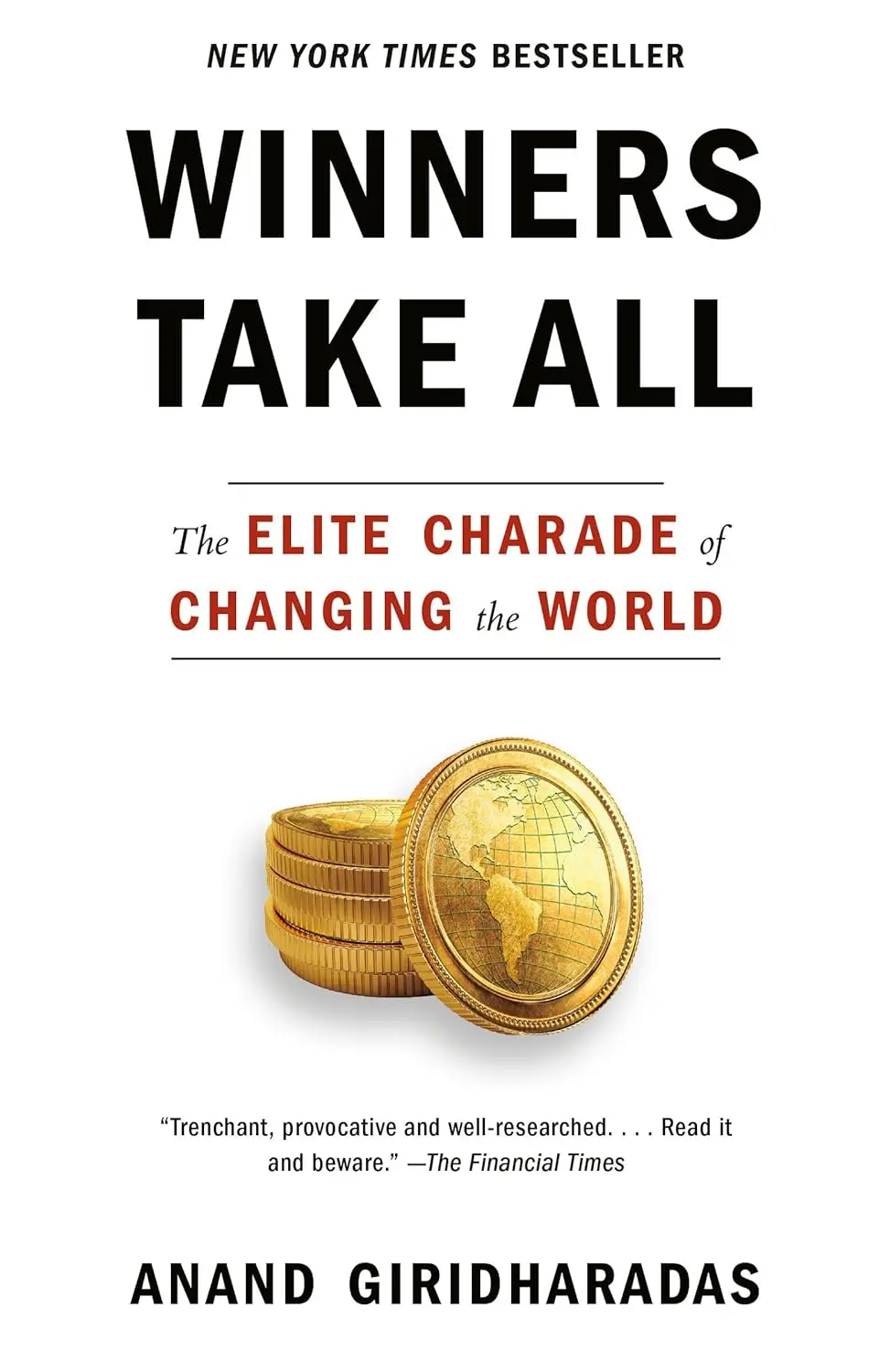
The argument hits close to home for anyone in the startup and business world. Giridharadas, a former New York Times columnist and McKinsey consultant, spent several years embedded in the world of elite do-gooding: the Aspen Institute, the Clinton Global Initiative, corporate social responsibility programs, impact investing conferences. He came away convinced that most of it is performance.
His thesis: when rich people and powerful corporations set the terms of social change, they inevitably steer the conversation toward solutions that do not threaten their own position. A tech billionaire will fund a charter school rather than support higher taxes on wealth. A consulting firm will offer pro bono work to a nonprofit rather than question why so many people need nonprofits in the first place. The language of social innovation, with its emphasis on disruption, scale, and measurable impact, conveniently redirects attention from the structural causes of inequality to market-friendly fixes.
Giridharadas profiles specific individuals to make the argument concrete. There is a young woman at Georgetown who wants to change the world and is told by a McKinsey recruiter that the best way to do so is to work at McKinsey first. There is a tech entrepreneur who genuinely wants to reduce inequality but cannot bring himself to support policies that would reduce his own wealth. There is a philanthropist who gives generously while lobbying against regulations that would make the philanthropy unnecessary.
The book does not argue that these people are cynical or dishonest. It argues something more uncomfortable: that they are sincere. They genuinely believe they are helping. The problem is that their sincerity operates within a frame that protects their interests. They want to change the world, but only in ways that leave them on top of it.
The writing is sharp and occasionally biting. Giridharadas has a talent for isolating the contradictions in language that powerful people use without examining. Phrases like “doing well by doing good” and “giving back” get dissected until their comfortable veneer peels off.
The book generated real debate when it came out in 2018. Some readers found it too broad in its critique, arguing that Giridharadas paints all elite philanthropy with the same brush and ignores genuinely effective efforts. Others found it clarifying, a useful corrective to a culture that treats billionaires as moral authorities on problems they may be contributing to.
It landed on the New York Times bestseller list and has been widely discussed in business schools and policy circles.
