
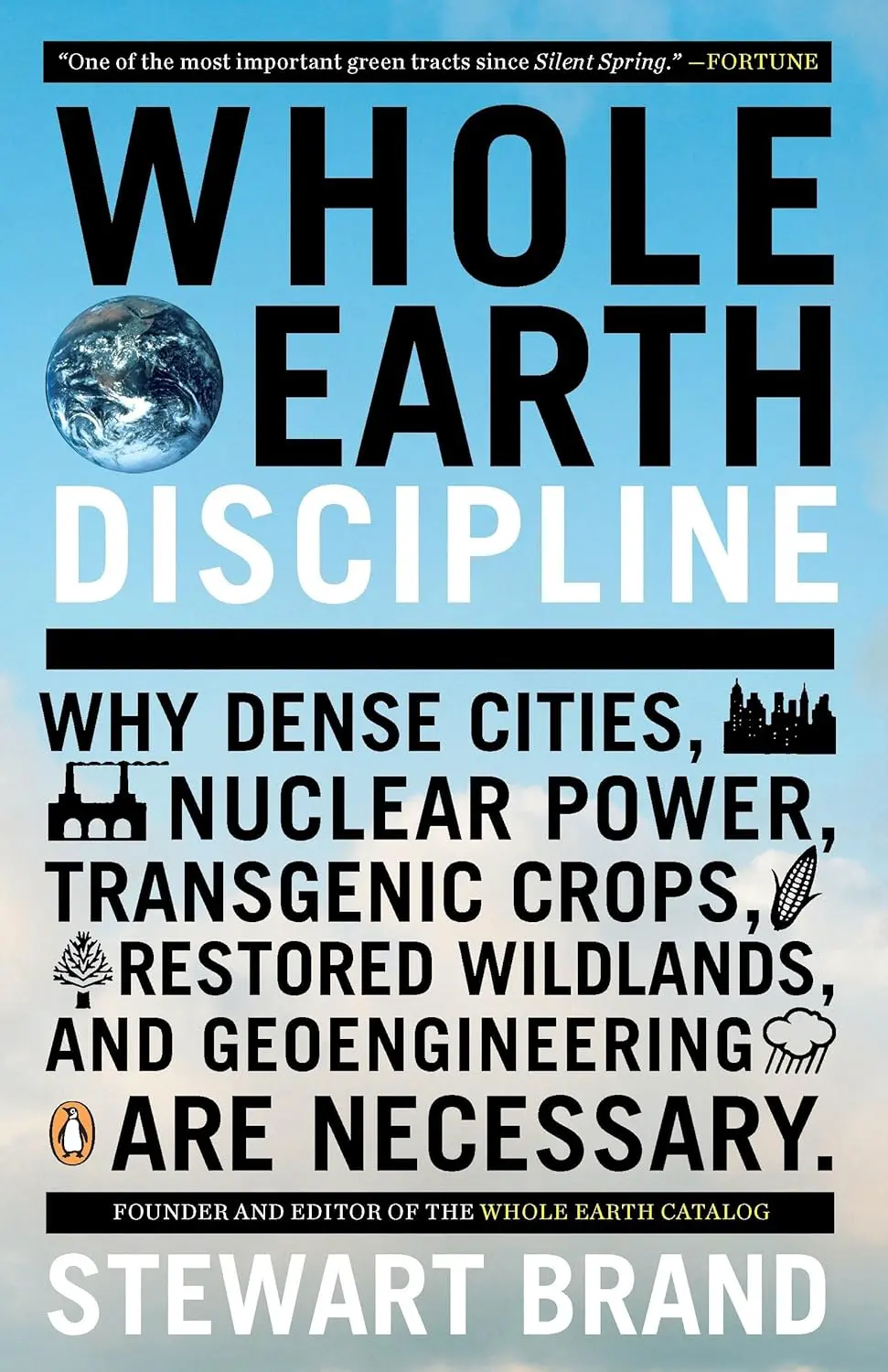
Stewart Brand has been an environmentalist since before the word existed in popular culture. He created the Whole Earth Catalog in 1968, won a National Book Award for it, co-founded the Long Now Foundation, and helped launch The WELL, one of the earliest online communities. So when he published Whole Earth Discipline in 2009, telling fellow greens that they had gotten several big issues wrong, the argument carried weight that it would not have coming from someone outside the movement.
The book is organized around four claims. Cities are greener than the countryside. Nuclear power is the cleanest large-scale energy source available. Genetic engineering is a tool that agriculture cannot afford to reject. And geoengineering, the deliberate intervention in Earth’s climate systems, is probably going to be necessary whether anyone likes it or not.
Each claim runs against decades of mainstream environmental orthodoxy, and Brand knows it. He builds his cases with data and expert sources, citing biologists, engineers, and climate scientists rather than relying on ideological arguments. The chapter on nuclear power traces the gap between public fear and engineering reality. The section on genetic engineering examines Golden Rice, transgenic crops designed to address vitamin A deficiency in developing countries, and the regulatory barriers that have kept them from reaching the people who need them. The urbanization chapters look at slum cities in the developing world and explain why the move from rural to urban life, even in terrible conditions, tends to reduce birthrates, increase economic opportunity, and shrink per-capita environmental footprints.
Brand frames his thinking as pragmatic rather than ideological. He calls himself an “ecopragmatist” and argues that the environmental movement has let romantic ideas about nature override evidence about what actually works. This is not a comfortable book for people who have built their identity around opposing the technologies Brand defends, but it was not written to be comfortable. It was written to force a conversation.
The book also touches on ecosystem restoration, de-extinction, and the responsibilities that come with managing an entire planet’s natural systems. Brand’s thinking here draws on his work with the Long Now Foundation, which encourages people to think on timescales of centuries rather than news cycles.
Jack Dorsey called it the best book he had read that year. Marc Andreessen has also cited it. Published in 2009, some of the specific debates Brand describes have moved forward, particularly around nuclear energy, where a growing number of climate scientists have publicly endorsed his position. The broader argument that environmentalism needs to become more scientific and less tribal remains as relevant as it was when the book came out.
