
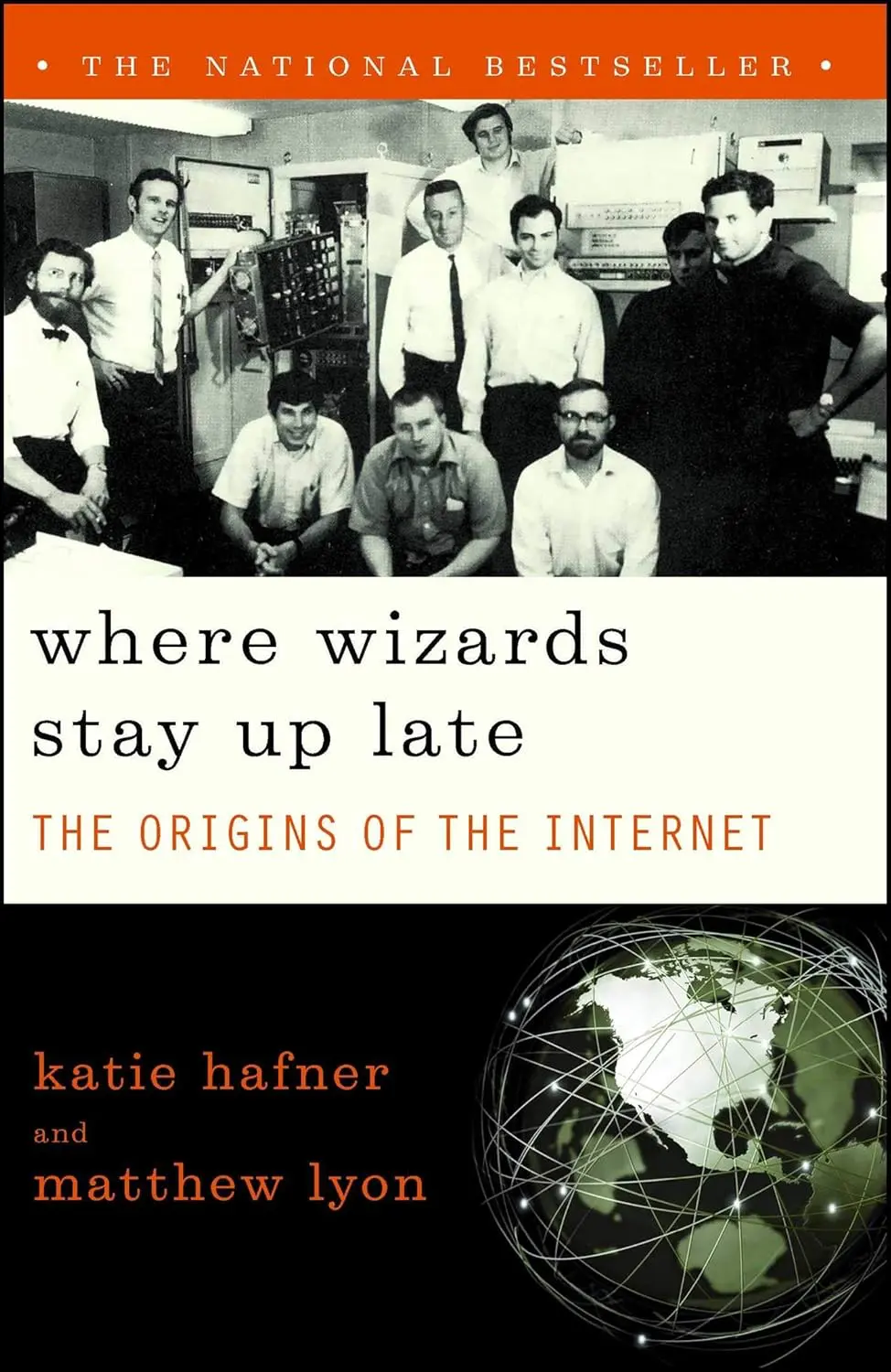
The internet was not designed by a single person or team. It emerged from a series of decisions, experiments, and compromises made by dozens of researchers at universities and government agencies over roughly a decade. Hafner and Lyon reconstruct this process in detail, starting with the funding initiative by ARPA in the mid-1960s and ending with the ARPANET’s transition into the broader internet in the 1980s.
The technical challenges were substantial. Nobody had built a wide-area packet-switched network before. The engineers had to figure out how to break data into packets, route those packets across unreliable phone lines, reassemble them at the destination, and handle errors and congestion. They also had to convince university computer science departments to connect their machines to a shared network, which many initially resisted because they did not want outsiders accessing their computing resources.
The institutional story is equally interesting. Bob Taylor at ARPA secured the funding. Larry Roberts managed the project. Bolt Beranek and Newman (BBN), a small consulting firm in Cambridge, won the contract to build the Interface Message Processors (the routers that connected the network nodes). The first message was sent between UCLA and Stanford Research Institute on October 29, 1969. It crashed after transmitting two letters (“LO” instead of “LOGIN”).
Hafner and Lyon write for a general audience. The technical explanations are clear without being condescending, and the human stories keep the narrative engaging. The book captures the collaborative, informal culture of early internet development, where decisions that would shape how billions of people communicate were made in conference rooms and over late-night coding sessions.
For founders, the book illustrates how infrastructure technologies develop: through funded research, collaboration between institutions that have different interests, and a willingness to solve problems without knowing exactly what the final product will look like.
At about 300 pages, the book is a manageable read. It pairs well with The Dream Machine for a fuller picture of how the computing and networking revolutions unfolded.
