
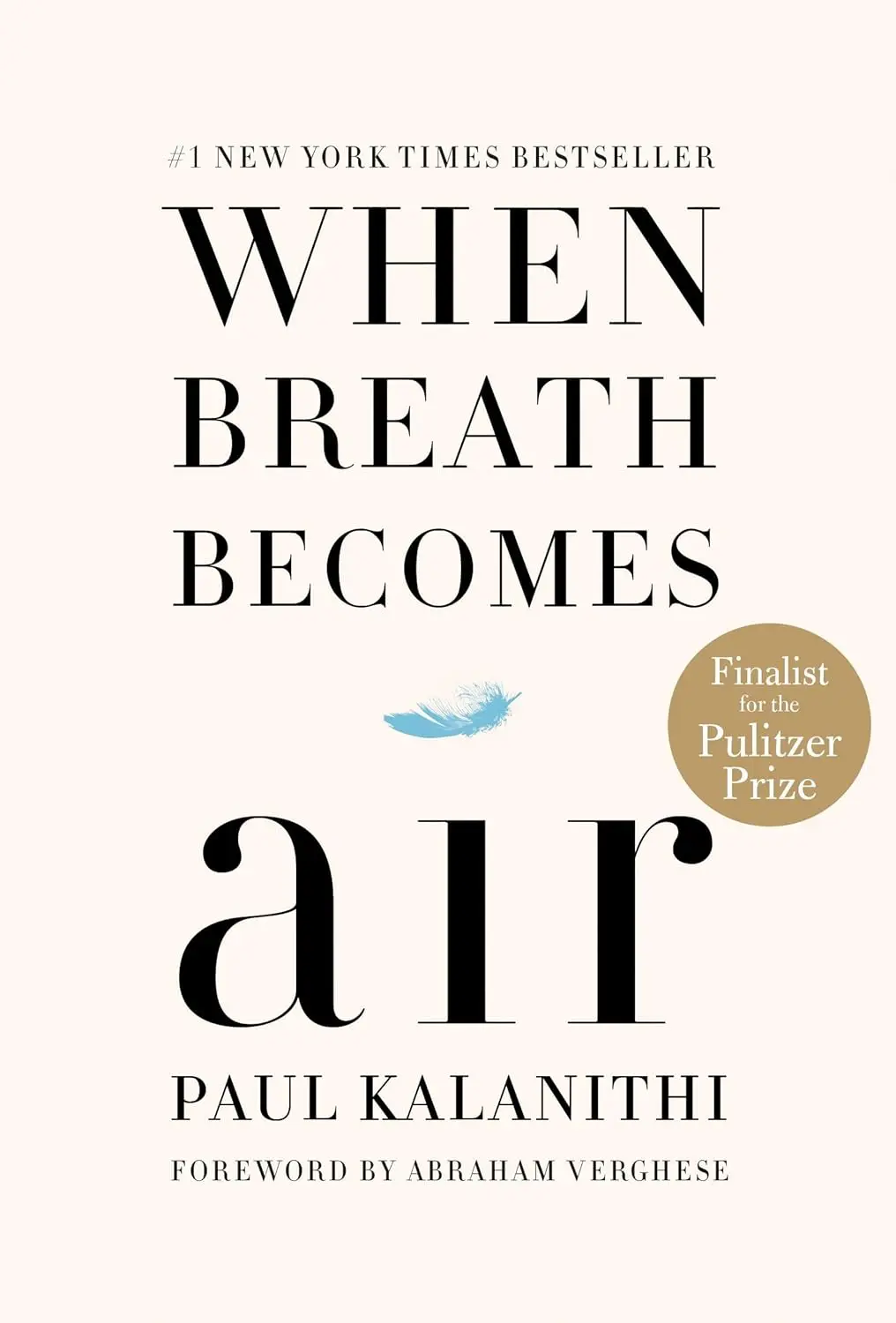
Paul Kalanithi was in the final year of his neurosurgery residency at Stanford when he was diagnosed with stage IV lung cancer. He was 36 years old. When Breath Becomes Air is the book he wrote in the months between his diagnosis and his death in March 2015.
The first half covers his path to neurosurgery. Kalanithi studied literature and biology as an undergraduate, earned a master’s in English literature, then went to medical school. He chose neurosurgery because the brain is where identity lives, and operating on it meant working at the boundary between life and meaning. He writes about cutting into a brain and knowing that a millimeter in either direction could change a person’s personality, their ability to speak, or their capacity to recognize their own children.
The second half covers his illness. The shift from doctor to patient is abrupt and disorienting. Kalanithi describes the strange experience of reading his own CT scan and knowing immediately what the spots meant. He had spent years telling other people they were dying. Now someone was telling him.
The book is not about fighting cancer or staying positive. Kalanithi is too honest for that. He writes about the uncertainty of not knowing whether he had months or years, the impossibility of making plans when you do not know how much time you have, and the decision to have a child with his wife Lucy even though he knew he might not live to see her grow up.
For business readers, this is not a business book. But the founders who recommend it, including Bill Gates and Sheryl Sandberg, tend to point to its effect on perspective. When you are consumed by fundraising, product launches, and growth metrics, a book about a man trying to figure out what matters in the time he has left can recalibrate what “important” actually means.
The writing is spare and precise, as you would expect from someone who studied literature and practiced surgery. At about 230 pages, the book is short. Kalanithi did not finish it before he died. His wife wrote the epilogue. The incompleteness is, in a way, part of the book’s honesty.
