
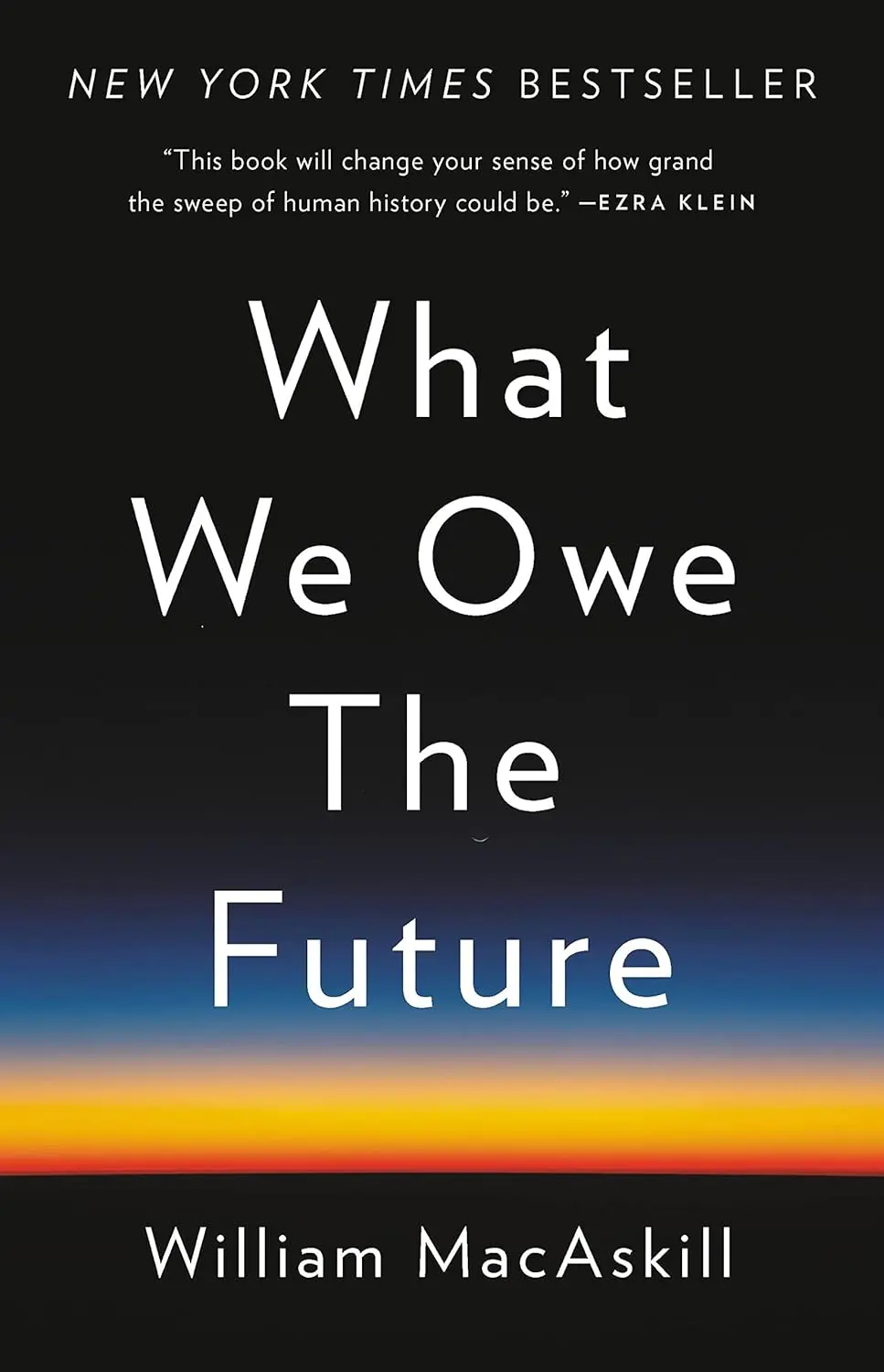
The future is big. If humanity survives and avoids catastrophe, there could be trillions of people living over the next million years, or longer. William MacAskill, a philosophy professor at Oxford and one of the founders of the effective altruism movement, argues that this fact has moral consequences we have barely begun to reckon with.
The core argument: the people who will exist in the future matter morally. They do not matter less just because they have not been born yet, the same way that people in distant countries do not matter less just because they are far away. If this is true, and if the future population is potentially enormous, then ensuring the future goes well may be the most important thing anyone can do. This perspective is called longtermism.
MacAskill explores what ensuring the future goes well actually means. It means reducing existential risks: the threats, from nuclear war to engineered pandemics to misaligned artificial intelligence, that could permanently prevent future generations from existing. It means avoiding value lock-in: the possibility that a bad set of values, whether imposed by a totalitarian government or encoded in a powerful AI, could become permanent and shape civilization for millennia. It means maintaining the option for future people to determine their own path rather than having it determined by choices we make now.
The book is structured to be accessible to readers who have never encountered these ideas. MacAskill writes with the clarity of a philosopher who has spent years explaining complex arguments to undergraduates. He uses historical examples to make abstract points concrete. The abolition of slavery, which took centuries and required the alignment of many forces, illustrates how values can shift. The stagnation of Chinese technology under the Ming Dynasty illustrates how progress can halt.
MacAskill is honest about the uncertainties. We do not know how large the future population will be. We do not know which risks are most dangerous. We do not know whether our actions today will actually affect outcomes centuries from now. The book does not pretend that longtermism provides neat answers. It argues that the questions deserve serious attention even when the answers are uncertain.
The book was published in 2022 and entered the conversation alongside the growing public debate about AI safety and existential risk. Elon Musk tweeted about it. Sam Bankman-Fried, who later destroyed the effective altruism movement’s reputation through fraud, cited MacAskill’s ideas as an influence, which has complicated the book’s reception in ways that have nothing to do with its arguments.
What We Owe the Future is the most readable introduction to a set of ideas that are likely to shape policy debates for decades. Whether longtermism is the right moral framework or a sophisticated form of neglecting present suffering is an open question that the book invites rather than resolves.
