
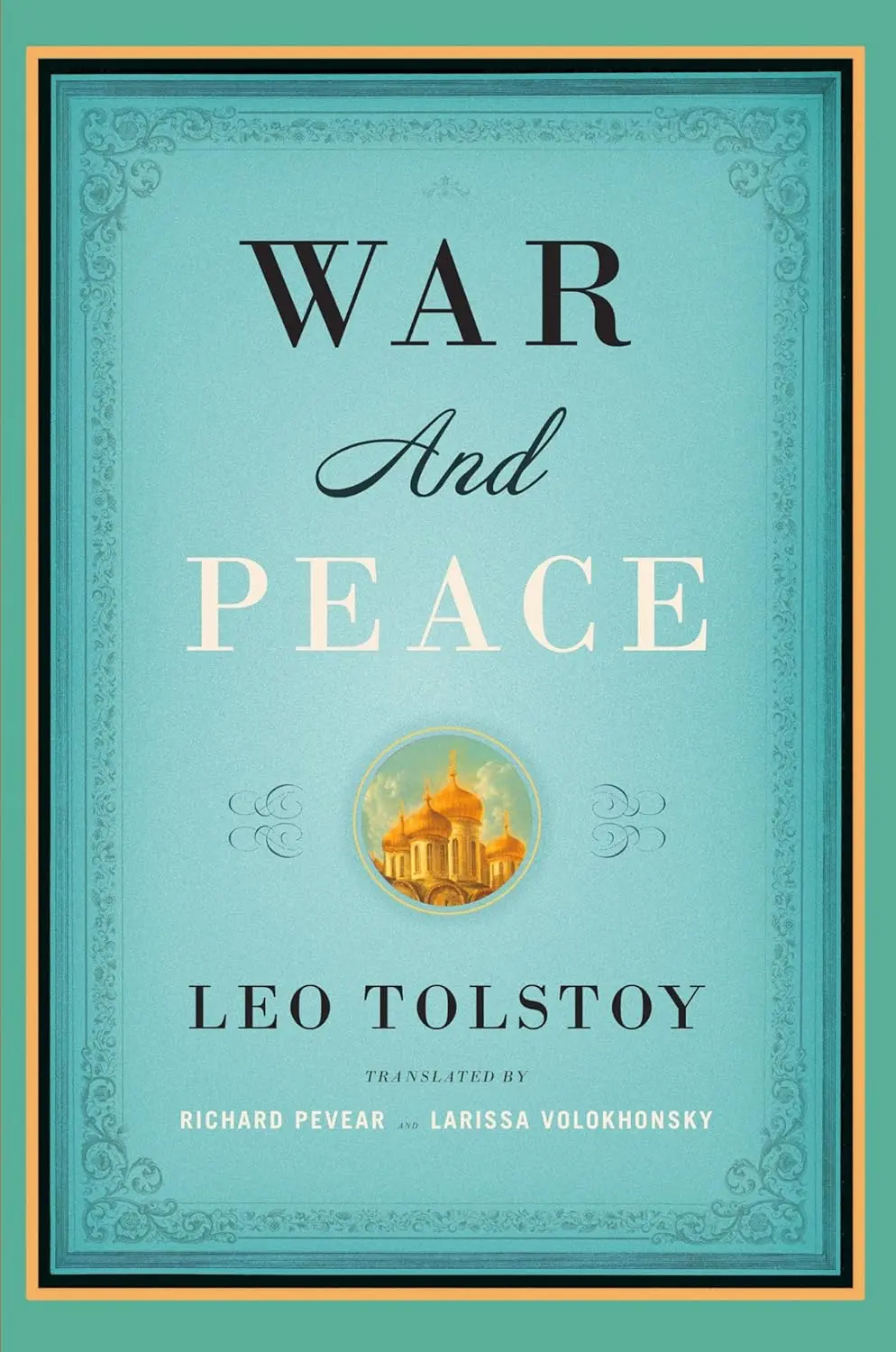
War and Peace follows several Russian aristocratic families, primarily the Rostovs, Bolkonskys, and Bezukhovs, from 1805 through Napoleon’s invasion of Russia in 1812 and its aftermath. The novel alternates between intimate domestic scenes and large-scale battle sequences, with Tolstoy using the contrast to build his argument about what actually drives history.
The personal stories are what carry the book. Natasha Rostova grows from a joyful, impulsive girl into a woman shaped by heartbreak and war. Prince Andrei Bolkonsky, disillusioned with society, searches for meaning on the battlefield and in philosophy. Pierre Bezukhov, the awkward, well-meaning heir to a fortune, stumbles through life trying to figure out what matters. Their stories feel immediate and real in a way that most historical fiction does not manage.
The war sections are equally compelling. Tolstoy served in the military himself, and his battle scenes have a visceral accuracy that came from personal experience. But he also uses the war chapters to make a philosophical argument: that history is not driven by great men making strategic decisions, but by the accumulated actions of thousands of ordinary people responding to circumstances they cannot control. Napoleon, in Tolstoy’s telling, is less a military genius than a man carried along by forces far larger than himself.
For founders and business readers, the philosophical sections are surprisingly relevant. Tolstoy’s argument that leaders overestimate their own influence and underestimate the role of chance and circumstance is a useful counterpoint to the founder-hero narrative that dominates startup culture.
The book is long, over 1,200 pages in most editions, and the Russian naming conventions (each character has a first name, a patronymic, and a surname, and is addressed differently by different people) can be confusing at first. Most modern editions include a character list. The Pevear and Volokhonsky translation and the Anthony Briggs translation are both well-regarded. Once you get through the first hundred pages, the story becomes genuinely hard to put down.
