
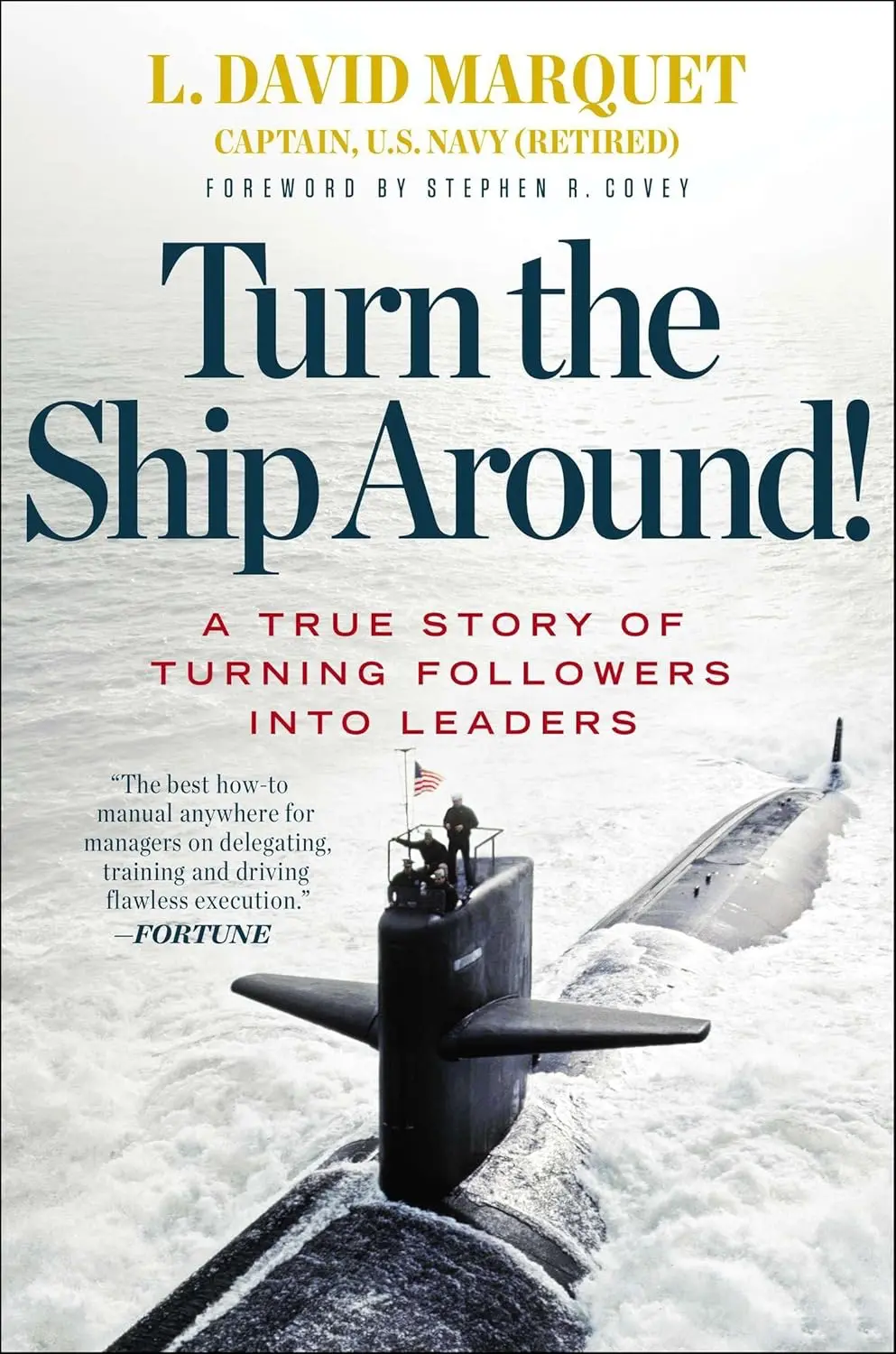
Marquet was assigned to command the USS Santa Fe, a nuclear submarine that had the worst retention, worst morale, and worst performance evaluations in the fleet. His first instinct was to fix things by giving better orders. Then he gave an order that was technically impossible (he told the helmsman to go to a speed the submarine’s engine could not reach), and the helmsman tried to execute it anyway because that is what the culture demanded: follow orders, do not think.
That moment convinced Marquet that the leader-follower model was the problem. If the crew was trained to do what they were told without thinking, no amount of better orders from the top would fix the underlying issue. So he flipped the model.
Instead of telling people what to do, Marquet pushed decision-making authority down. He replaced the phrase “permission to…” with “I intend to…” Crew members would say “I intend to submerge the ship” instead of “request permission to submerge.” The difference sounds small, but it shifted ownership of the decision from the commander to the person doing the work. Marquet’s role became approving or redirecting intentions rather than generating orders.
For this to work, two things had to be in place: competence (the crew needed to actually know what they were doing) and clarity (everyone needed to understand the ship’s goals and constraints). Marquet invested heavily in both, running training programs and making the submarine’s objectives explicit at every level.
The results were measurable. The Santa Fe went from worst to first in the fleet during Marquet’s command. After he left, the ship continued to perform well, which is the real test of leadership: does the organization work after the leader is gone?
For founders, the leader-leader model is directly applicable. Many startup founders become bottlenecks because every decision runs through them. Marquet’s framework shows how to distribute authority without losing control, which is the difference between a company that scales and one that stalls when the founder runs out of bandwidth.
At about 230 pages, the book is concise. The submarine setting keeps the examples concrete and the stakes clear.
