
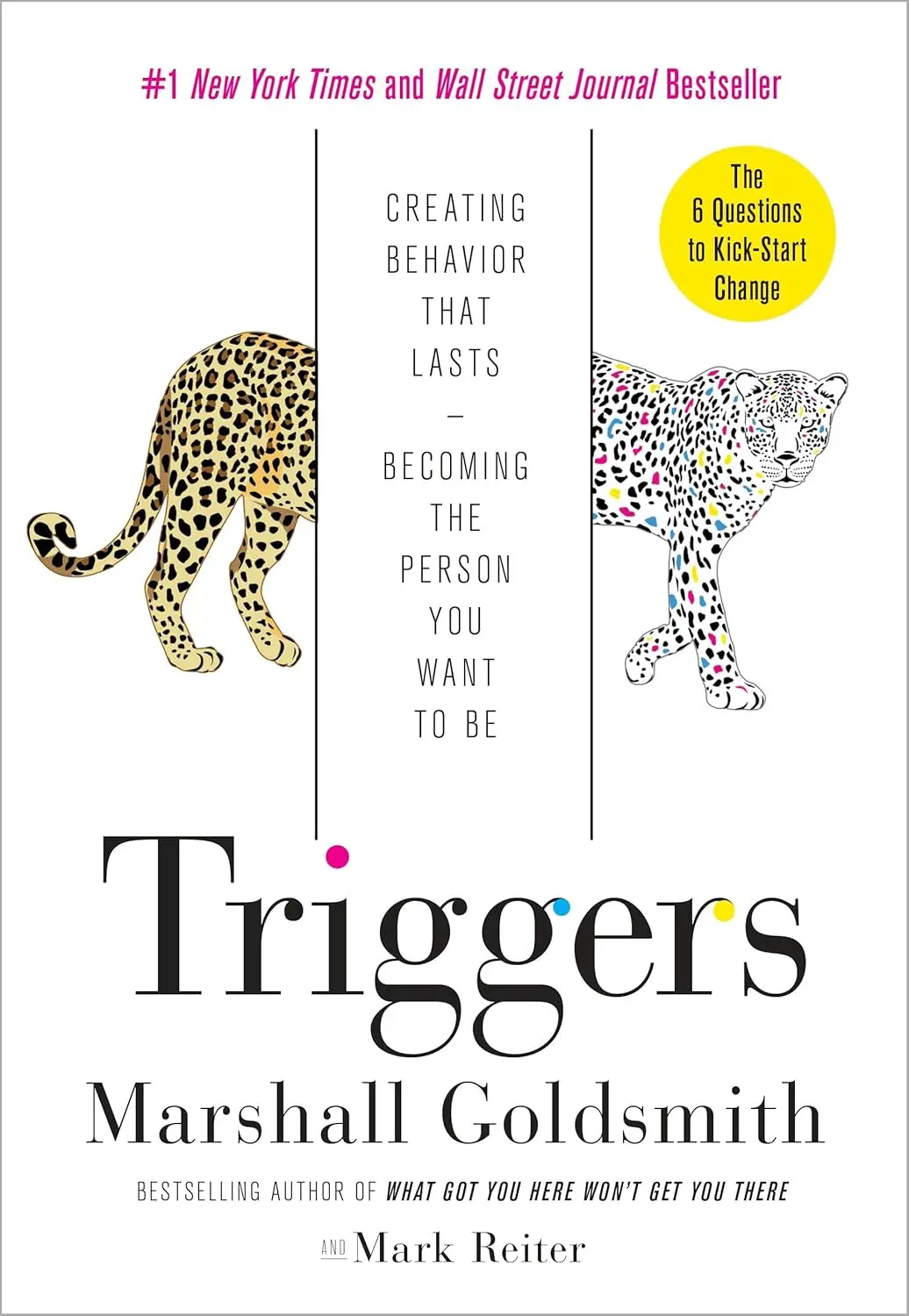
Triggers is Marshall Goldsmith’s book about why people struggle to change their behavior even when they know exactly what they should be doing differently. Goldsmith, one of the most well-known executive coaches in the world, has spent decades helping successful leaders change behaviors that their colleagues have identified as problematic. The book shares what he has learned about why change is hard and what makes it stick.
The central concept is the “trigger”: any stimulus in your environment that shapes your behavior, often without your awareness. A long meeting triggers impatience. A stressful email triggers a snappy reply. A bad night’s sleep triggers poor food choices. Goldsmith argues that most people dramatically underestimate how much their environment controls their behavior, and that this gap between self-image (“I’m a patient person”) and actual behavior (“I just yelled at my team”) is where most personal development failures happen.
The practical centerpiece is the “Daily Questions” practice. Every evening, you ask yourself a set of questions, not about what happened to you but about whether you did your best in areas that matter: “Did I do my best to be happy today? Did I do my best to find meaning? Did I do my best to build positive relationships?” The “did I do my best” framing is the key innovation. It puts agency on you rather than on your circumstances, which prevents the common excuse of blaming the environment for a bad day.
For founders, whose environments are constantly triggering stress, urgency, and reactive behavior, the framework is practical and easy to implement. The Daily Questions practice takes five minutes and produces a feedback loop that most self-improvement methods lack: you can actually see, over weeks and months, whether you’re getting better at the things you care about.
The writing is conversational and built around stories from Goldsmith’s coaching practice. He uses real examples (with names changed) of executives who struggled with specific behavioral patterns and how they worked through them. The tone is warm and self-deprecating, with Goldsmith frequently admitting his own failures with behavioral change. The book reads fast and the Daily Questions tool is something you can start using the same day you read about it.
