
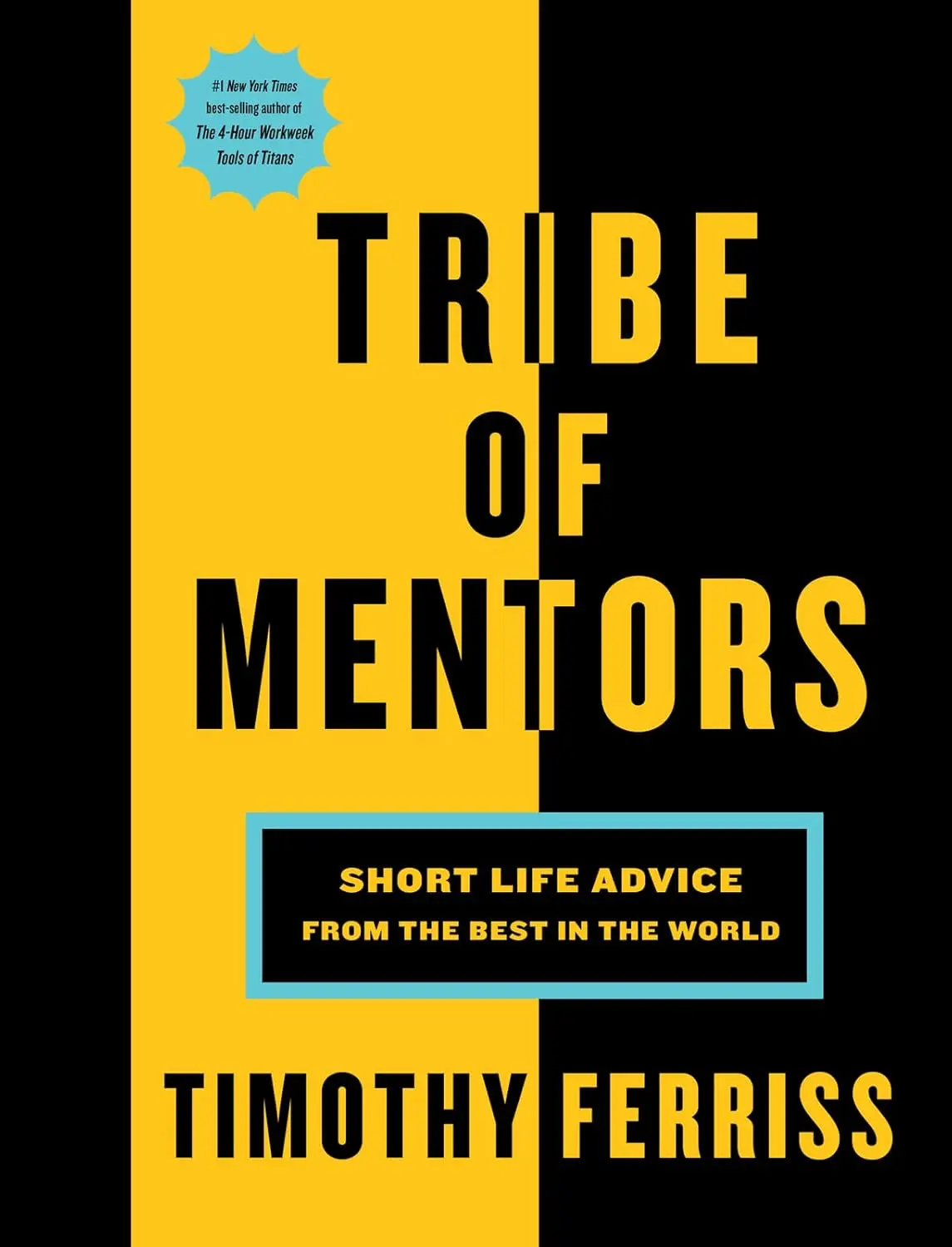
Tribe of Mentors grew out of a personal crisis. Ferriss, who had built his career around optimization and productivity, found himself stuck. Rather than retreat or pretend everything was fine, he sent a set of eleven questions to people he admired and collected their responses.
The questions include: What is the book you have given most as a gift? What purchase of $100 or less has most positively impacted your life? What is an unusual habit or absurd thing you love? What advice would you give to a smart, driven college student about to enter the real world? What is the worst advice you see given in your field? When you feel overwhelmed or unfocused, what do you do?
The respondents range from tech investors (Ray Dalio, Naval Ravikant) to athletes (Laird Hamilton, Amelia Boone) to writers (Steven Pressfield, Maria Popova) to musicians, military leaders, and scientists. Not everyone answered every question, and the variety is part of the value. Some responses are a few sentences. Others run several pages.
The format means the book does not build a sustained argument. It reads more like a reference manual that you can open to any page and find something useful. The lack of narrative structure is a weakness if you want a cohesive book, but a strength if you want a wide range of perspectives on practical questions.
For founders, the most useful sections tend to be the responses about failure, overcoming creative blocks, and what experienced people would tell their younger selves. The patterns that emerge across dozens of respondents are often more revealing than any single answer.
At about 620 pages, the book is large. But because each interview is self-contained, you can read it in any order and put it down at any time. It works well as a book you keep on your desk and open when you need a different perspective on a problem you are stuck on.
