
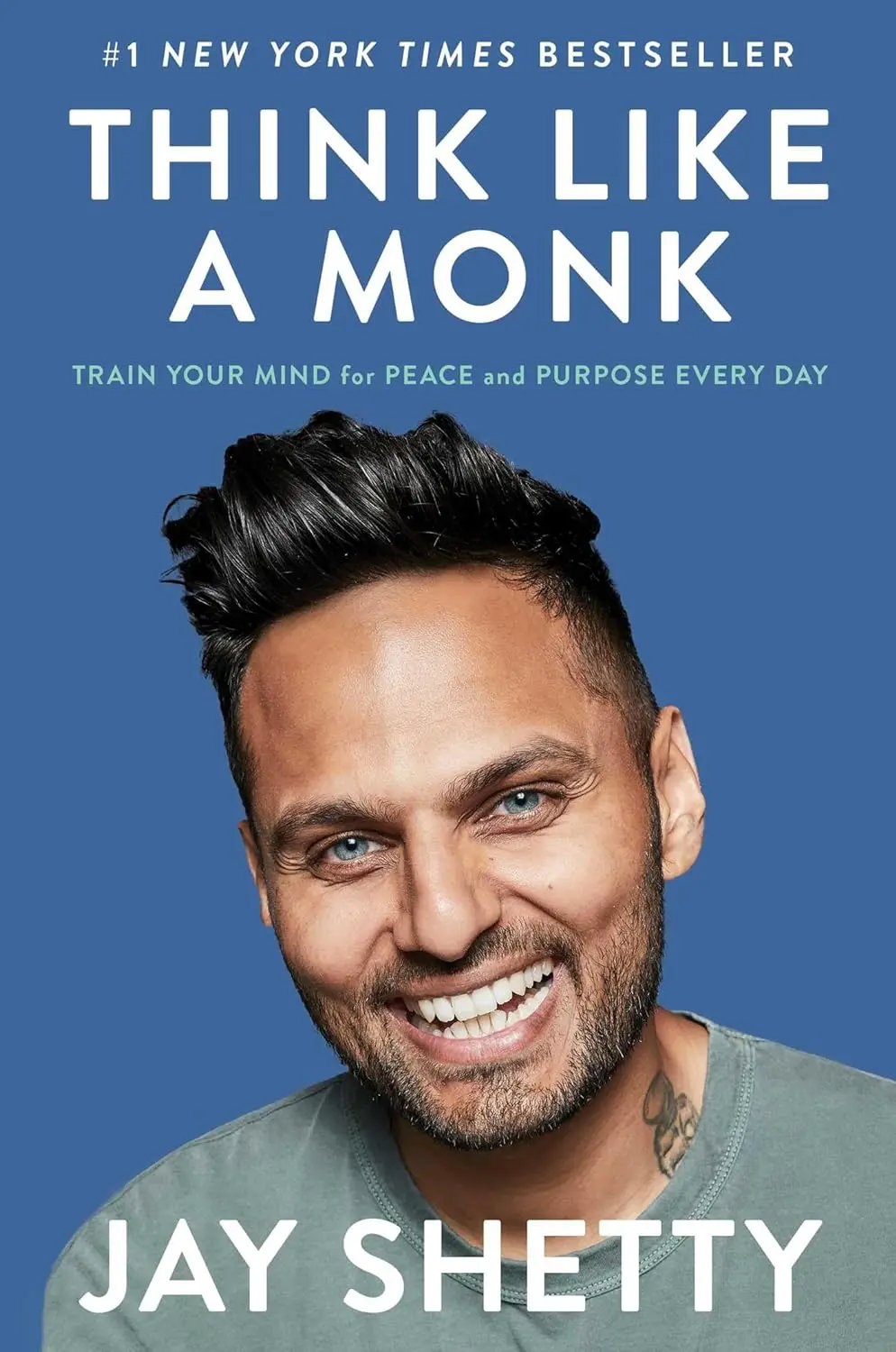
Jay Shetty was a student at Cass Business School in London when he attended a talk by a monk and decided that the monk was happier than anyone else he knew. He spent the next three years living in an ashram in India, meditating, studying Vedic philosophy, and sleeping on the floor. Then he came back to London and started making videos.
The videos, which distill lessons from his monastic experience into short, shareable formats, made Shetty one of the most popular creators in the personal development space. Think Like a Monk is the long-form version: a book that takes the practices of monastic life and translates them into advice for people who live in the regular world.
The book is organized around three stages, borrowed from the ashram’s framework. Let Go: releasing negative thought patterns, dealing with fear, managing the influence of other people’s expectations. Grow: building a daily routine, developing a meditation practice, finding purpose, deepening relationships. Give: using your skills and growth to serve others, which Shetty presents as the final stage of fulfillment rather than a separate activity.
The advice is specific enough to be actionable. Shetty describes his morning routine in detail. He provides exercises for identifying the values you actually hold versus the ones you have inherited from family and culture. He offers frameworks for evaluating whether a relationship is nourishing or draining. He includes guided meditations and journaling prompts.
Shetty writes in a warm, accessible tone that is clearly shaped by his years making social media content. Sentences are short. Examples are relatable. Complex philosophical ideas from the Bhagavad Gita and other Vedic texts are summarized in language that requires no background knowledge. This accessibility is the book’s main strength and its main limitation. Readers looking for depth on the philosophical traditions Shetty draws from will need to go to the source texts.
The book has been criticized for being derivative, repackaging ideas from older wisdom traditions and from other self-help authors. Shetty would probably agree with the first part and dispute the second. He is explicit about his sources and presents himself as a translator, not an originator. The value he adds is in the packaging: making material that might otherwise feel inaccessible to a young, Western, digitally native audience feel relevant and usable.
Think Like a Monk was a number one New York Times bestseller. Shetty has since hosted a podcast and launched additional content platforms. Whether the book is a starting point for deeper exploration or a destination in itself depends on how far you want to go.
