
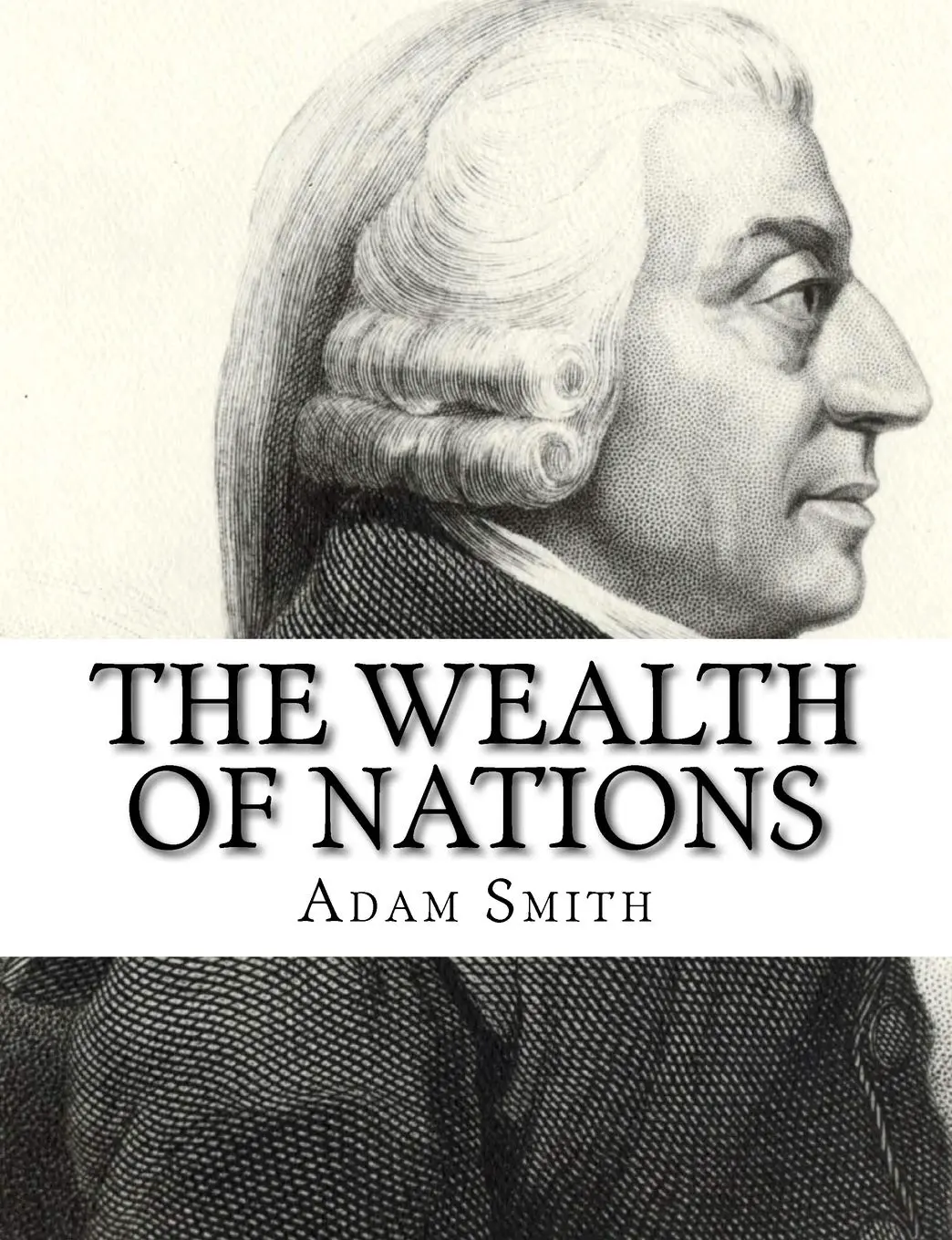
The Wealth of Nations was published the same year as the American Declaration of Independence, and it was almost as revolutionary. Smith argued that national wealth does not come from hoarding gold (the mercantilist view) but from productive labor, and that the best way to increase productive labor is through the division of labor and free trade.
Smith’s famous example is a pin factory. One person working alone might make 20 pins a day. Ten people, each specializing in one step of the process, can make 48,000. This is the division of labor, and Smith traces its effects across industries and economies. Specialization increases productivity. Trade allows people to specialize. Markets coordinate specialization without central planning.
The “invisible hand” is the book’s most cited concept, though Smith uses the phrase only once in the entire text. The idea is that individuals pursuing their own self-interest in a competitive market tend to produce outcomes that benefit society, even though that was not their intention. The baker does not bake bread out of benevolence. He bakes it to earn money. But the result is that people get bread.
Smith also covers topics that free-market enthusiasts tend to skip: the role of government in providing public goods (defense, justice, infrastructure), the problem of monopolies, the tendency of businessmen to conspire against the public interest, and the conditions under which free markets fail.
For business readers, the book provides the intellectual foundation for market economics that most business thinking takes for granted. Understanding Smith helps you understand why markets work, why they sometimes fail, and what the actual arguments are (as opposed to the simplified versions).
The book is very long (roughly 1,000 pages in most editions) and 18th-century prose requires patience. Most readers benefit from an abridged edition or from reading Books I and IV, which contain the core arguments. Charlie Munger and Warren Buffett have cited Smith’s influence on their thinking. It is one of those books that is more referenced than read, which is a shame because Smith’s actual arguments are more nuanced than the caricatures suggest.
