
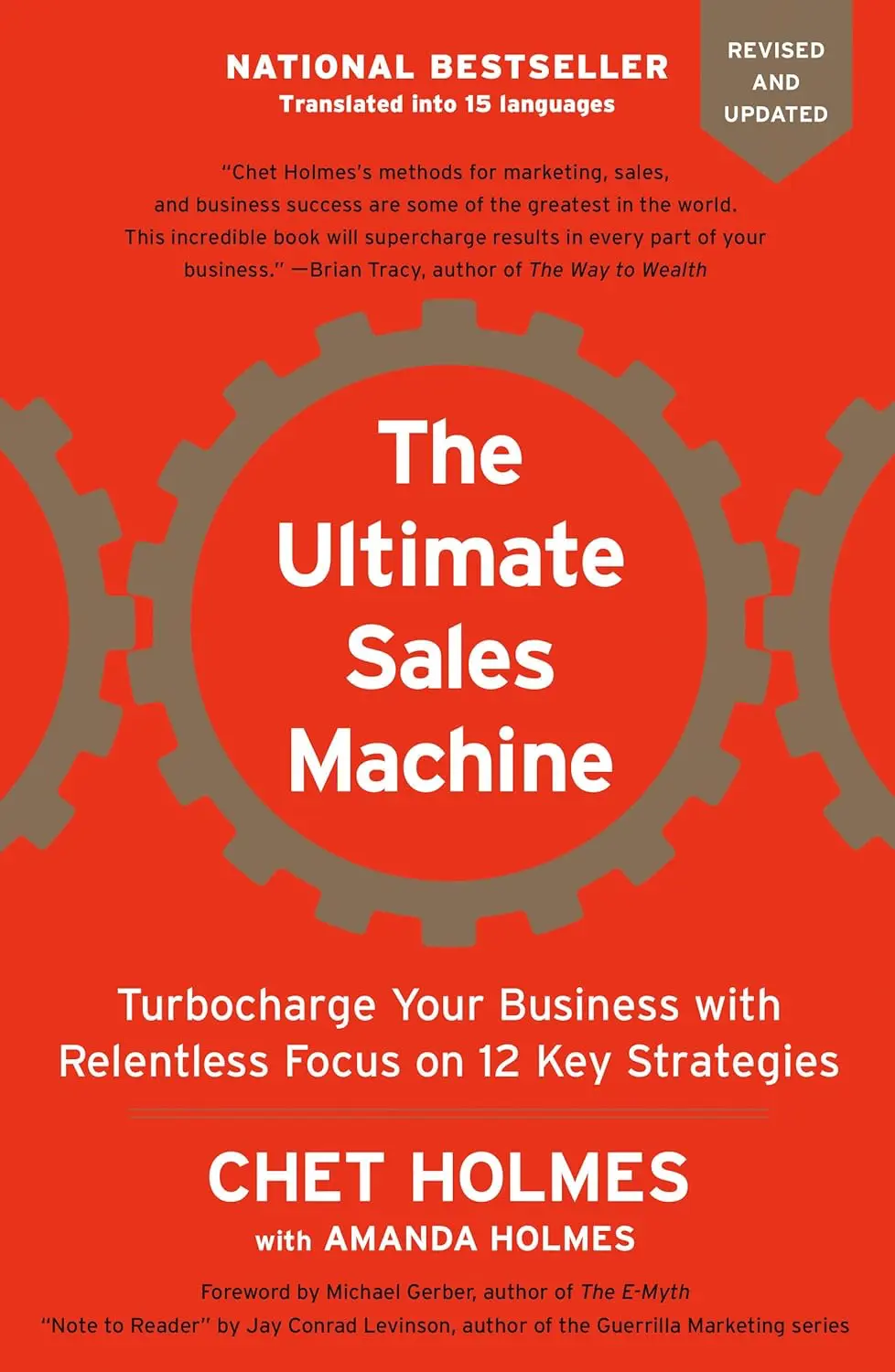
Holmes’s central idea is what he calls “pigheaded discipline and determination.” Most businesses try to fix their problems by adopting new tactics. Holmes argues that the problem is rarely a lack of tactics. It is a lack of consistent execution on the fundamentals. The book identifies 12 areas where disciplined execution produces disproportionate results.
The “Dream 100” concept is probably the most cited strategy. Instead of marketing to everyone, identify the 100 prospects who would make the biggest difference to your business and focus relentlessly on reaching them. Holmes describes how he used this approach to sell advertising for a small magazine: he identified 167 advertisers who could make the magazine profitable and contacted them every two weeks for months until they responded.
Education-based marketing is another key concept. Instead of pitching your product, offer potential customers something educational (a report, a workshop, a webinar) that positions you as an expert and builds trust before you ever ask for a sale. Holmes calls this “stadium pitching” because the goal is to get your prospects into an educational presentation where you can demonstrate expertise.
The book also covers meeting management (short, focused, with clear action items), time management (blocking specific hours for specific activities), hiring (Holmes advocates behavioral interviewing and personality testing), and follow-up systems (most sales are lost because nobody follows up consistently).
Holmes died in 2012, and his daughter Amanda Holmes has continued the business. Some of the specific tactics feel dated, but the underlying discipline of consistent execution on proven fundamentals holds up.
For founders, especially those in B2B or service businesses, the Dream 100 and education-based marketing concepts are immediately applicable. Alex Hormozi has recommended the book. At about 260 pages, it is practical and well-organized. Holmes writes with the energy of a sales trainer, which can feel intense but keeps the material engaging.
