
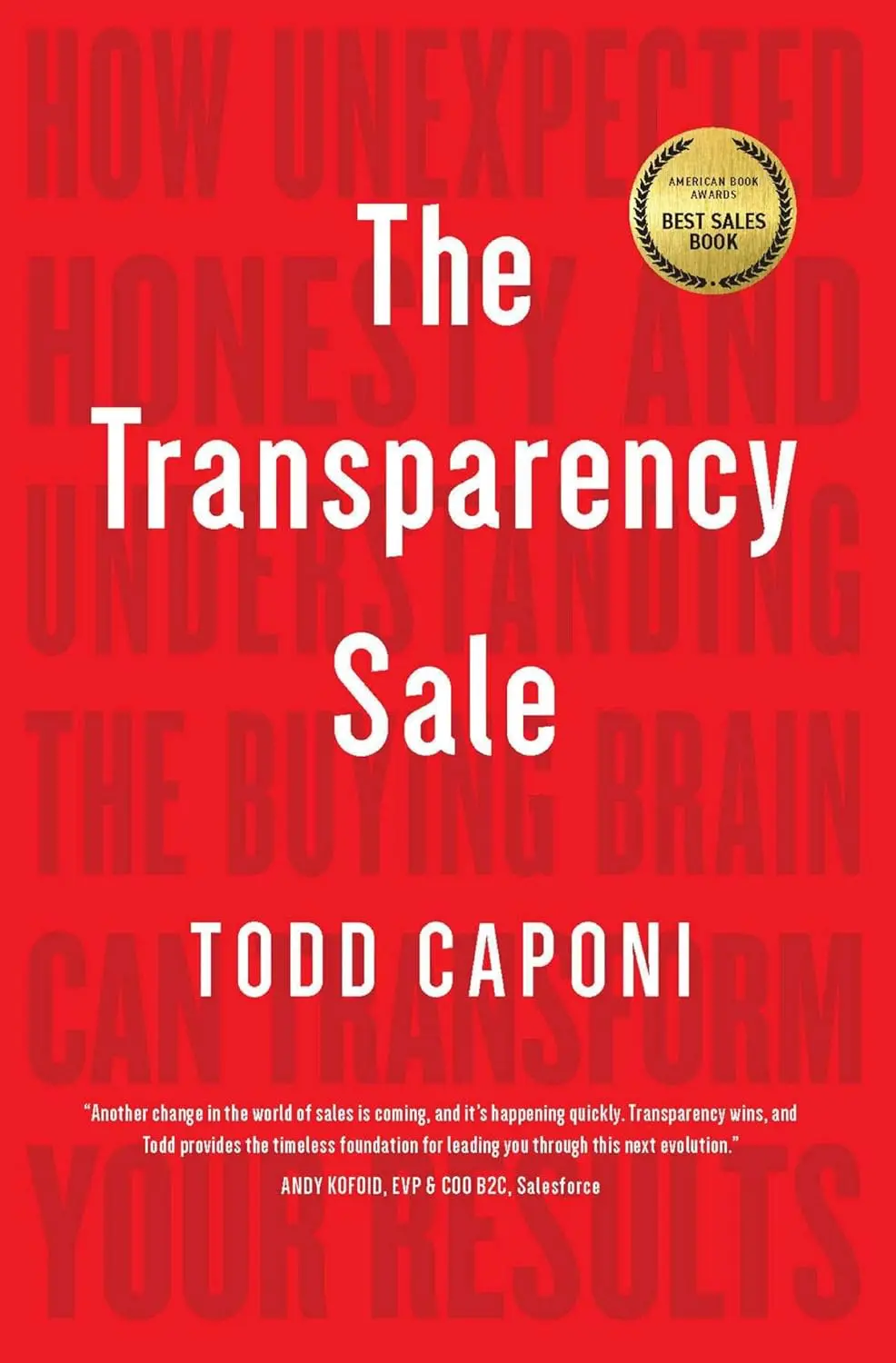
The Transparency Sale is Todd Caponi’s argument that the old playbook of selling, where you hide weaknesses, oversell strengths, and only reveal downsides when forced, is not just outdated but counterproductive. In a world where buyers can read reviews, compare alternatives, and research your product before they ever talk to you, trying to control the narrative by hiding information makes you look less trustworthy, not more.
Caponi’s central claim, backed by behavioral science research, is that products with perfect 5-star ratings sell worse than products rated 4.2 to 4.5 stars. Why? Because nobody trusts perfection. When a product has a few honest negative reviews mixed in with the positive ones, buyers trust the positive reviews more. The same principle applies to sales conversations: when you voluntarily disclose a weakness or limitation of your product, the rest of what you say becomes more credible.
The book provides a framework for leading with transparency. Caponi teaches salespeople to bring up known weaknesses early in the conversation rather than waiting for the buyer to discover them. He covers how to frame limitations honestly without torpedoing the deal, how to use transparency to differentiate yourself from competitors who are still hiding their flaws, and how to build a sales process where honesty is systematic rather than ad hoc.
The behavioral science chapters explain the cognitive mechanisms behind why transparency works. Loss aversion, confirmation bias, and the pratfall effect (the finding that people who show a small vulnerability are liked more, not less) all support the approach. Caponi presents the research clearly and connects it to specific sales situations.
For founders, especially those selling a product that isn’t yet perfect (which is every early-stage product), the book offers permission to stop pretending. Instead of sweating over objections about features you haven’t built yet, lead with what you don’t do and explain why what you do do is worth buying anyway. This approach tends to attract customers who are a genuine fit and repel ones who aren’t, which saves time for everyone.
The writing is clear and practical. Caponi spent years in sales leadership at companies like Power Reviews, and the examples come from real sales situations. The book is relatively short and well-organized. It pairs well with The Challenger Sale for a more complete picture of modern B2B selling.
