
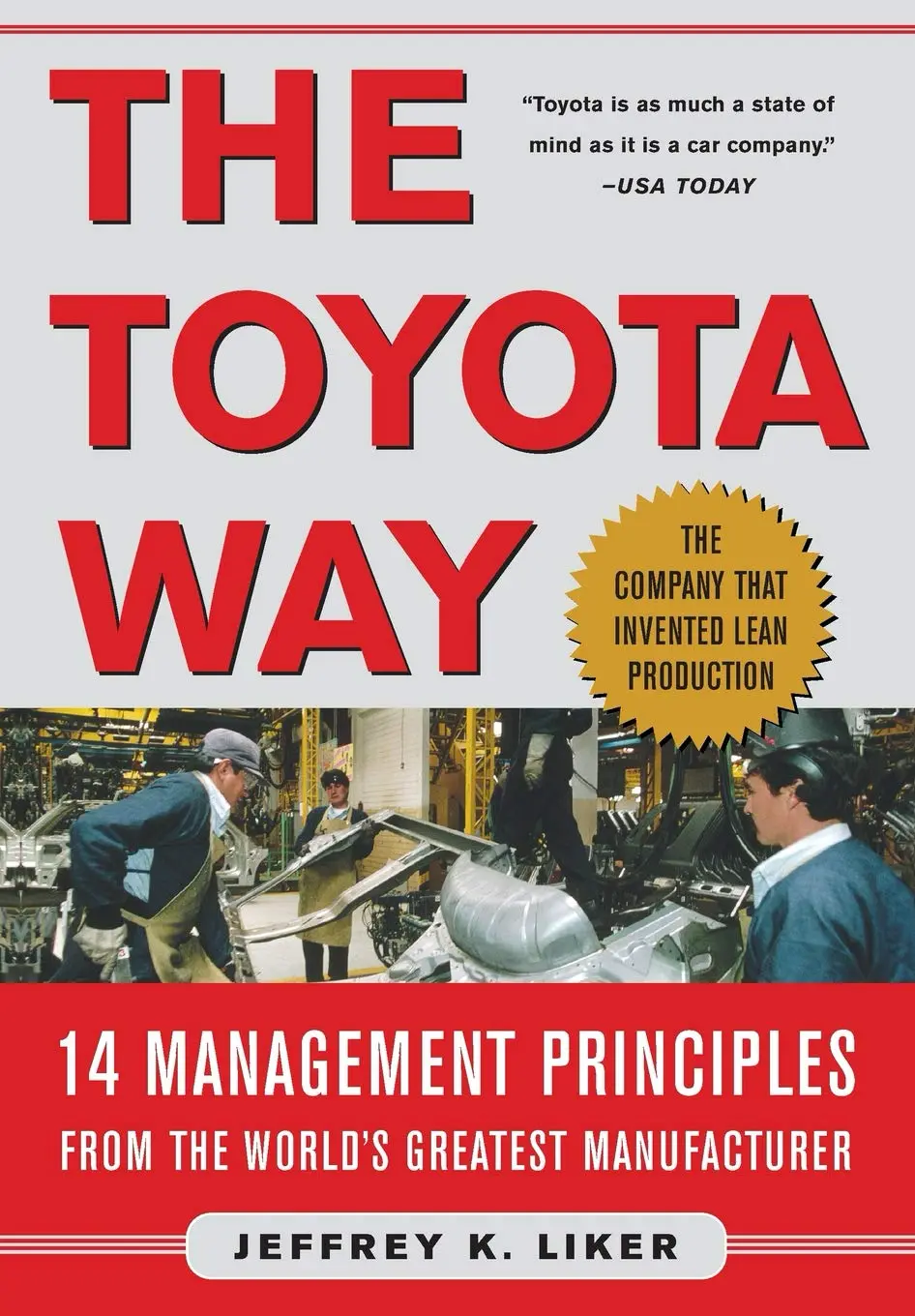
Most books about Toyota focus on the tools: kanban boards, just-in-time delivery, continuous improvement, value stream mapping. Liker argues that the tools are the least important part. What makes Toyota exceptional is the management philosophy underneath the tools, and companies that copy the tools without understanding the philosophy get mediocre results.
The 14 principles are organized into four categories. Philosophy (base management decisions on long-term thinking, even at the expense of short-term financial results). Process (create continuous flow, use pull systems, level the workload, stop when there is a quality problem, standardize tasks before improving them). People (develop leaders who live the philosophy, respect partners and suppliers, develop teams that follow the philosophy). Problem Solving (go and see for yourself, make decisions slowly by consensus but implement rapidly, become a learning organization through reflection and improvement).
The principle “go and see for yourself” (genchi genbutsu) is one that translates directly to startups. Toyota managers are expected to go to the actual place where work is done and observe before making decisions. This is the opposite of managing by spreadsheet or dashboard. Liker gives examples of senior Toyota executives spending days on the factory floor watching a single process before suggesting changes.
The book uses detailed case studies from Toyota’s operations in Japan and the United States. Liker had unusual access to the company over two decades, and the specificity of the examples is the book’s strength.
For founders, the most transferable ideas are about building a culture of continuous improvement rather than relying on periodic overhauls, about respecting the people who do the work and involving them in improvement rather than imposing solutions from above, and about the discipline of understanding a problem thoroughly before trying to fix it.
At about 350 pages, the book is thorough. Liker writes clearly, and the 14-principle framework gives the material structure. Some readers find the Toyota-specific examples difficult to translate to other industries, but the underlying principles are general enough to apply anywhere.
