
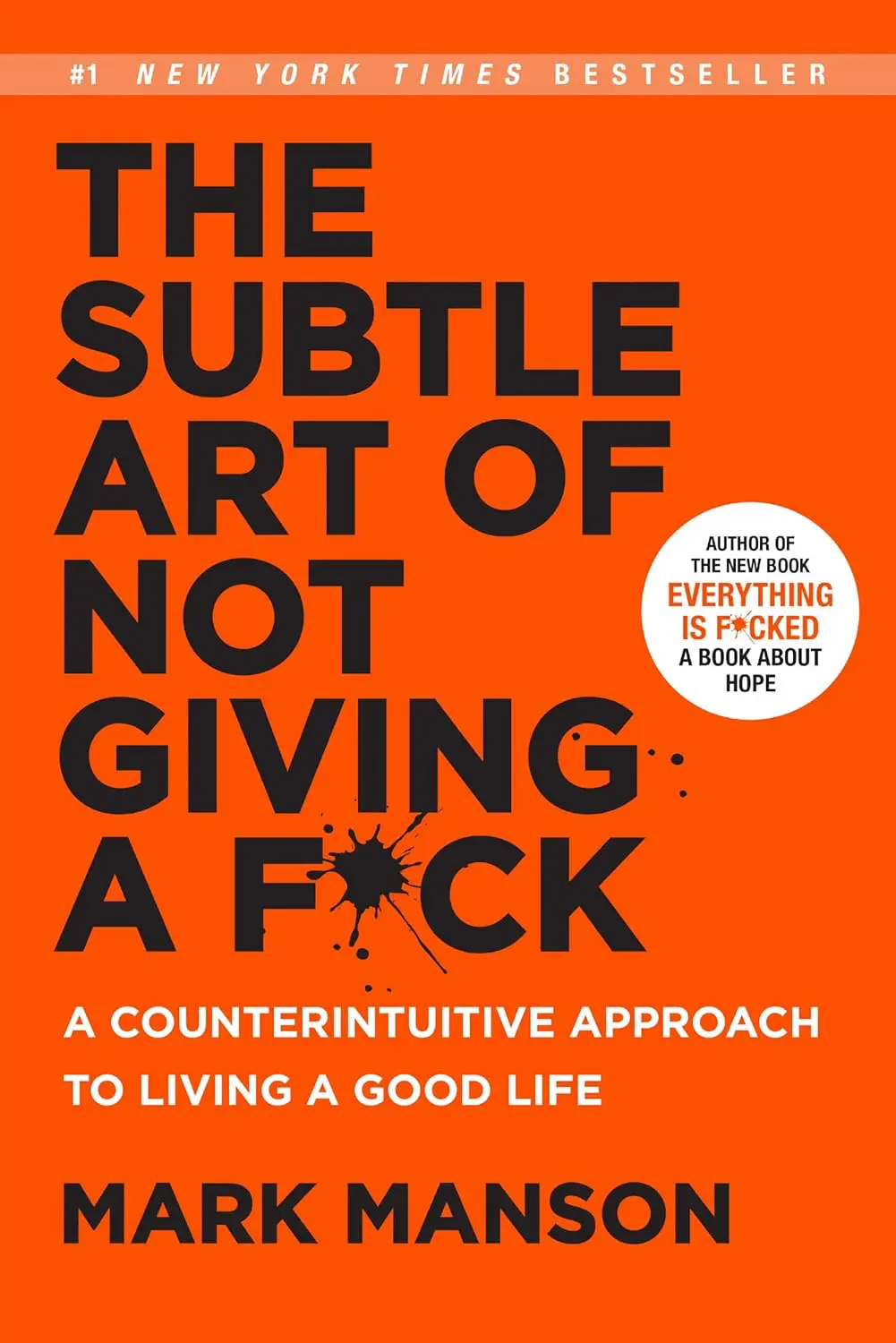
Manson’s premise is that everyone has a limited amount of things they can care about, and most people waste theirs on the wrong things: what strangers think, minor inconveniences, social media comparisons, the pursuit of constant happiness. The result is a kind of exhaustion that comes from caring too much about too many things that do not matter.
The alternative is not apathy. It is selectivity. Manson argues for choosing your struggles deliberately. Every worthwhile outcome comes with a corresponding set of problems, and the question is not “what do you want?” but “what problems are you willing to tolerate?” Someone who wants to start a company but hates uncertainty has a mismatch between desire and tolerance. Someone who wants to be fit but hates the gym has the same problem.
The book covers several ideas from philosophy and psychology, repackaged in blunt, profane language. The “feedback loop from hell” (feeling bad about feeling bad) comes from mindfulness traditions. The idea that values determine experience comes from Stoicism. The emphasis on personal responsibility echoes existentialist philosophy. Manson does not cite his sources as carefully as an academic would, but the ideas underneath the provocative tone are solid.
The writing is conversational, funny, and deliberately abrasive. Manson built his audience through a blog that used the same style, and the book reads like an extended blog post. This works for readers who respond to directness and alienates readers who prefer a more measured tone.
For founders, the most applicable idea is about choosing your struggles. Building a company means accepting specific types of suffering: financial risk, long hours, rejection, uncertainty about whether your product matters. If you are not willing to endure those specific problems, no amount of motivation will help.
The book has sold over 10 million copies. At about 220 pages, it is a fast read. The main criticism is that the contrarian packaging can feel like a gimmick, and some of the advice (“not everything is your fault, but everything is your responsibility”) is less original than the branding suggests. But as a reframe on what to care about, it lands.
