
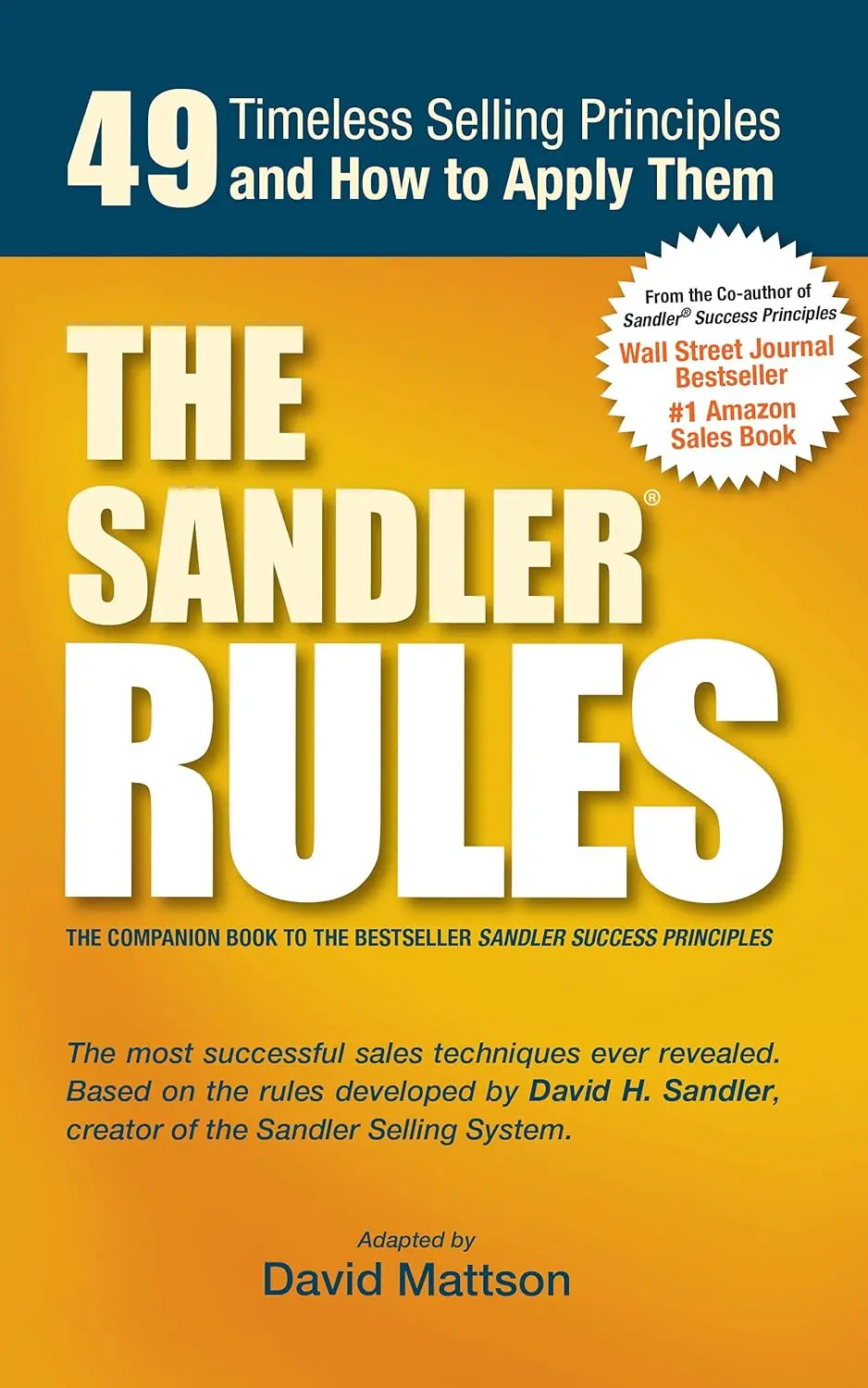
The Sandler Rules compiles 49 selling principles from the Sandler Selling System, a methodology developed by David Sandler in the 1960s and still taught through a global network of training centers. The book is organized as a series of short chapters, each presenting one rule with an explanation, a story, and guidance on how to apply it.
The Sandler approach is built on a different philosophy than traditional sales training. Where most sales methods teach you to overcome objections, Sandler teaches you to surface them early. Where most methods push toward a close, Sandler teaches you to let the prospect close themselves or walk away. The underlying idea is that sales should be a conversation between equals, not a battle where the salesperson tries to overpower the buyer’s resistance.
Some of the rules are counterintuitive. “Don’t spill your candy in the lobby” means don’t volunteer your full presentation before you’ve qualified whether the prospect actually has a problem you can solve. “No mutual mystification” means both parties should be clear about where they stand rather than playing games. “You can’t sell anybody anything” means you can only help people buy what they already want; trying to sell them something they don’t want is a waste of everyone’s time.
For founders doing their own sales, the Sandler approach is particularly well-suited because it avoids the aggressive tactics that technical founders often find distasteful. The emphasis on qualification, meaning figuring out early whether a deal is real or not, saves time that would otherwise be spent chasing prospects who were never going to buy. The “upfront contract” technique, where you agree at the start of every meeting on what will happen and what each party will do next, is simple and effective.
The writing is straightforward and the short-chapter format makes it easy to read one rule at a time and apply it before moving on. The book works well as a reference that you return to as specific selling situations arise. Some readers will want more depth on certain rules than the format allows, and the Sandler methodology books that go deeper on specific topics (like Sandler’s You Can’t Teach a Kid to Ride a Bike at a Seminar) are useful follow-ups.
