
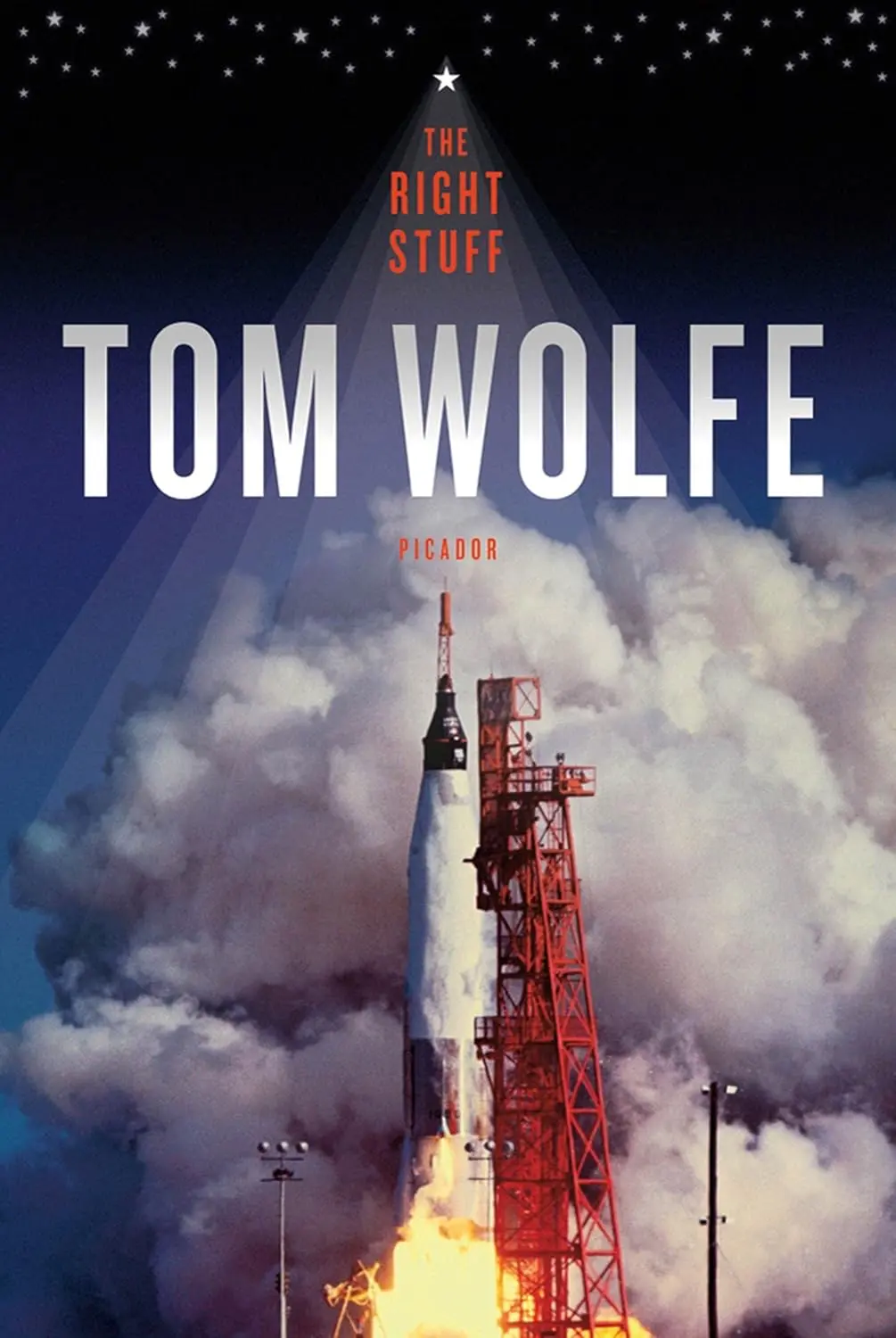
The Right Stuff opens not with space but with test pilots at Edwards Air Force Base in the 1950s, where the fatality rate was roughly one pilot per week. Wolfe describes a culture built around an unspoken hierarchy: the pilots who pushed hardest, flew fastest, and came closest to death without dying had “the right stuff.” Nobody defined it. Everybody knew who had it.
The book then follows the transition from test pilots to astronauts. When NASA selected the Mercury Seven in 1959, the test pilot community was skeptical. The astronauts would be passengers, not pilots. They would sit in a capsule while ground control made the decisions. But the media turned them into national heroes, and the tension between the test pilot culture (where you earned status by risking your life) and the astronaut culture (where you earned status by being famous) runs through the book.
Wolfe’s writing style is distinctive: long, looping sentences, heavy use of italics and exclamation points, sound effects embedded in the prose, and a narrative voice that gets inside the characters’ heads. It is either exhilarating or exhausting depending on your tolerance for stylistic excess.
The book is also about how institutions create narratives that serve their purposes. NASA needed heroes for public support and funding. The press needed stories that sold papers. The astronauts needed to maintain the image that justified their status. Everyone was performing, and Wolfe exposes the gap between the public story and the private reality.
For founders, the book is about ambition, risk tolerance, and the cultures that form around high-stakes performance. The test pilot community’s norms, their refusal to acknowledge fear, their obsession with status, and their willingness to die rather than be seen as weak, are extreme versions of dynamics that exist in any competitive environment.
Elon Musk has cited it. At about 350 pages, the book is Wolfe at his best: reported, detailed, opinionated, and impossible to put down once the momentum builds. It won the National Book Award and remains one of the best pieces of nonfiction about the space program.
