
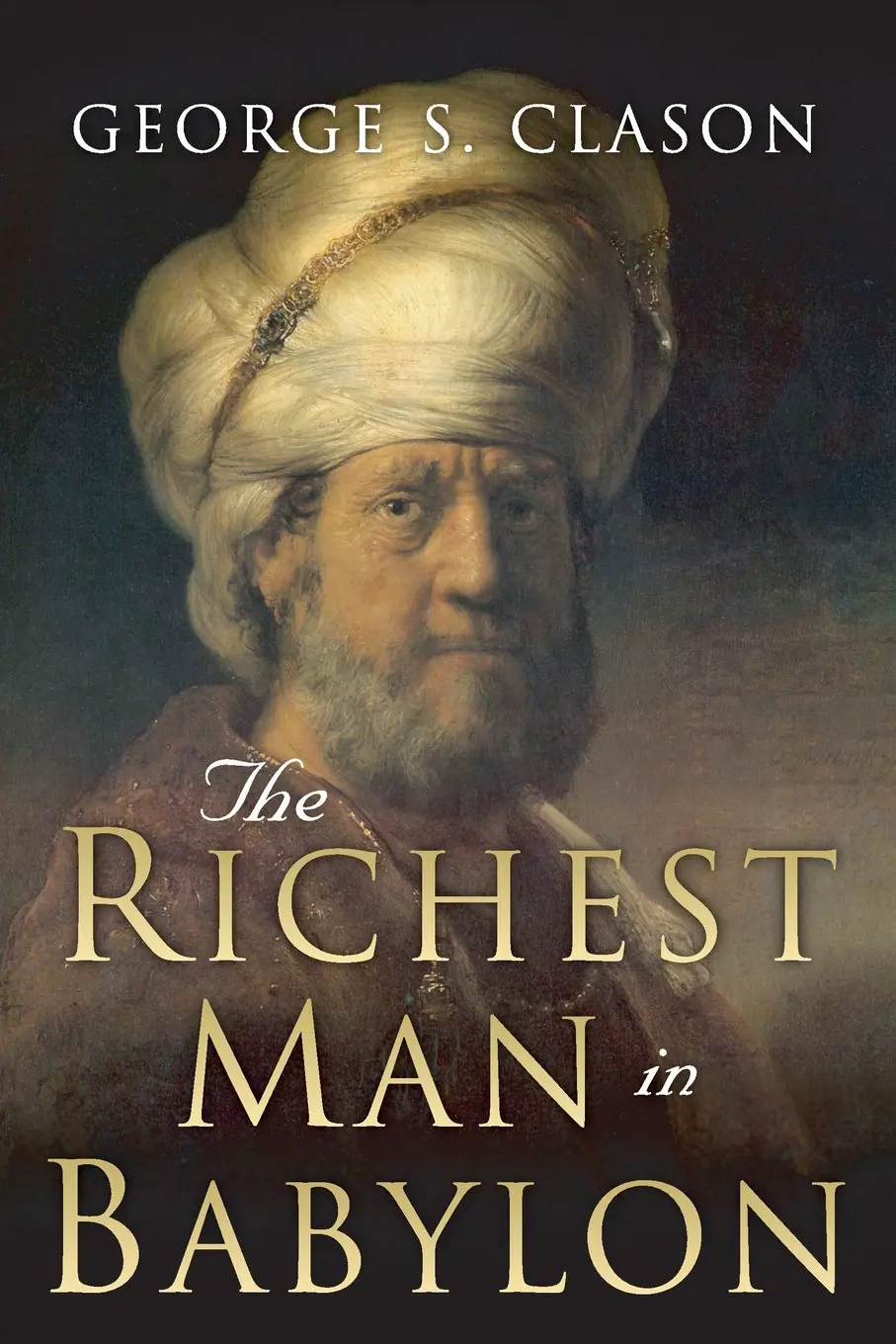
Arkad is the richest man in Babylon. His childhood friends, who had the same opportunities he did, are still poor. They visit him and ask: how did you do it? Arkad tells them. The rest of the book is variations on this setup, with different characters in ancient Babylon learning the same lessons through different stories.
The lessons are: Pay yourself first. Before you pay any bill or buy anything, set aside at least one-tenth of your income. Put your money to work by investing it where it can earn returns. Do not invest in things you do not understand. Seek advice from people who actually handle money, not from people who merely talk about it. Own the roof over your head. Protect your wealth through insurance and diversification. Increase your ability to earn by becoming better at what you do.
That is it. The entire book, stripped to its core, fits in a paragraph. Clason did not discover these principles. They are the fundamentals of personal finance, and they were already old when Babylon was young. What Clason did was wrap them in stories set in an ancient civilization, which made them memorable and gave them a sense of timelessness that a straightforward finance book would not have.
The book was originally a series of pamphlets that Clason, a Colorado businessman, wrote for banks and insurance companies to distribute to their customers. The pamphlets were collected and published as a book in 1926. They have been in print ever since.
The Babylonian setting is not historically rigorous. Clason was not a historian, and the ancient city serves more as a backdrop than as a researched environment. The characters speak in a stilted, formal English that is supposed to sound ancient but mostly sounds like a 1920s American’s idea of how ancient people talked. This either adds to the charm or detracts from it, depending on your tolerance for that sort of thing.
The book has sold millions of copies and is frequently recommended as a first book on personal finance. Dave Ramsey, Robert Kiyosaki, and other financial educators have cited it as an influence. Its strength is not sophistication. It is repetition of fundamentals in a form that is easy to remember and hard to argue with. Save a tenth. Invest carefully. Avoid debt for consumption. Increase your earnings. These rules were true in ancient Babylon, if Babylon’s inhabitants followed them, and they remain true now.
