
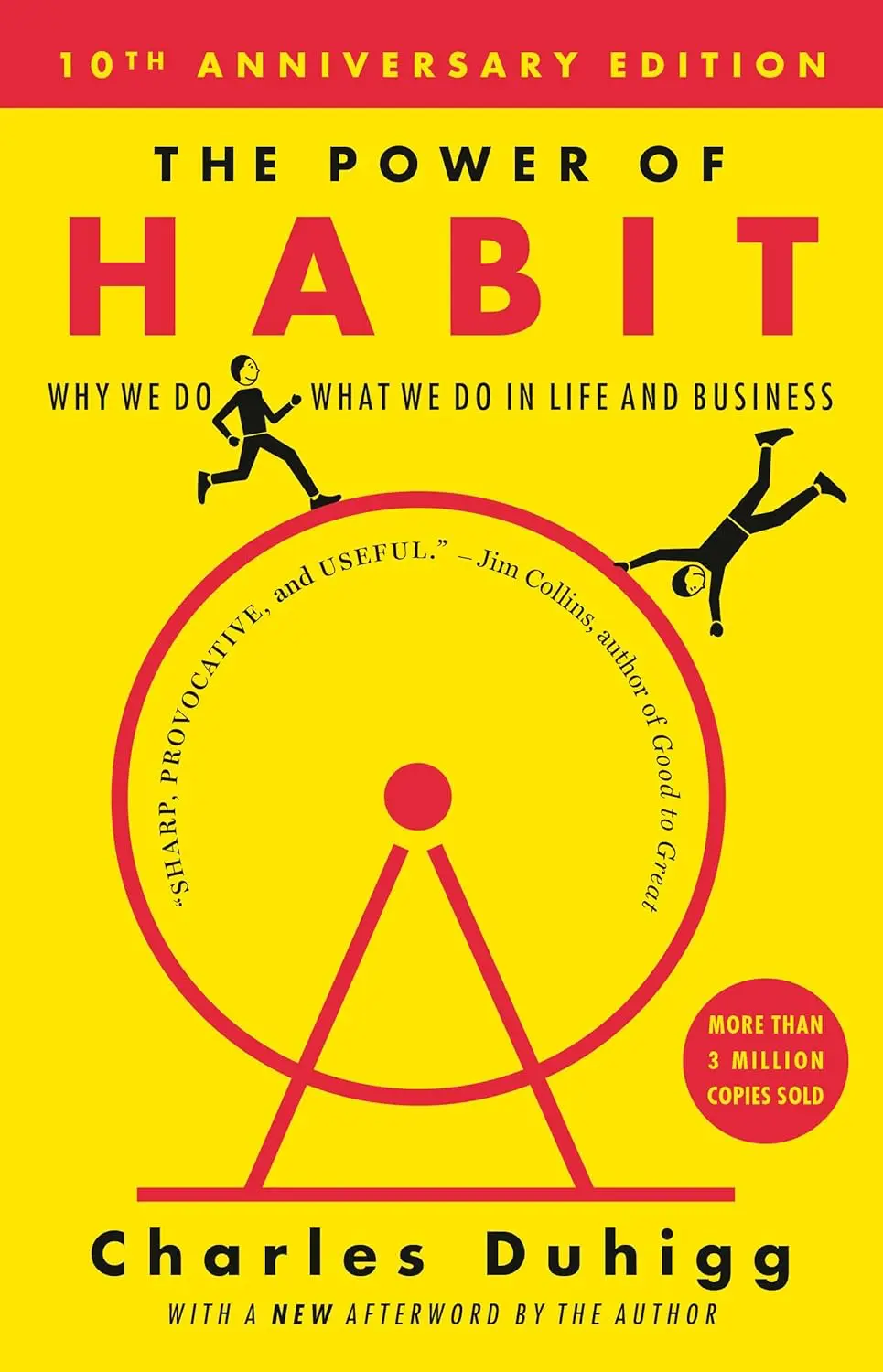
The Power of Habit is organized around a framework Duhigg calls the “habit loop.” Every habit has three components: a cue (the trigger that starts the behavior), a routine (the behavior itself), and a reward (the satisfaction that reinforces it). To change a habit, you keep the cue and the reward but swap the routine.
Duhigg illustrates this with stories from multiple domains. An individual struggling with an afternoon cookie habit discovers the real cue was boredom and the real reward was social interaction, not sugar. Alcoa’s new CEO transformed the company’s culture by focusing obsessively on a single “keystone habit” (worker safety) that cascaded into improvements everywhere else. The civil rights movement succeeded partly because social habits of friendship and community obligation drove participation.
The book is divided into three parts. Part one covers individual habits: how they form, how they work neurologically, and how to change them. Part two covers organizational habits: the routines that companies develop, how some become dysfunctional, and how leaders can reshape them. Part three covers societal habits: how movements spread through weak ties and peer pressure.
Duhigg is a journalist (formerly at The New York Times), and the book reads like a series of well-reported magazine features strung together by the habit loop framework. The writing is clear, the stories are engaging, and the science is presented accessibly without being oversimplified.
For founders, the organizational habits section is the most relevant. Companies develop routines early, and those routines become the culture. Some are productive (how decisions get made, how information flows, how conflicts get resolved). Others are destructive (how blame gets assigned, how bad news gets hidden, how meetings waste time). Understanding the habit loop gives founders a tool for diagnosing and changing these patterns deliberately.
The book has sold over three million copies. Tim Ferriss, Bill Gates, and Arianna Huffington have recommended it. At about 370 pages, it is a reasonable length. The main criticism is that the individual habit-change framework can feel simplistic for deeply entrenched behaviors, but as a starting model for understanding behavior, it is solid.
