
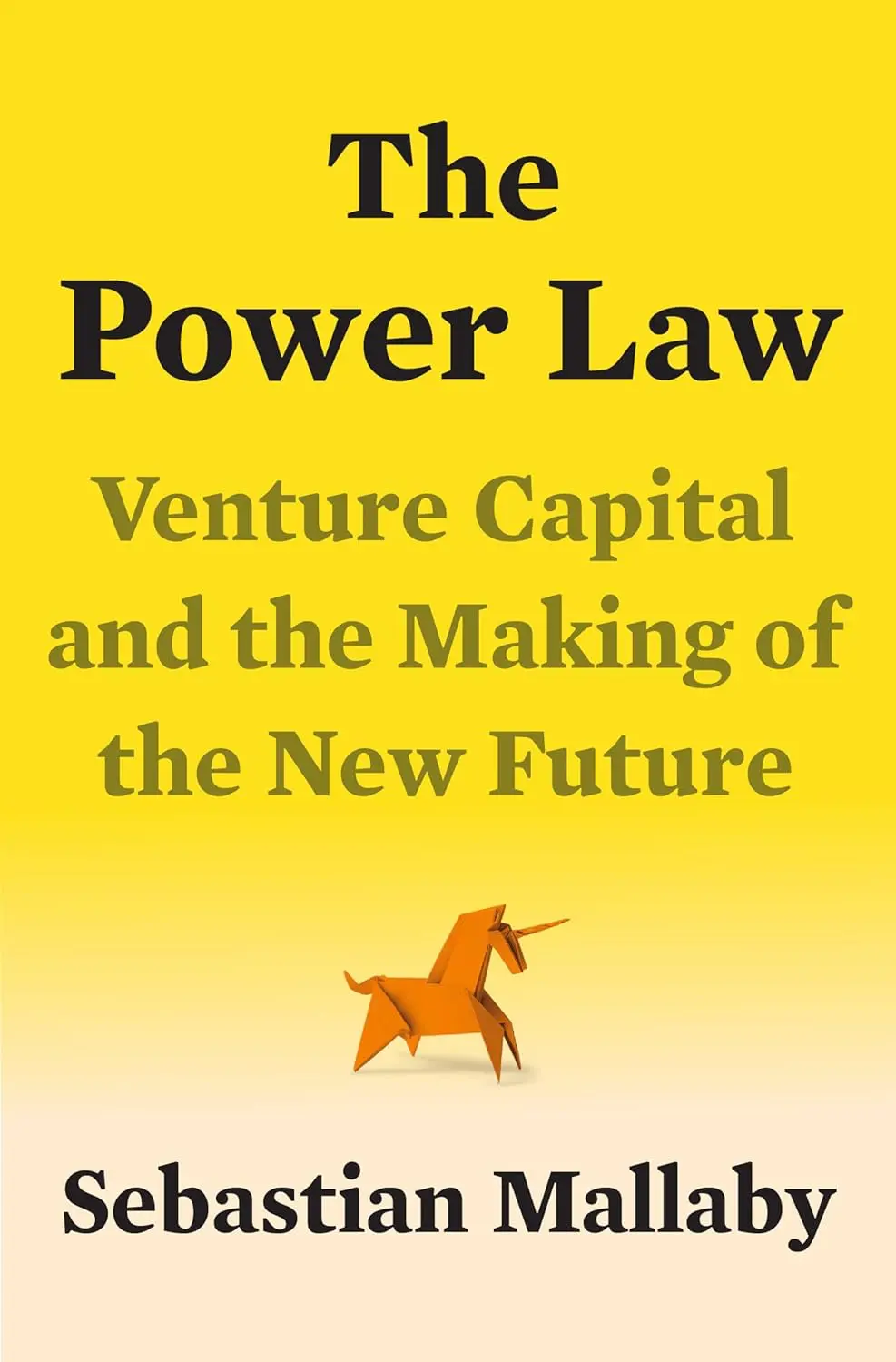
The power law in the title refers to the mathematical distribution that governs venture capital returns: a tiny number of investments produce nearly all the returns. One fund’s performance typically depends on one or two companies. One generation of VC firms is defined by one or two bets. This distribution shapes everything about how the industry operates, from the willingness to fund unlikely ideas to the tolerance for high failure rates.
Mallaby traces the history chronologically. Arthur Rock and the financing of Fairchild Semiconductor in the 1950s. Tom Perkins and Kleiner Perkins in the 1970s. Don Valentine and Sequoia Capital. John Doerr and the internet boom. Peter Thiel and the PayPal Mafia. Yuri Milner and the globalization of VC through Tiger Global and SoftBank.
The reporting is thorough. Mallaby conducted over 300 interviews and had access to internal records from several firms. The stories are specific: how particular investment decisions were made, what the partners argued about, where they were wrong, and where they were lucky. The detail separates this from most VC histories, which tend to rely on the polished narratives firms tell about themselves.
Mallaby also engages with the debate about whether VC actually produces good outcomes for the economy, or whether it primarily enriches a small class of founders and investors while creating companies that extract value from workers and consumers. He does not take a definitive position, but he presents the arguments honestly.
For founders, the book is useful for understanding how VCs think, what motivates their decisions, and why the industry is structured the way it is. If you are raising capital, knowing the economics of the fund you are pitching helps you understand what they need from you.
At about 480 pages, the book is a commitment. Mallaby writes well, and the narrative moves despite the length. It is the most comprehensive history of venture capital available.
