
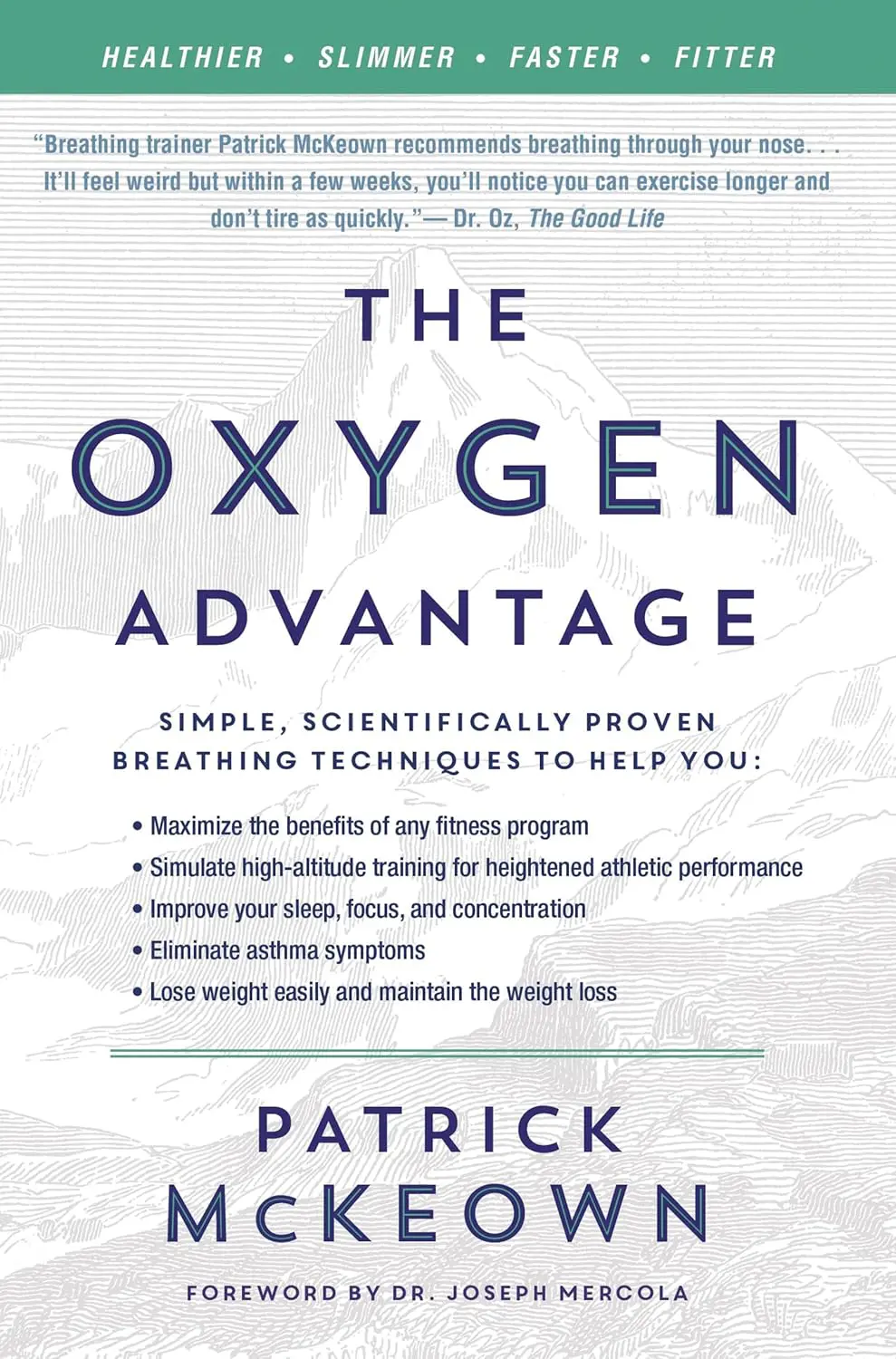
The Oxygen Advantage is Patrick McKeown’s guide to breathing retraining, built on the work of Russian physician Konstantin Buteyko, who argued in the 1950s that chronic overbreathing (breathing more air than your body needs) is the root cause of many health problems. McKeown, a Buteyko practitioner, adapts the method for a general audience and adds specific protocols for athletes and people looking to improve their health.
The core concept is counterintuitive: most people think they need to breathe more deeply to get more oxygen. McKeown argues the opposite. When you breathe too much, you exhale too much carbon dioxide, which actually makes it harder for your blood to release oxygen to your tissues (a phenomenon called the Bohr effect). The fix is to breathe less: slower, through the nose, and with natural pauses between breaths. This increases CO2 tolerance, improves oxygen delivery, and calms the nervous system.
The book introduces the BOLT score (Body Oxygen Level Test), a simple measurement of how long you can comfortably hold your breath after a normal exhale. A BOLT score under 20 seconds indicates chronic overbreathing. McKeown provides a progressive series of exercises to increase this score, starting with basic nasal breathing awareness and moving to reduced breathing during exercise and breath-hold walking.
For founders dealing with stress, poor sleep, or general tension, the breathing exercises are practical and can be done at a desk. McKeown also covers the benefits of mouth taping during sleep (which forces nasal breathing and reduces snoring) and provides specific protocols for different sports and fitness levels.
The writing is clear and the exercises are well-explained with step-by-step instructions. Some of the health claims go further than the published research supports, particularly around weight loss and asthma management, so readers should approach those sections with some skepticism. But the core principles about nasal breathing and CO2 tolerance are well-supported, and the exercises themselves are safe and easy to try. The book pairs well with Breath by James Nestor, which covers similar ground from a journalist’s perspective rather than a practitioner’s.
