
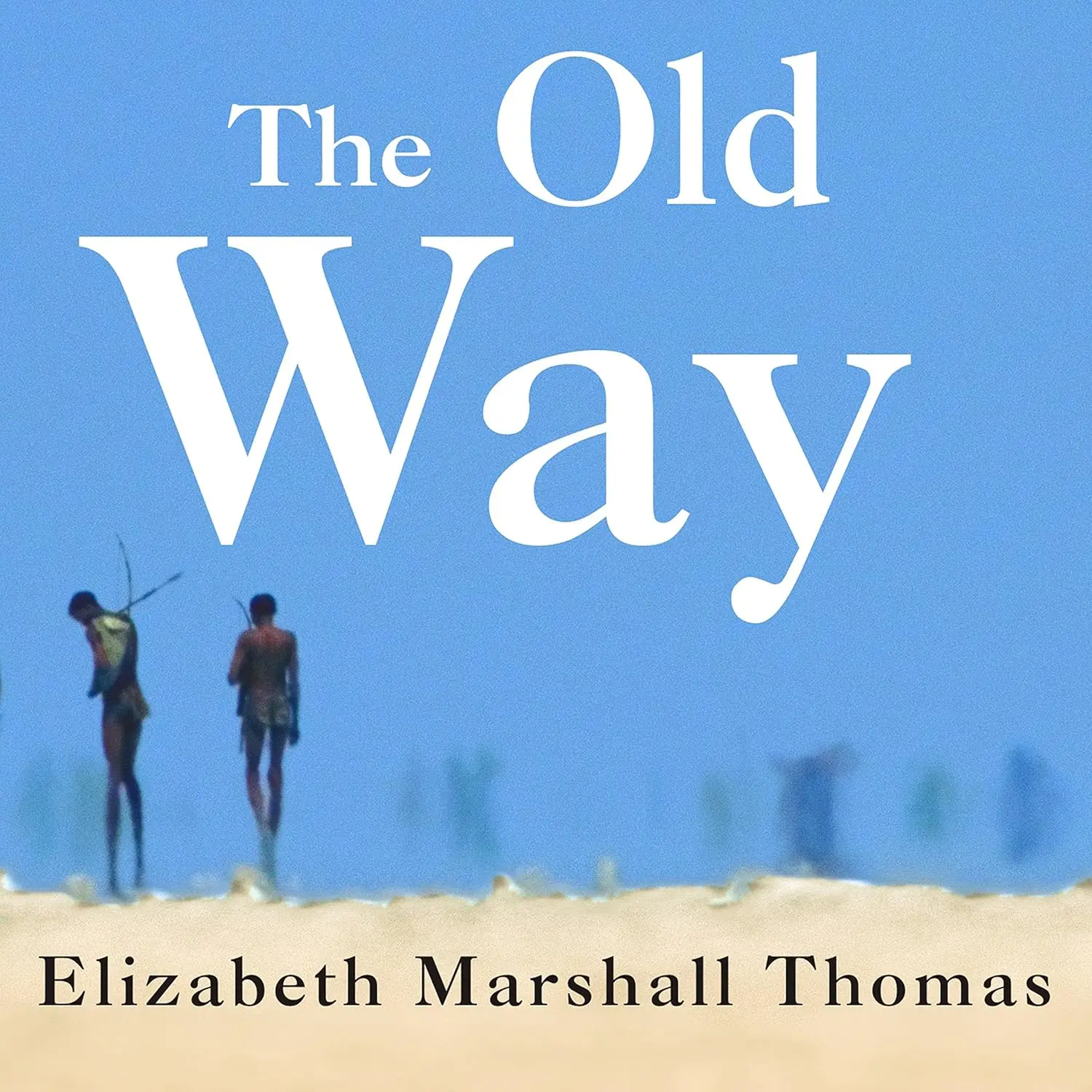
Elizabeth Marshall Thomas was nineteen when her family traveled to the Kalahari Desert in southern Africa in 1950. Her father, Laurence Marshall, had co-founded Raytheon and retired wealthy. He funded an expedition to study the Ju/wasi (also known as the !Kung San or Bushmen), one of the last groups of people on earth still living as hunter-gatherers in the way that all humans lived for the vast majority of the species’ existence. Elizabeth went along and kept watching for the next fifty years.
The Old Way is her account of what she saw. The title refers to the way of life that defined humanity for roughly 150,000 years before agriculture appeared approximately 10,000 years ago. Thomas argues that to understand human nature, you need to understand how people lived during that immensely longer period, not the brief and unusual era of farming, cities, and industry that followed.
The book is organized around daily life. How the Ju/wasi hunted (with poisoned arrows and extraordinary tracking ability). How they gathered plant food (women provided the majority of calories). How they raised children (with almost constant physical contact and no corporal punishment). How they resolved conflict (through talking, sometimes for days, until consensus was reached). How they shared food (meat from a kill was distributed according to a system so specific that everyone knew exactly what they were owed, which prevented the accumulation of surplus and the power imbalances that come with it).
Thomas writes without sentimentality. She does not present the Ju/wasi as noble savages. Life in the Kalahari was hard. Infant mortality was high. Drought could be deadly. Violence existed. But the social structures she describes, egalitarian, consensus-based, built around sharing rather than accumulating, had sustained a population for thousands of years in one of the harshest environments on earth. That fact, in itself, is worth sitting with.
The anthropological value of the book is matched by its literary quality. Thomas is a careful observer and a precise writer. She describes animal behavior, weather patterns, and plant life with the same attention she gives to human relationships. The Kalahari comes alive on the page in a way that makes the later sections, when modern society begins to encroach and the old way begins to disappear, genuinely painful to read.
Thomas also wrote The Harmless People, an earlier and shorter account of the same community, published in 1959. The Old Way is the deeper, more reflective work, written with the benefit of decades of additional observation and thought.
The book sits at the intersection of anthropology, natural history, and memoir. It has been praised by readers ranging from archaeologists to people interested in what human life looked like before the assumptions of modern civilization took hold.
