
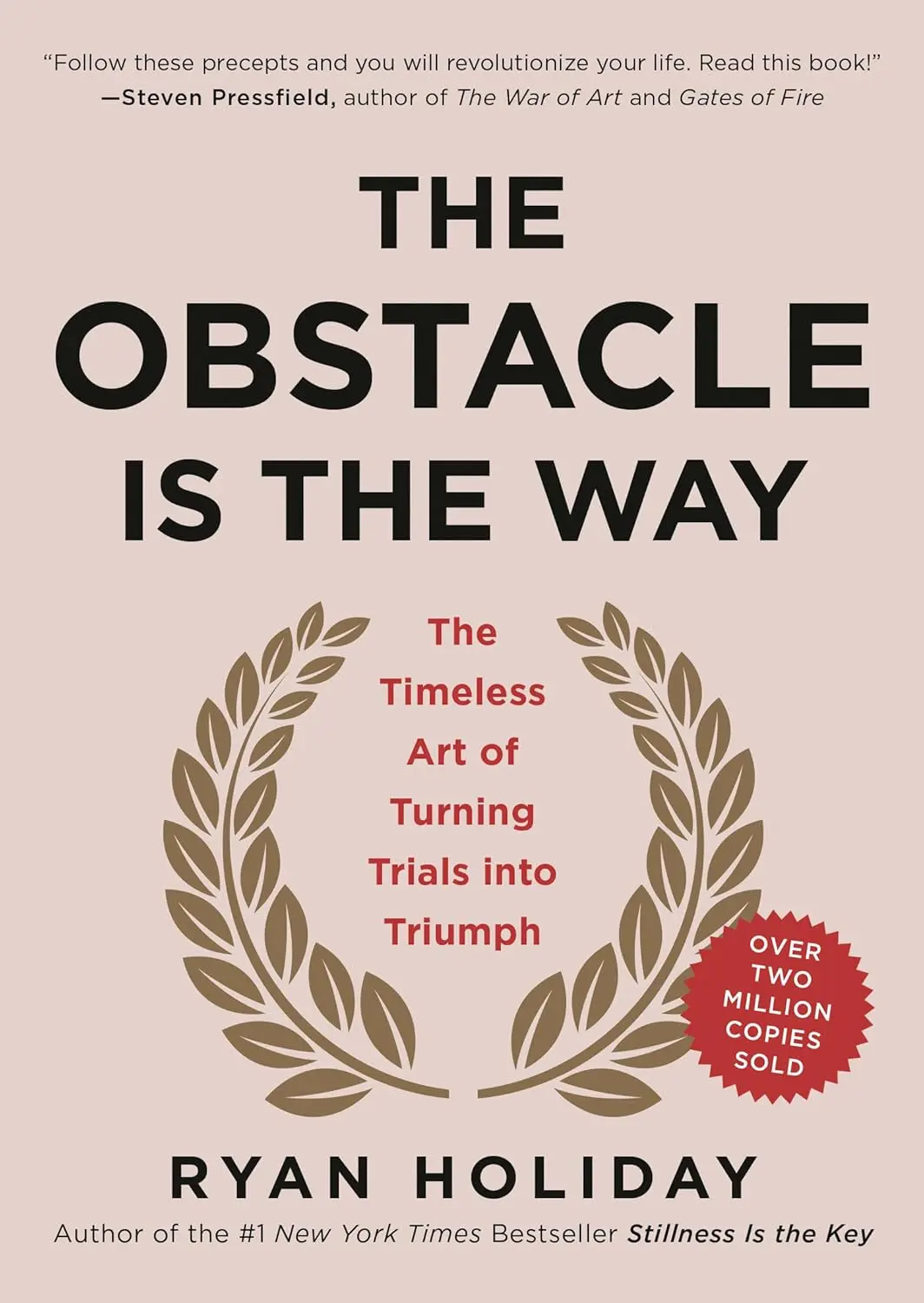
The Obstacle Is the Way takes its title from Marcus Aurelius and applies the Stoic idea that what stands in the way becomes the way. The book is organized into three sections: Perception (how you see the obstacle), Action (what you do about it), and Will (how you endure what you cannot change).
Holiday fills each section with historical examples. Ulysses S. Grant used his failure at every civilian job to develop the toughness he needed as a general. Amelia Earhart used sexist gatekeeping as motivation to fly higher and farther. Thomas Edison treated his factory burning down as an opportunity to rebuild better. The examples span centuries and industries, and Holiday ties each one back to a specific Stoic principle.
The Perception section argues that most obstacles are not as bad as they initially appear. Panic, self-pity, and catastrophizing make problems feel larger and more permanent than they are. The Stoic practice of separating what happened from your emotional reaction to what happened creates space for clear thinking.
The Action section covers the discipline of doing something productive about the obstacle rather than complaining about it or waiting for it to go away. Holiday emphasizes persistence, creative problem-solving, and the willingness to try approaches that seem unconventional.
The Will section is about endurance: accepting that some situations cannot be fixed and must simply be survived. This is the hardest part of Stoicism for most people, because it requires sitting with discomfort rather than fighting or fleeing.
For founders, the book’s message is that every difficulty contains a potential advantage, but only if you approach it with the right mindset. Cash running out forces creativity. A failed product launch produces customer data you would not have gotten otherwise. Losing a key hire forces you to rethink your team structure.
Tim Ferriss, James Clear, and Arnold Schwarzenegger have recommended the book. At about 200 pages, it is a fast read. Holiday’s writing is clean and punchy, and the historical stories are well-chosen. The book was published in 2014 and has become one of the most widely read introductions to Stoic philosophy in business circles.
