
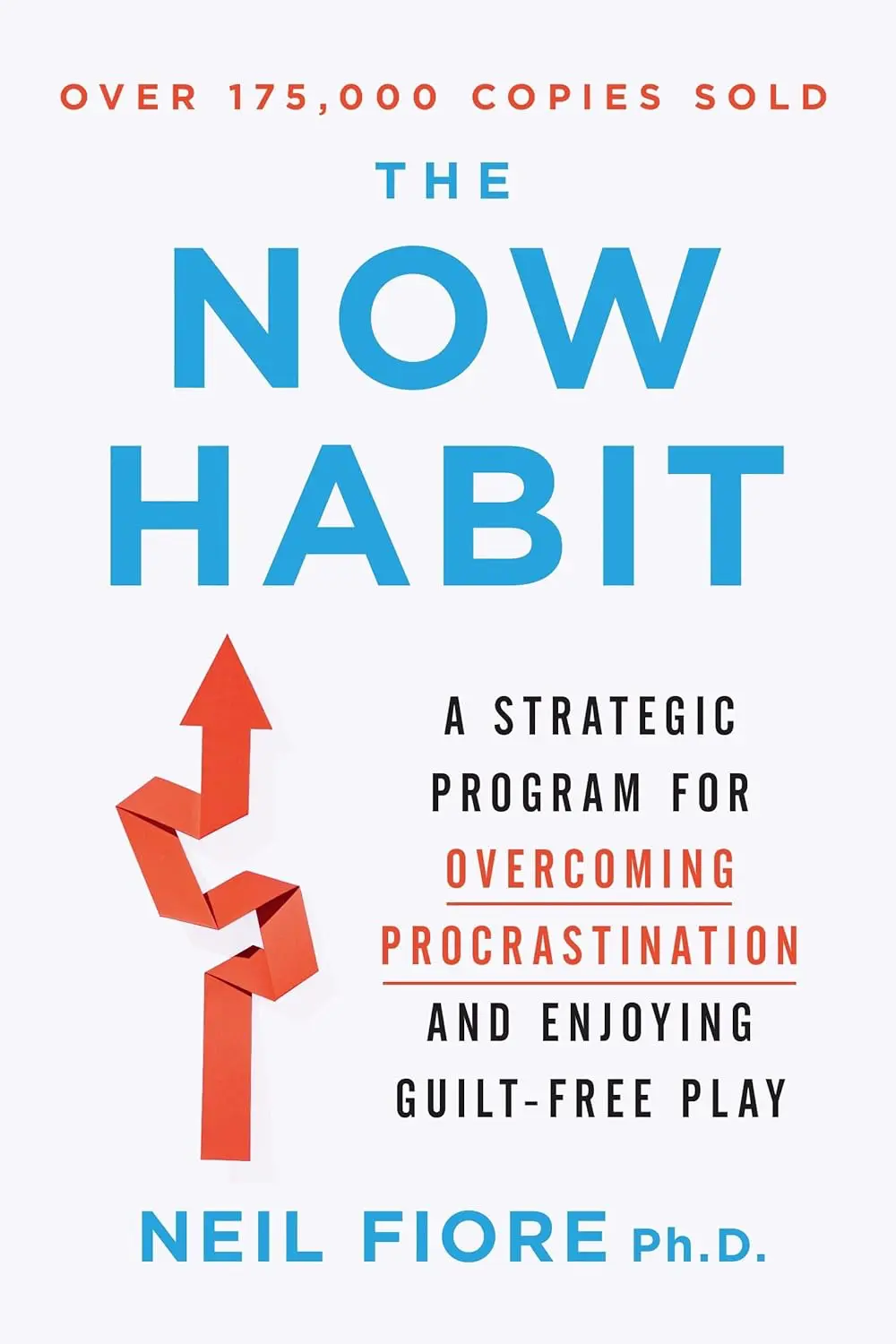
The Now Habit takes a different approach to procrastination than most productivity books. Neil Fiore, a psychologist who has treated procrastinators for decades, argues that procrastination is not a sign of laziness or poor discipline. It is a coping strategy, usually a way of dealing with anxiety about the task, perfectionism about the result, or resentment about being forced to do work that feels meaningless.
Fiore’s approach starts by understanding why you procrastinate rather than trying to force yourself to stop. He identifies several common patterns: people who procrastinate because they fear failure, people who procrastinate because they resent the obligation, and people who procrastinate because they’ve tied their self-worth to the quality of their output and are terrified of producing anything less than perfect.
The practical centerpiece is the Unschedule, a weekly calendar where you first block in all your committed non-work time: exercise, meals, social activities, hobbies, rest. Only after filling in leisure do you add work blocks, and only in 30-minute increments that you record after completing them, not before. The logic is that most procrastinators respond badly to a schedule full of work obligations, which triggers the very anxiety that leads to avoidance. By scheduling play first, you remove the feeling that your entire life is one unbroken stretch of demands.
For founders, who often struggle with specific types of procrastination (avoiding the sales call, putting off the difficult conversation, delaying the strategic decision that feels too big), Fiore’s framework is more useful than simple “eat the frog” advice. Understanding why you’re avoiding something is the first step to actually doing it.
The book was first published in 1988 and has been updated, but the core ideas haven’t changed. The writing is warm and psychologically grounded. Fiore writes like a therapist, which means the tone is supportive rather than demanding. Some readers will want a harder push. Others will find that the gentle approach is exactly what they need, since the problem was never lack of motivation but too much pressure.
