
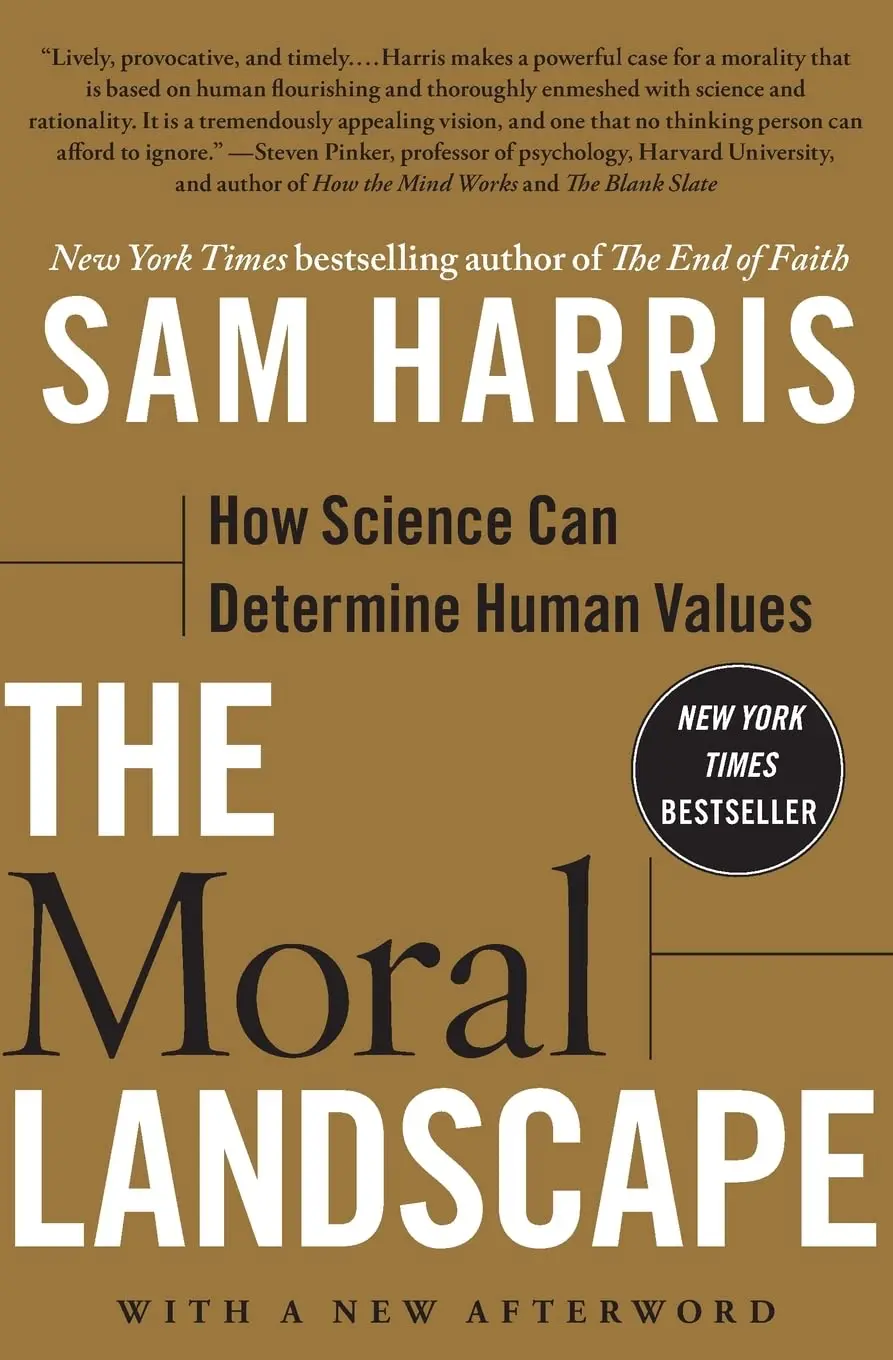
The book proposes that moral questions are questions about the well-being of conscious creatures, and that science can, at least in principle, provide evidence about what promotes or diminishes well-being. If this is true, then there are objectively better and worse ways to organize a society, raise children, and treat other people, even if we cannot yet measure all the relevant variables.
Harris uses the metaphor of a landscape with peaks (states of maximum well-being) and valleys (states of suffering). There may be multiple peaks, meaning multiple ways of living well. But there are also clear valleys: societies that stone women for adultery, that practice female genital mutilation, or that burn witches are not on a peak. The claim is not that there is one right way to live, but that some ways are clearly better than others and that science can help identify which.
The book is partly a philosophical argument and partly a polemic against moral relativism (the position that no culture’s values are better than another’s). Harris argues that this position is both logically incoherent and practically dangerous, because it prevents us from criticizing genuine harm.
Harris also addresses the “is-ought” problem (David Hume’s argument that you cannot derive moral conclusions from factual premises). His response is that the distinction collapses once you accept that morality is about well-being, because well-being is a factual matter that can be studied.
For business readers, the book is relevant to how companies think about ethics. Is ethics a matter of compliance (following rules) or a matter of outcomes (promoting well-being)? Harris’s framework suggests the latter, which implies that companies should evaluate their impact on stakeholders empirically rather than relying on industry norms or legal minimums.
At about 290 pages, the book is clearly written. Harris is a skilled communicator who can make philosophical arguments accessible without oversimplifying them. The book generated significant debate among philosophers, some of whom agree with Harris’s conclusion but disagree with his arguments.
