
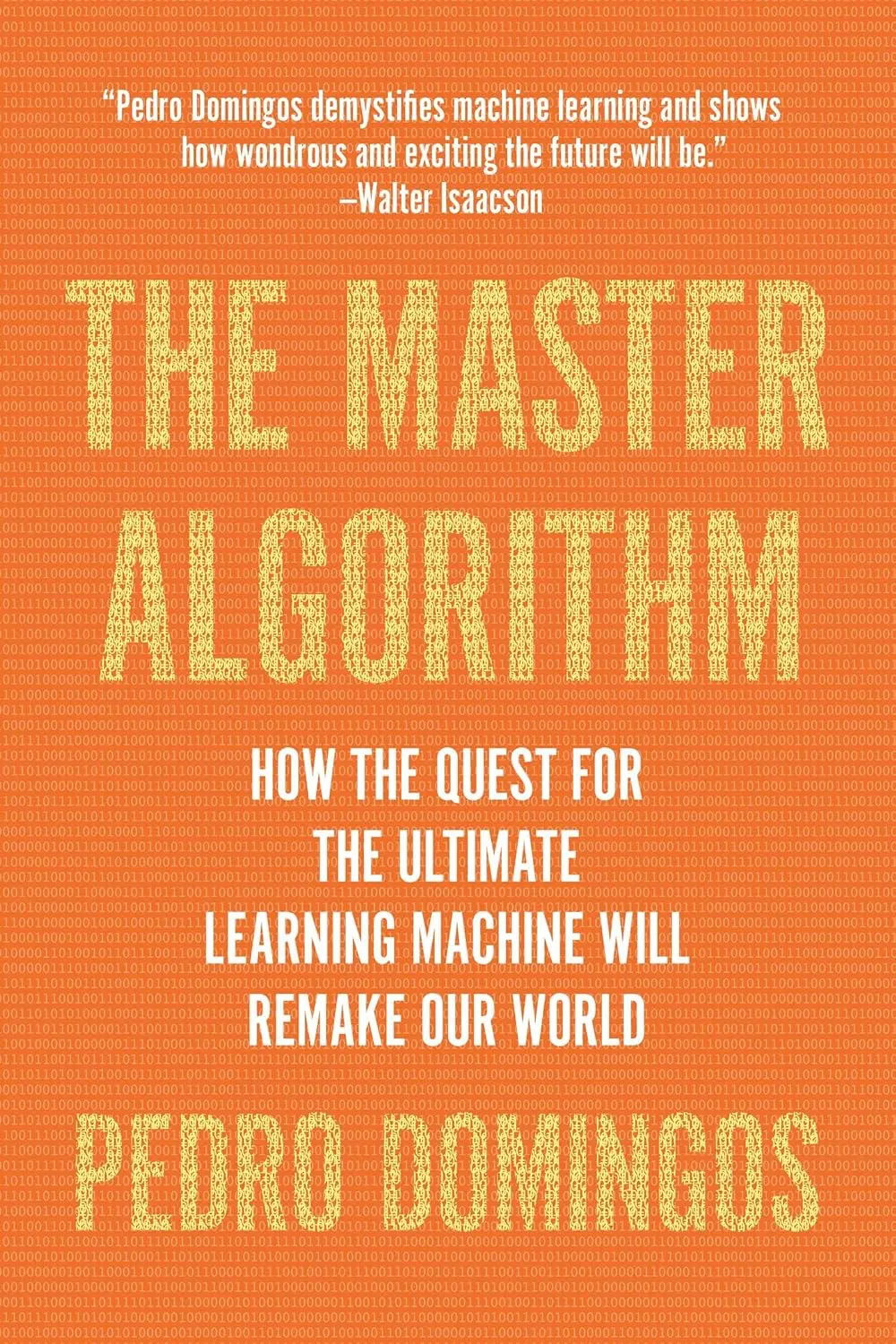
The Master Algorithm is Pedro Domingos’s survey of the machine learning field, organized around five “tribes” that have each approached the problem of learning from data differently. The Symbolists use logic and rules. The Connectionists use neural networks inspired by the brain. The Evolutionaries use genetic algorithms modeled on natural selection. The Bayesians use probabilistic reasoning. The Analogizers use similarity-based methods like nearest-neighbor and support vector machines.
Domingos explains each approach clearly enough for a non-technical reader to follow, using analogies and examples rather than equations. He covers what each tribe does well and where it struggles, and argues that the biggest breakthroughs will come from combining insights from all five into a unified learning algorithm, the “master algorithm” of the title.
The practical sections cover how machine learning already affects daily life: spam filters, recommendation engines, drug discovery, fraud detection, and targeted advertising. Domingos also speculates about where the field is heading, including the possibility of a machine that can learn anything a human can learn, given enough data.
For founders building products that use machine learning, the book provides a useful map of the field. Understanding the difference between a neural network approach and a Bayesian approach, and knowing when each is appropriate, helps you have better conversations with your technical team and make better decisions about which problems are worth throwing ML at.
The book was published in 2015, before the current deep learning boom, and some of the specific predictions about which approaches would dominate have not played out exactly as Domingos expected. Neural networks (the Connectionist approach) have won more battles than the book anticipated. But the broader survey of the field and the argument for combining approaches remain relevant.
The writing is engaging and Domingos has a flair for metaphor. He occasionally overpromises on how close the master algorithm is, which some reviewers have criticized. But as an accessible introduction to the different ways machines can learn from data, the book has held up well and is still recommended by many people in the field.
