
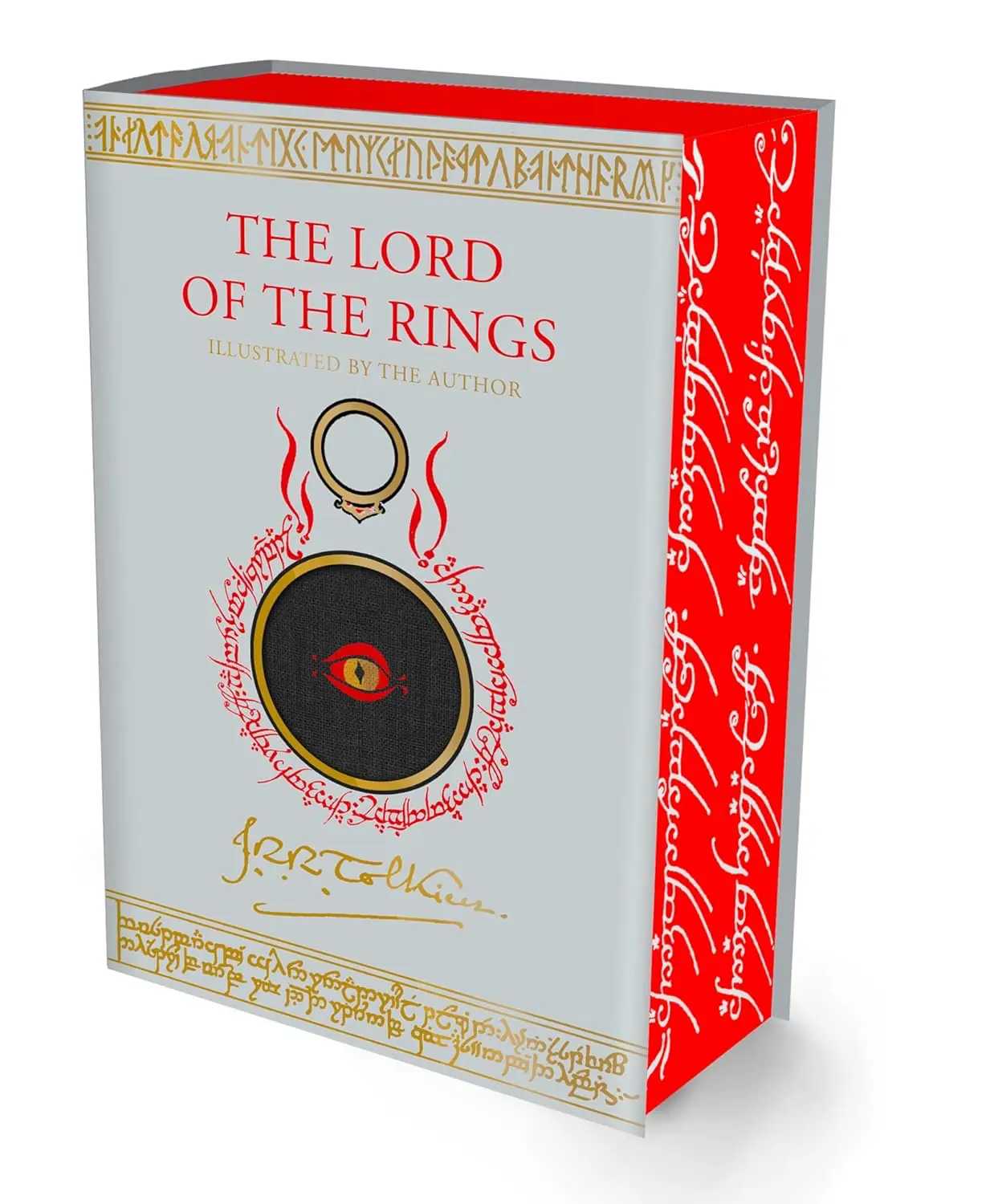
The Lord of the Rings was published in three volumes between 1954 and 1955, but it is a single continuous story. Frodo Baggins, a small hobbit with no military training, no political power, and no particular qualifications, is given the task of destroying the One Ring, the most dangerous weapon in Middle-earth. His journey takes him across a continent, through wars, betrayals, and moral tests, accompanied by a fellowship that fractures and reforms along the way.
The reason this book shows up on founder reading lists, despite being a fantasy novel, is the underlying structure of the story. Frodo is overmatched for the task he is given. He does not succeed through brilliance or strength. He succeeds through persistence, the support of others, and sheer refusal to quit. The ring itself is a metaphor for power that corrupts anyone who tries to wield it. Leaders who start out with good intentions are destroyed by the temptation to control others.
Tolkien was a linguist and medievalist, and the depth of the world he built is part of what gives the story its weight. Middle-earth has thousands of years of history, multiple languages, and a moral framework drawn from Tolkien’s Catholic faith and his experience in World War I. The story does not shy away from loss. Major characters die. The victory is bittersweet. The hobbits return home changed in ways that make it impossible to go back to who they were before.
For business readers, the appeal is partly the themes (persistence against long odds, the danger of power concentration, the importance of a team with diverse strengths) and partly the experience of being absorbed in a story so completely that it changes how you see your own challenges. Elon Musk, Peter Thiel, Reid Hoffman, and Paul Graham have all named it as a favorite or influence.
The book is long, about 1,200 pages across the three volumes. Tolkien’s prose is deliberate and sometimes slow by modern standards, with long descriptions of scenery and songs. But for readers who commit to it, the payoff is a story that stays with you. It is one of the best-selling novels ever written, with over 150 million copies sold.
