
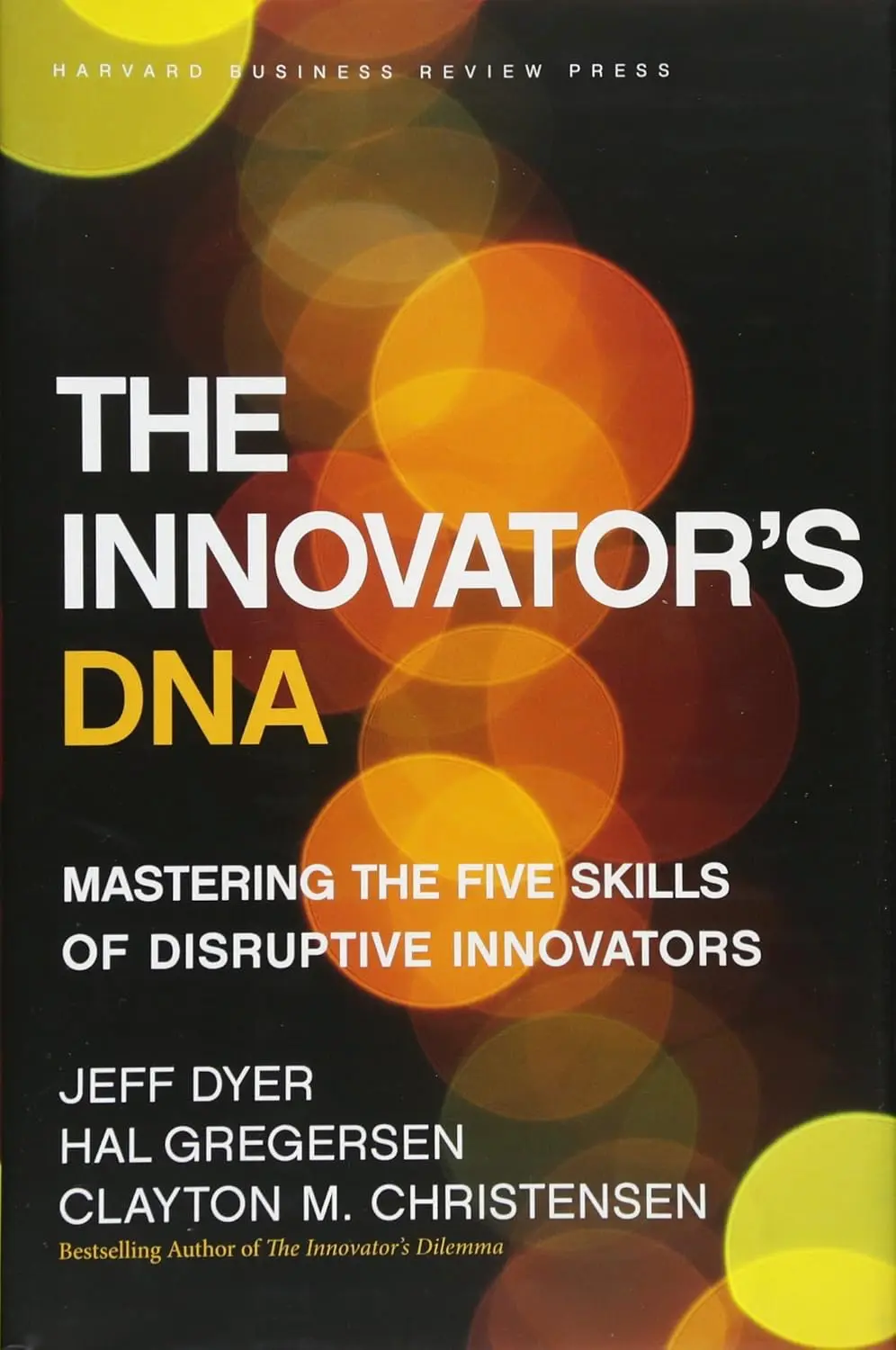
The Innovator’s DNA is based on an eight-year study of approximately 500 innovators and 5,000 executives. The research identified five “discovery skills” that innovative entrepreneurs practiced far more often than typical executives.
Associating means connecting ideas from unrelated fields. Bezos drew on concepts from biology and computer science to design Amazon’s organizational structure. Benioff combined the software delivery model of consumer websites with enterprise software to create Salesforce. The ability to see connections across domains is the most common trait among successful innovators, and it is powered by the other four skills.
Questioning means challenging assumptions by asking “why?” and “what if?” and “why not?” Innovators ask questions that others consider naive or irrelevant, and those questions often expose opportunities hidden inside taken-for-granted assumptions.
Observing means watching how customers, products, and processes actually work in real-world settings, rather than relying on reports and data. Many breakthrough ideas came from founders who noticed small behaviors or frustrations that surveys and focus groups would never capture.
Networking means seeking out people with different perspectives specifically to learn from them, not just to advance your career. Innovators build networks that span industries, functions, and geographies, which feeds the associating skill.
Experimenting means trying things to see what happens. Prototyping, running pilots, visiting new countries, taking apart products, and building side projects all count. Innovators treat the world as a laboratory.
For founders, the practical value is that these skills are behaviors, not traits. You can practice them deliberately. The book includes self-assessment tools and exercises for developing each skill.
At about 300 pages, the book is clearly written. The research base gives it more weight than typical innovation books that rely on anecdotes. Christensen’s involvement connects it to his disruption theory, adding another layer of credibility.
