
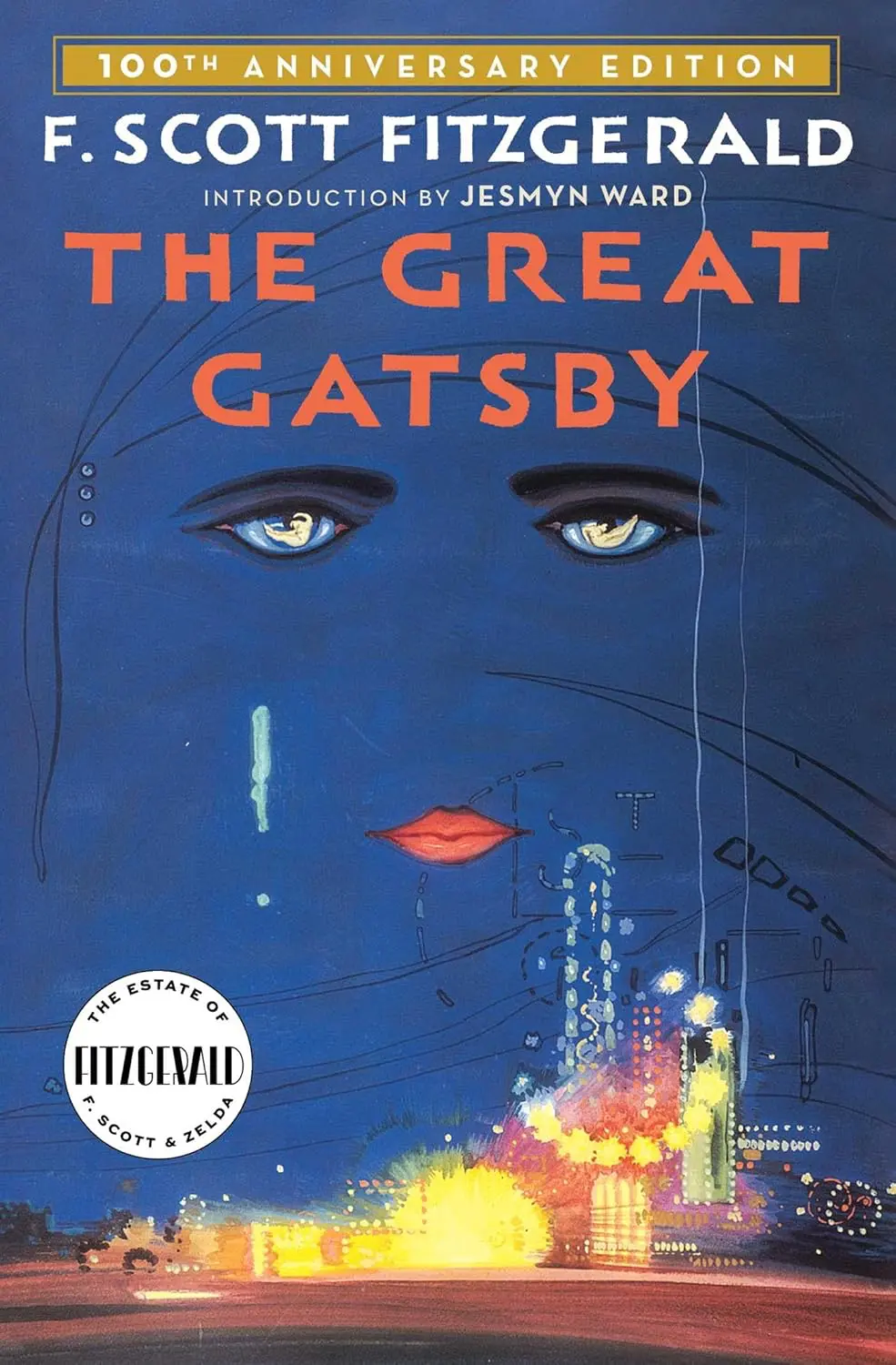
The Great Gatsby is set on Long Island in the summer of 1922 and narrated by Nick Carraway, a bonds salesman who moves next door to Jay Gatsby, a fabulously wealthy man who throws enormous parties every weekend. Gatsby’s wealth is new and his past is murky. Gradually, Nick learns that Gatsby’s entire lifestyle, the mansion, the parties, the carefully constructed persona, exists for a single purpose: to reunite with Daisy Buchanan, a woman Gatsby loved five years earlier who married someone richer while he was away at war.
The novel is short, under 200 pages, and every sentence carries weight. Fitzgerald’s prose is often cited as some of the finest in American literature, and the economy of the writing means that details that seem decorative are usually doing structural work.
The story functions as a critique of the American dream. Gatsby believes that with enough money and effort, he can recreate the past and win back what he lost. The tragedy is that what he lost never existed the way he remembers it. Daisy is not the ideal he built in his mind. The green light across the bay that he reaches for is a symbol that recedes the closer you get to it.
For business readers, The Great Gatsby resonates because the tension between ambition and satisfaction is familiar. Many founders are Gatsby in some way: building something ambitious, driven by a vision of how things should be, willing to sacrifice everything for it. The question the book asks is: what happens when you get what you wanted and it is not what you thought?
The book has sold over 25 million copies and is regularly taught in American high schools, which means many readers encountered it before they were old enough to appreciate it. Reading it as an adult, especially as someone building something, hits differently. Bill Gates, Barack Obama, and Jay-Z have all named it among their favorites.
At under 200 pages, it can be read in an evening. The 1925 publication date has not dulled its relevance. If anything, the questions it raises about wealth, identity, and self-invention are more applicable now than they were a century ago.
