
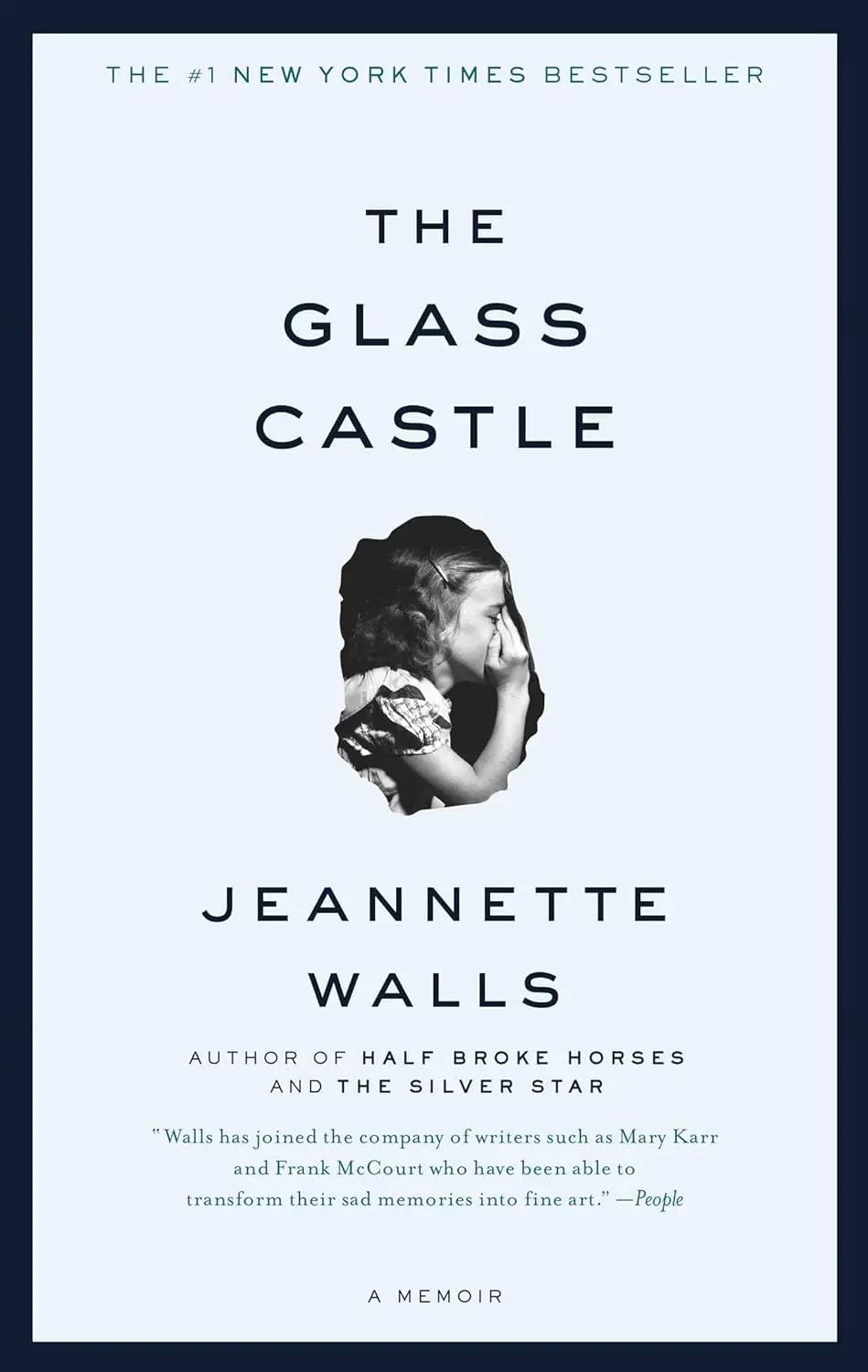
The Glass Castle is Jeannette Walls’s memoir of growing up with parents who alternated between being wildly entertaining and dangerously negligent. Her father, Rex Walls, was a charming, self-taught engineer who could explain the stars and build elaborate plans for a glass castle he was always about to start constructing. He was also an alcoholic who regularly moved the family in the middle of the night to avoid paying rent. Her mother, Rose Mary, was a painter who treated motherhood as an inconvenience and once told the children to fend for themselves because she needed to work on her art.
The family moved constantly through desert towns in the Southwest, living in houses without heat, plumbing, or enough food. Walls and her siblings learned to scavenge, go hungry, and take care of each other when their parents couldn’t or wouldn’t. The children eventually made their way to New York City, where Walls built a career as a journalist while her parents became homeless by choice, living in an abandoned building in lower Manhattan.
What makes the memoir work is the absence of self-pity. Walls writes about terrifying situations, a house fire when she was three, her father pulling her out of school and driving the family cross-country on a whim, being hungry for weeks at a time, with a calm, factual clarity that lets the reader feel the shock she has long since processed. She also captures the genuine appeal of her parents: Rex was brilliant and made his children feel like anything was possible, at least when he was sober.
For founders and driven people, the book raises uncomfortable questions about the line between visionary ambition and irresponsibility. Rex Walls had grand plans and real intelligence. What he lacked was the follow-through to turn any of it into reality for the people depending on him. The gap between what he promised and what he delivered is a cautionary tale that applies well beyond parenting.
The writing is direct and restrained. Walls lets the events speak for themselves without adding commentary or analysis. The book reads fast and is hard to put down once the family dynamics take hold. It was a massive bestseller and was adapted into a film, but the book is significantly more powerful than the adaptation.
