
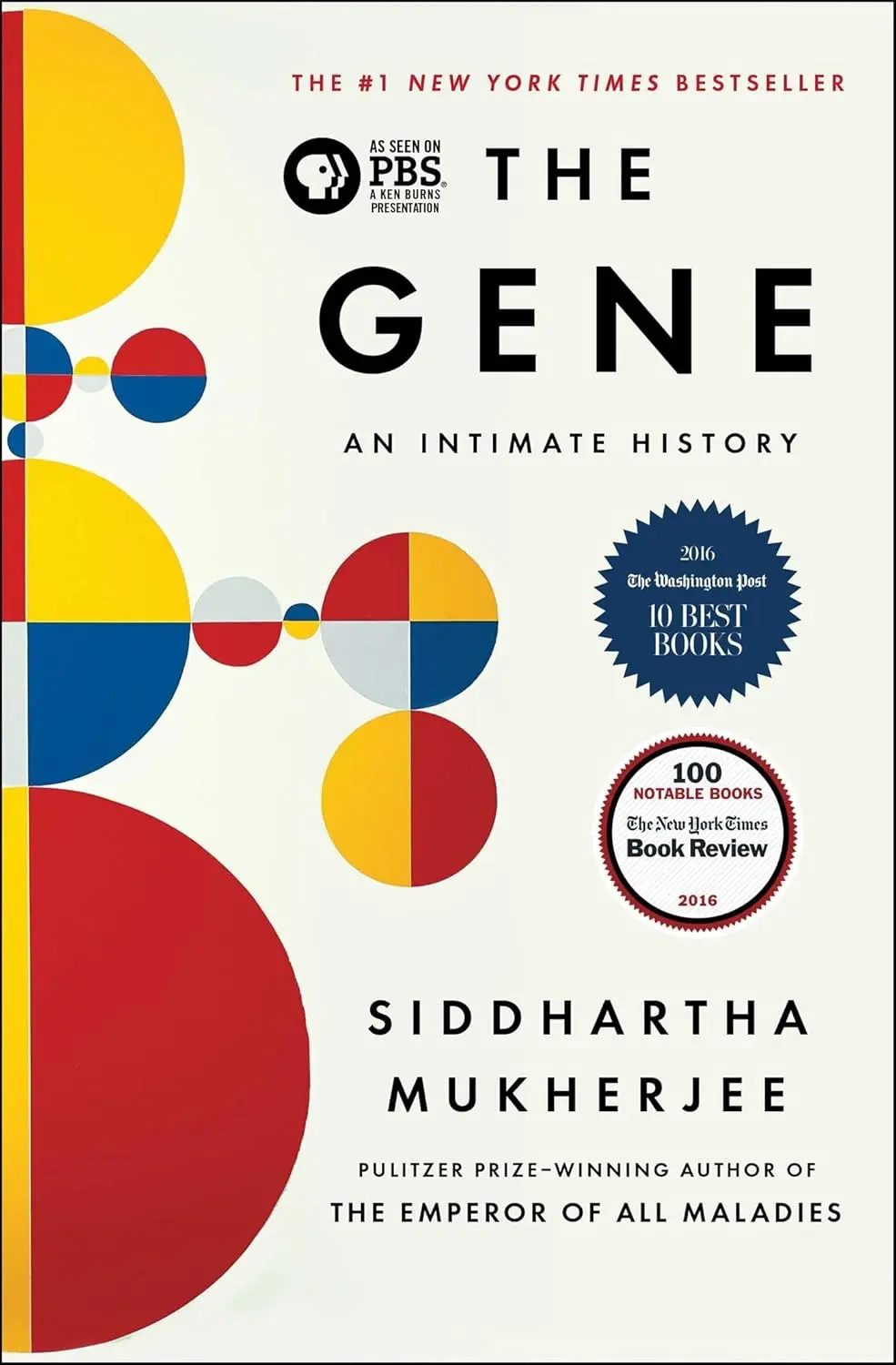
Mukherjee uses his family history as a through line. Several members of his extended family in India have been affected by schizophrenia and bipolar disorder, and the question of whether these conditions are genetic, and whether they might appear in his own children, gives the scientific narrative personal weight.
The book covers the history of genetics chronologically. Mendel’s experiments with pea plants in the 1860s. The rediscovery of his work in 1900. The identification of DNA’s structure by Watson and Crick in 1953. The cracking of the genetic code. The development of recombinant DNA technology. The Human Genome Project. And the arrival of CRISPR, a gene-editing tool that allows precise modifications to DNA and raises questions that previous technologies only hinted at.
Mukherjee is skilled at explaining technical concepts through stories and analogies. He covers the science clearly enough for non-specialists while maintaining enough depth that readers with biology backgrounds will not feel patronized. The ethical questions, particularly around eugenics (which he covers in disturbing historical detail) and genetic engineering (which he approaches with both excitement and caution), are treated seriously.
The sections on eugenics are some of the most important in the book. Mukherjee traces how the early genetics movement was co-opted by racist ideologies in the United States and Nazi Germany, leading to forced sterilizations and genocide. This history is relevant to current debates about genetic engineering because it shows what happens when genetic knowledge is applied without ethical constraints.
For founders in biotech, health tech, or any field touching genetic data, the book provides historical context that helps frame current ethical debates. For general readers, it is one of the clearest accounts of how genetics works and why it matters.
Bill Gates has recommended it. At about 590 pages, the book is long. Mukherjee’s writing is engaging enough to carry the length, and the personal family story gives the science an emotional dimension that pure history books lack.
