
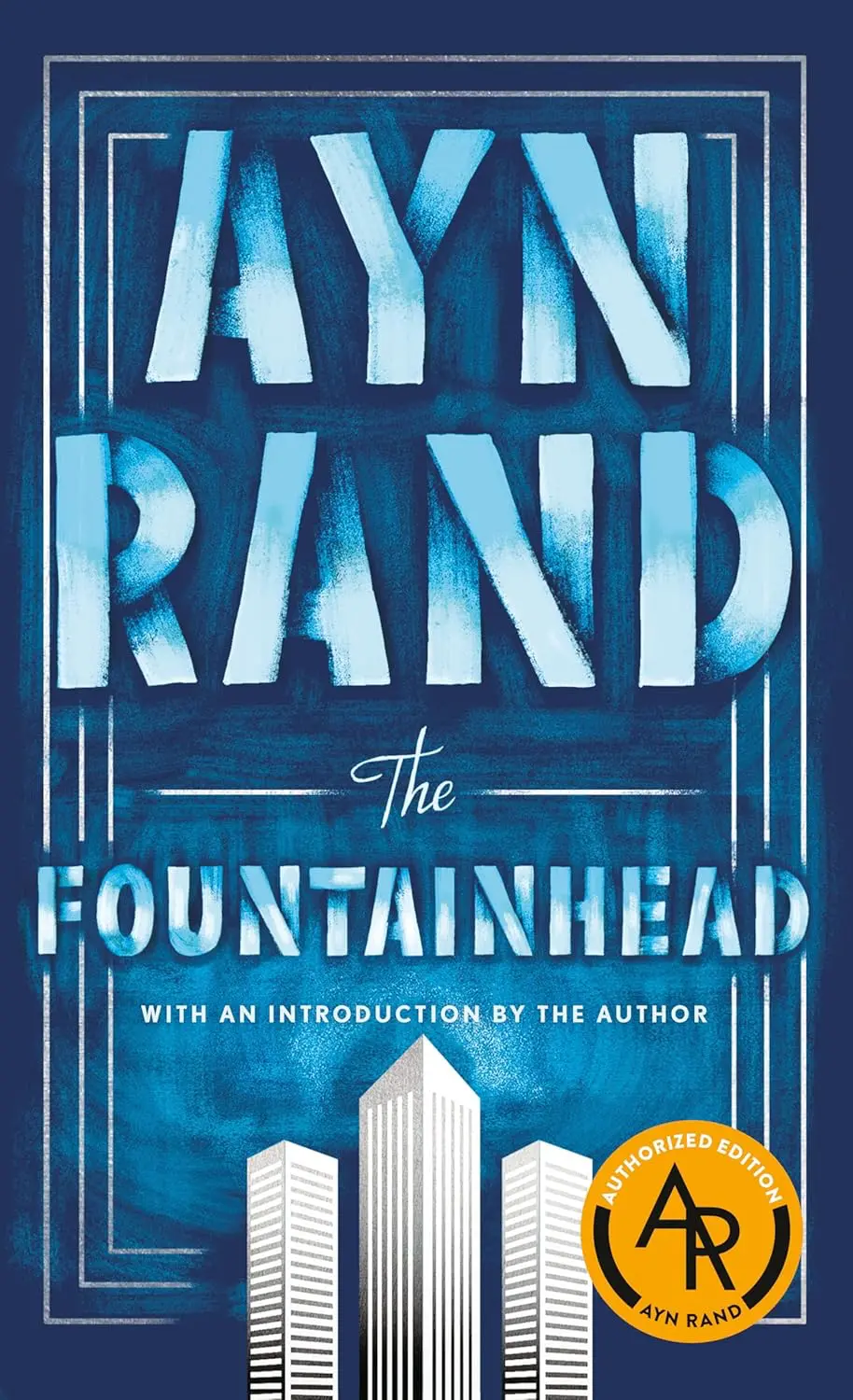
The Fountainhead, published in 1943, tells the story of Howard Roark, a young architect whose buildings are original and uncompromising. He would rather blow up a building than see it altered. Opposite him is Peter Keating, a classmate who succeeds by copying others and pandering to popular taste. The novel follows both men through their careers, using architecture as a metaphor for integrity versus conformity.
Rand wrote the book to make a philosophical argument about individualism. Roark represents the creator who works according to his own standards regardless of what the market or society demands. Keating represents the second-hander, someone who derives his sense of self from the approval of others. The conflict between these two approaches drives the plot.
The book is long, over 700 pages, and Rand is not a subtle writer. Characters make speeches, motivations are clearly stated, and the moral framework is black and white. If you are looking for nuanced characterization or literary ambiguity, this is not the book. But if you are looking for a story that takes the act of creation seriously and argues that compromising on your vision has a real cost, the book delivers.
For founders, The Fountainhead hits a specific nerve. Building a product or company often involves pressure to conform, to copy what competitors are doing, to listen to feedback that would dilute the original idea. Roark’s refusal to bend is extreme (and in some cases destructive), but the underlying question is valid: when do you listen to the market and when do you trust your own judgment?
Travis Kalanick, Peter Thiel, Mark Cuban, and Evan Spiegel have all cited it as influential. The book’s popularity among tech founders is partly about the philosophy and partly about the emotional experience of reading a story where the protagonist refuses to quit on his idea, no matter the cost.
The Fountainhead is more accessible than Atlas Shrugged and works better as a novel because it stays focused on a smaller cast and a single theme. The courtroom scene near the end, where Roark defends his decision to destroy a building rather than see it compromised, remains one of the most discussed scenes in 20th-century fiction about the ethics of creation.
