
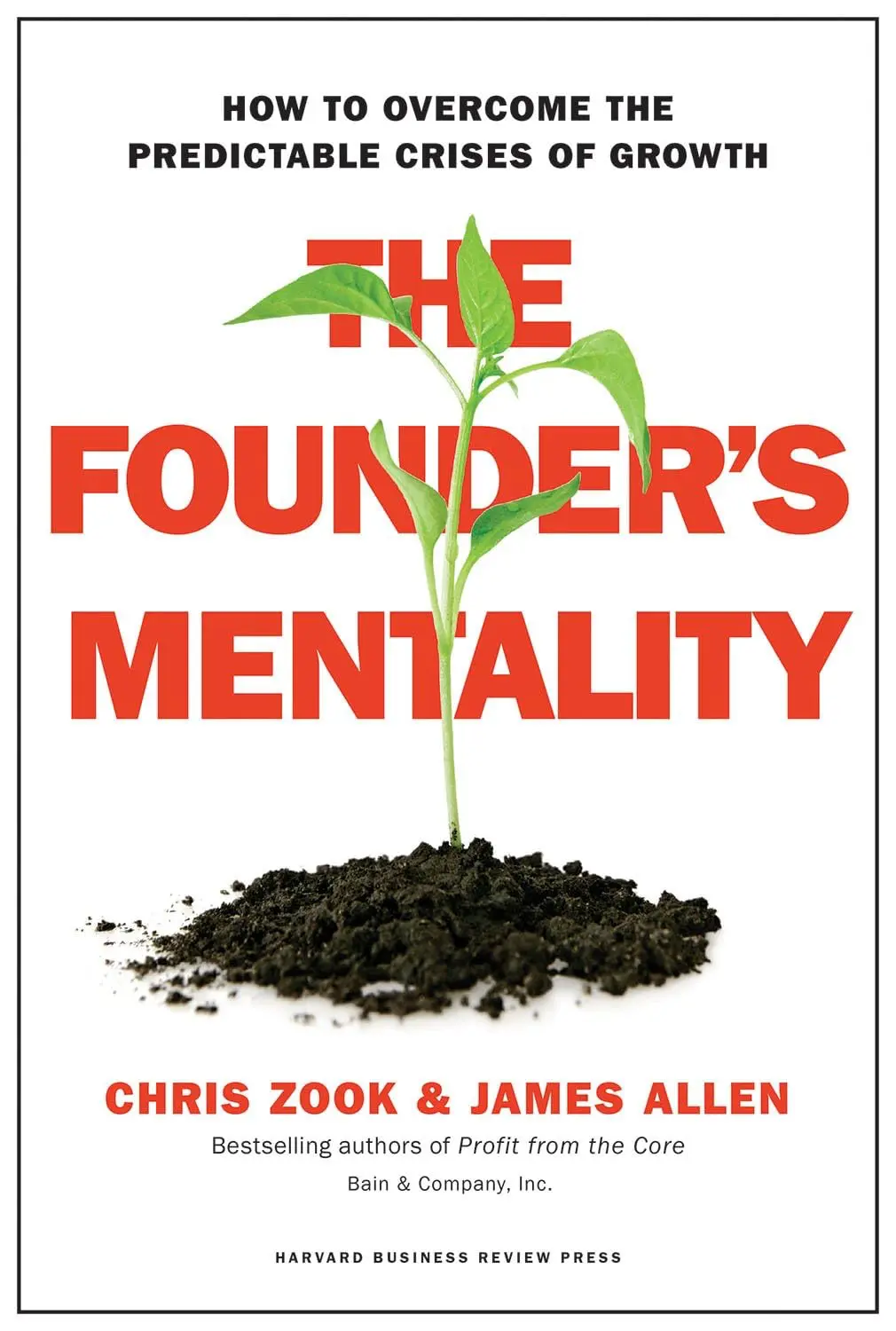
The Founder’s Mentality is Chris Zook and James Allen’s research into why companies lose their energy and effectiveness as they grow. Working from Bain & Company’s database of thousands of companies, they identified three traits that characterize the most successful young companies and that tend to erode as organizations scale.
The three traits are insurgent mission (a clear sense of what you’re fighting against and why it matters), frontline obsession (staying connected to customers and to the people doing the actual work), and owner’s mindset (treating the business with the care and urgency of someone whose personal wealth is at stake). Startups have all three naturally. Large companies have usually lost at least one, and often all three.
The book identifies three predictable crises that cause this erosion. Overload happens when rapid growth overwhelms the company’s ability to manage complexity. Stall-out happens when bureaucracy and internal politics replace the founder’s original urgency. Free fall happens when the business model stops working and the company doesn’t know how to respond because it has lost touch with its customers and its original mission.
For founders, the book is most useful as a warning and a diagnostic tool. The erosion of founder’s mentality is gradual and often invisible from the inside. You add a layer of management, and suddenly customer complaints take longer to reach someone who can fix them. You create a planning process, and suddenly the team spends more time making slides than building product. Zook and Allen’s framework helps you recognize these patterns early and take specific steps to preserve the traits that made the company successful in the first place.
The writing is clear and data-driven, reflecting the authors’ consulting background. The case studies include specific companies that lost and regained founder’s mentality, which makes the framework concrete rather than abstract. The book is relatively short and focused, avoiding the temptation to cover too much ground. If you’re leading a company through a growth phase and worried about losing what made you special, this is one of the more useful frameworks for thinking about that challenge.
