
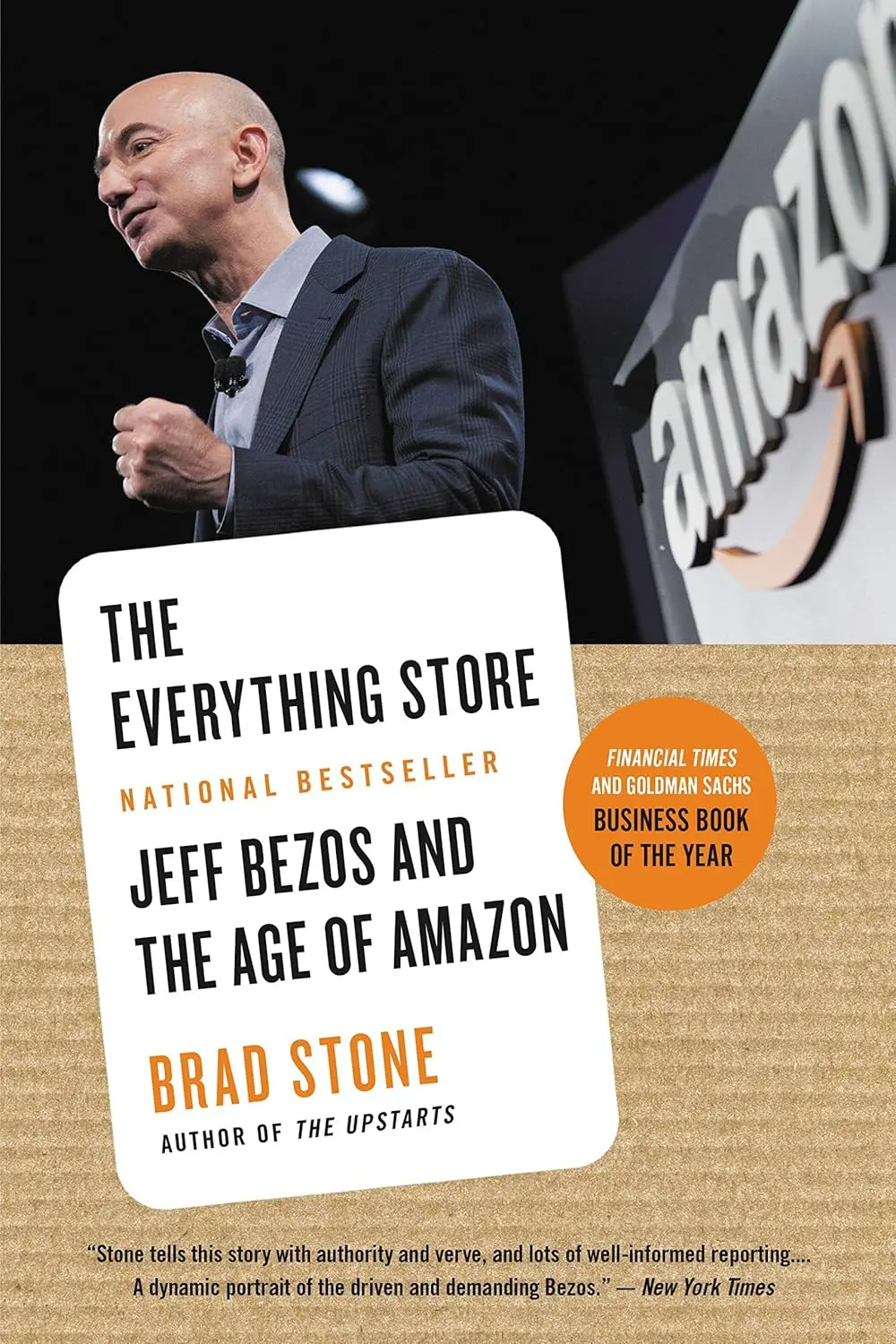
The Everything Store is based on over 300 interviews, including with Bezos’s family, early employees, and competitors. Stone, a Bloomberg technology reporter, traces the arc from Bezos writing the Amazon business plan during a cross-country drive in 1994 through the company’s expansion into cloud computing, hardware (Kindle), and logistics.
The strategic sections are the strongest. Bezos’s willingness to lose money for years to build market share, his obsession with the customer to the exclusion of almost everything else, and his long-term thinking (he talks in terms of decades, not quarters) are all documented with specific decisions. The choice to build Amazon Web Services, which started as internal infrastructure and became the most profitable cloud platform in the world, is a case study in seeing an opportunity that nobody else did.
The cultural sections are harder to read. Stone describes an environment where the standards are extreme, where public confrontation in meetings is normal, and where the pace burns through employees. Bezos’s feedback could be withering. Senior executives describe being told their work was “lazy,” “stupid,” or “why are you wasting my time?” The book does not take a firm position on whether this culture is justified by the results, but it presents enough detail for the reader to form an opinion.
Bezos’s family reportedly objected to the book, and his wife Mackenzie wrote a critical review on Amazon’s own site. This reaction itself says something about the level of access and honesty Stone brought to the reporting.
For founders, the book is useful on two levels. The strategic thinking is worth studying: how to pick markets, how to sacrifice short-term profit for long-term position, and how to build infrastructure that becomes a competitive moat. The cultural questions are worth considering: how much intensity is productive, and at what point does demanding excellence become destructive?
At about 370 pages, the book is well-paced. Stone writes in a journalistic style that moves through events quickly without skimping on detail. It remains the best reported account of how Amazon was built.
