
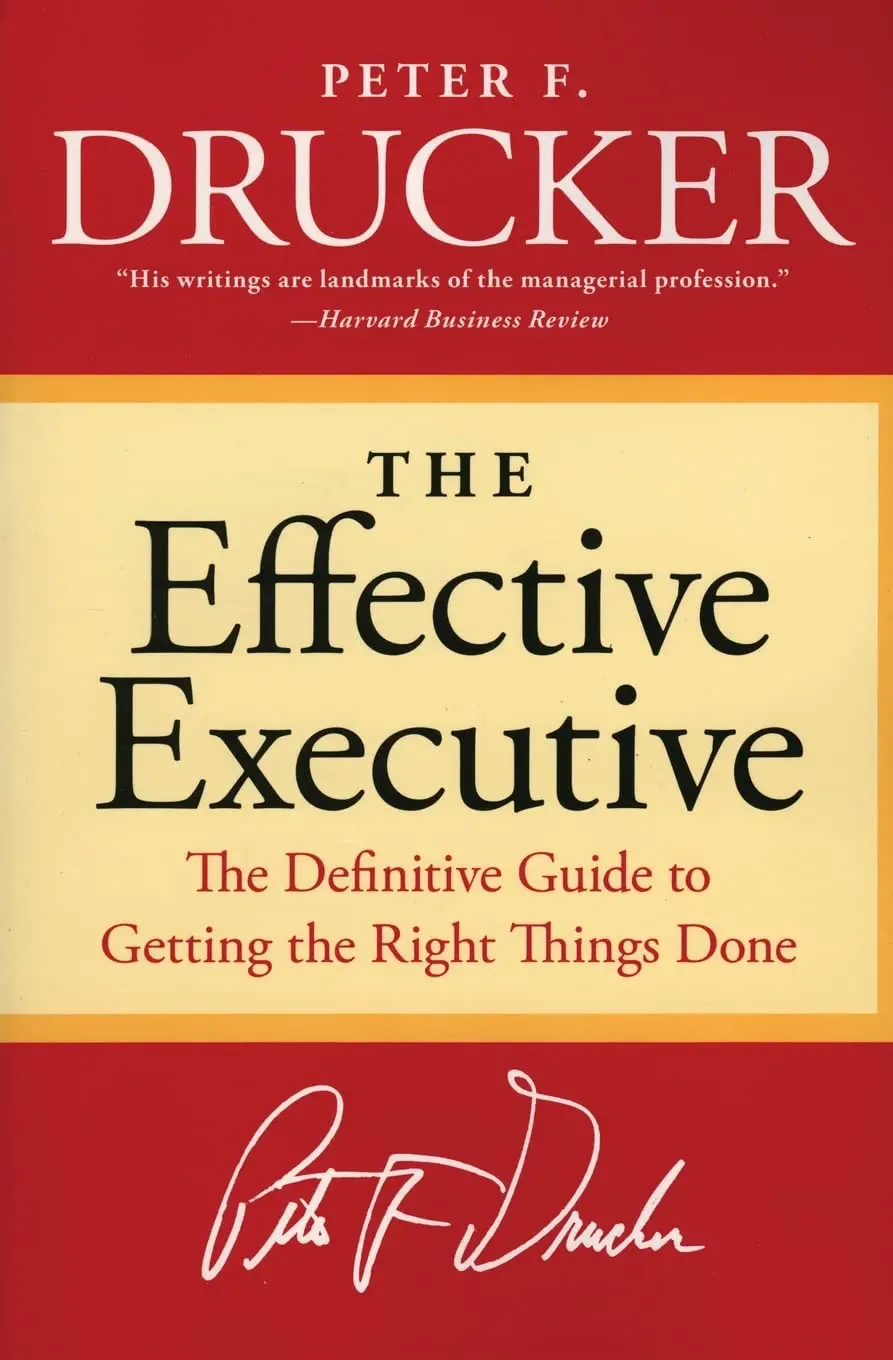
Peter Drucker published The Effective Executive in 1967, and it remains one of the most practical management books ever written. At under 200 pages, it is remarkably dense. Drucker wastes nothing.
His opening argument is that intelligence, imagination, and knowledge are useless without effectiveness, and that effectiveness is a discipline, not a personality trait. Effective executives are not a type. They come in all temperaments, styles, and backgrounds. What they share are habits.
The book identifies five habits. First, effective executives know where their time goes. They track it, analyze it, and ruthlessly cut activities that do not produce results. Drucker found that most executives drastically overestimate how much time they spend on important work and underestimate how much is consumed by meetings, interruptions, and bureaucratic tasks.
Second, they focus on contribution. Instead of asking “what do I do?” they ask “what results are expected of me?” This outward orientation shifts attention from effort to output.
Third, they build on strengths, their own and their team’s, rather than trying to fix weaknesses. Staffing decisions should put people where their strengths can produce results, not where their weaknesses are least harmful.
Fourth, they concentrate on the few areas where superior performance will produce outstanding results. Drucker calls these “first things first.” The effective executive sets priorities and sticks to them, which means saying no to everything else.
Fifth, they make effective decisions. Drucker distinguishes between generic decisions (which should be handled by rules and policies) and unique decisions (which require judgment). Effective decision-making starts with defining the problem correctly, which most people skip.
For founders, nearly every chapter is directly applicable. Time management, prioritization, staffing decisions, and decision-making are the daily work of running a company. Marc Andreessen, Keith Rabois, and Tobi Lutke have all recommended this book specifically because of how compressed and actionable it is. There is no filler, no anecdotes for entertainment, and no padding. Just principles and their applications.
