
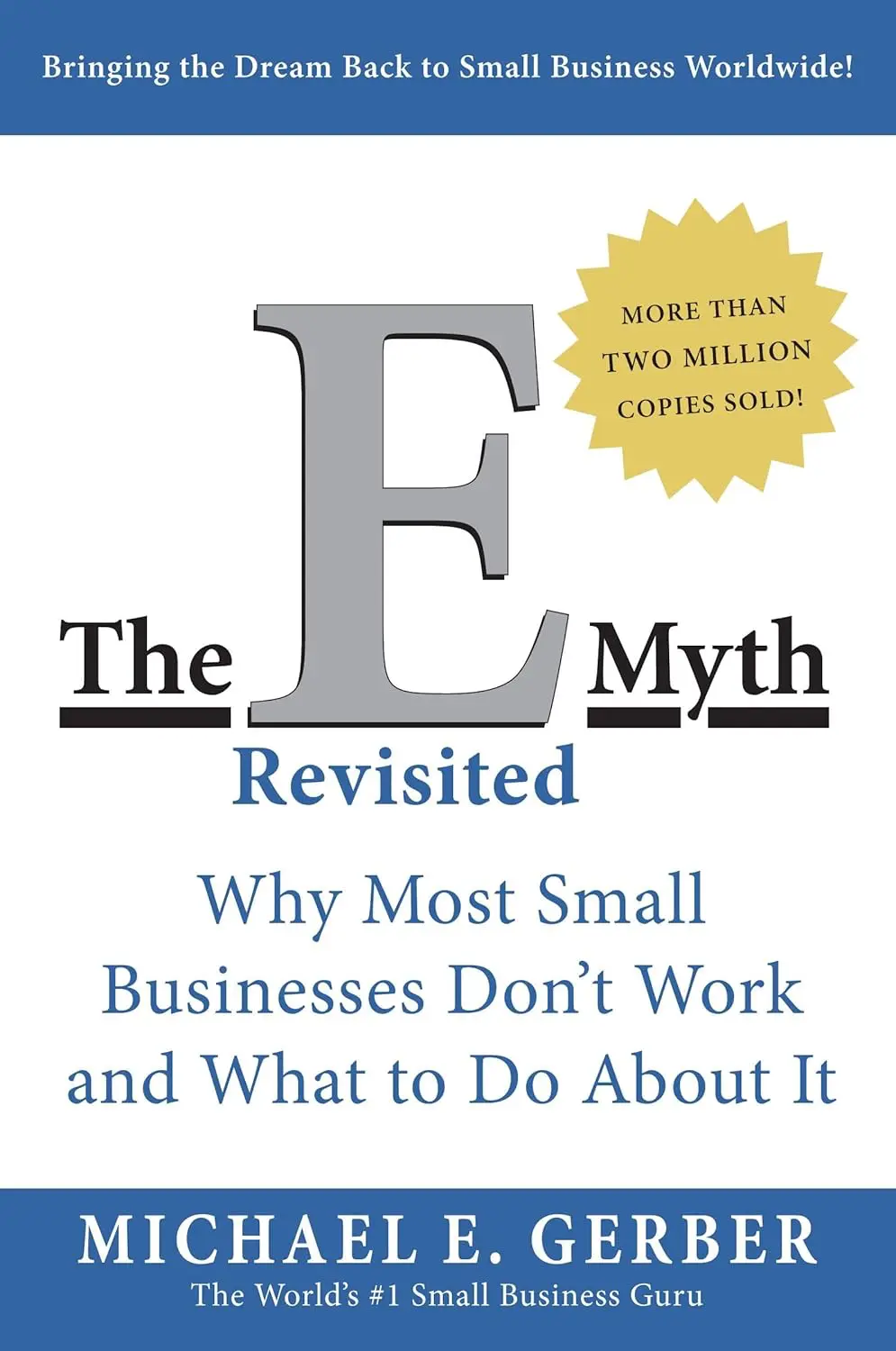
The “E-Myth” in the title refers to the Entrepreneurial Myth: the assumption that people who understand the technical work of a business automatically understand how to run a business that does that work. A great baker does not necessarily know how to run a bakery. A talented programmer does not necessarily know how to run a software company. The skills are different.
Gerber identifies three personalities inside every business owner: the Technician (who wants to do the work), the Manager (who wants order and systems), and the Entrepreneur (who wants to build something new). Most small business owners are primarily Technicians who had an “entrepreneurial seizure,” quit their job, and started a business doing what they already knew how to do. The problem is that they end up working in the business rather than on it.
The solution Gerber proposes is the “franchise prototype” model. Build your business as if you intended to replicate it 5,000 times. This forces you to create systems, document processes, and make the business work without depending on any single person, including you. The goal is a business that runs on systems rather than on the owner’s personal effort and expertise.
The book uses a fictional story of a pie shop owner named Sarah to illustrate these concepts. Gerber coaches Sarah through the transition from Technician-owner to systems-builder, and each chapter introduces a new concept through their conversations.
For founders, the most useful idea is the distinction between working in your business and working on it. Many first-time founders get trapped doing the work themselves because they are good at it and because hiring and training others feels slow and expensive. The E-Myth makes the case that this trap will kill the business or, at best, create a job that owns you rather than a company you own.
Jason Fried, Derek Sivers, and Rob Walling have recommended it. The book is about 270 pages. The fictional framing can feel dated to some readers, but the underlying framework has influenced how millions of small business owners think about building companies that work without them.
