
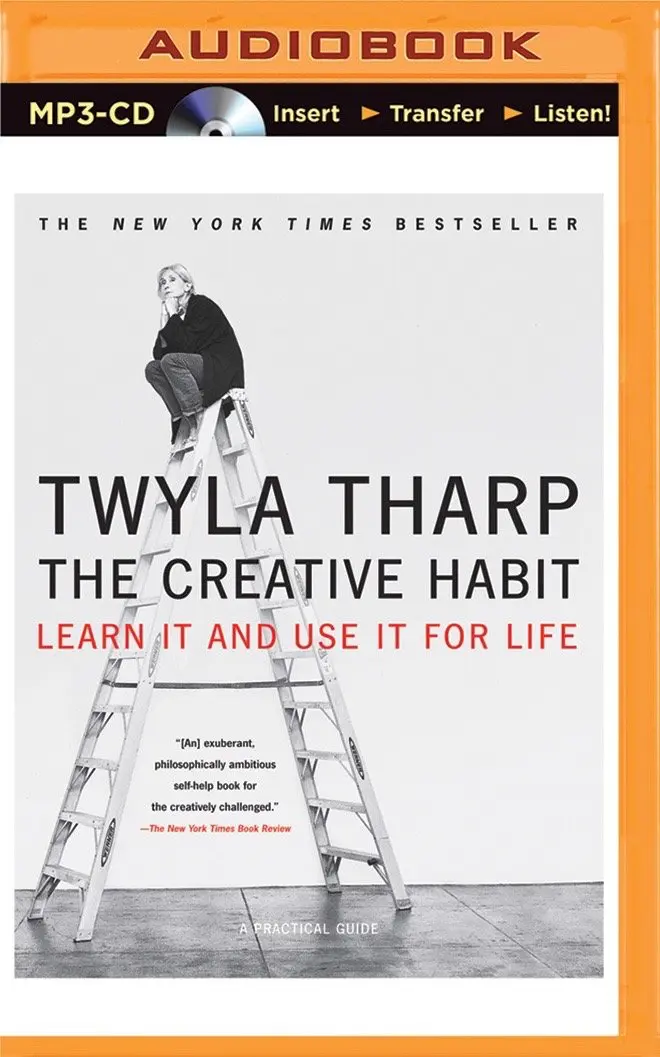
The Creative Habit is Twyla Tharp’s argument that creativity has far more to do with preparation and routine than with inspiration or talent. Tharp, who has choreographed over 160 works across dance, film, and Broadway, writes from the position of someone who has been producing creative work professionally for over five decades and who treats that work as a daily discipline rather than something that arrives when the muse shows up.
The book opens with Tharp’s own morning routine: she wakes at 5:30 AM, gets in a taxi to the gym, and works out for two hours before heading to the studio. The taxi, she says, is the moment the creative habit kicks in. Everything after that is execution. The point is that creativity starts with showing up, and showing up consistently is a habit you can build like any other.
Tharp covers her approach to starting new projects (she begins each one with a box where she collects every idea, clipping, note, and object related to the work), dealing with creative blocks (she calls them “ruts” and has specific strategies for getting out of them), knowing when to hold on to an idea and when to let it go, and working within constraints (which she argues are necessary for good work rather than obstacles to it).
The 32 exercises scattered throughout the book are designed to be practiced, not just read. They range from reading exercises (picking a genre you never read and studying it) to physical exercises (improvising movement to music) to analytical exercises (dissecting a piece of creative work you admire to understand how it’s built). The exercises are drawn from Tharp’s own practice and from the practices of other artists she has worked with.
For founders, the book reframes creativity as a discipline rather than a personality trait. Most founders need to be creative regularly, whether in product design, marketing, strategy, or problem-solving, and the idea that this is a learnable habit rather than a fixed talent is both reassuring and practical. Tharp’s emphasis on preparation, routine, and consistent output translates directly to any kind of knowledge work.
The writing is direct and personal. Tharp shares specific stories from her career, including failures and the uncomfortable process of reworking projects that aren’t coming together. The tone is that of a master practitioner talking to a younger colleague, firm but supportive.
