
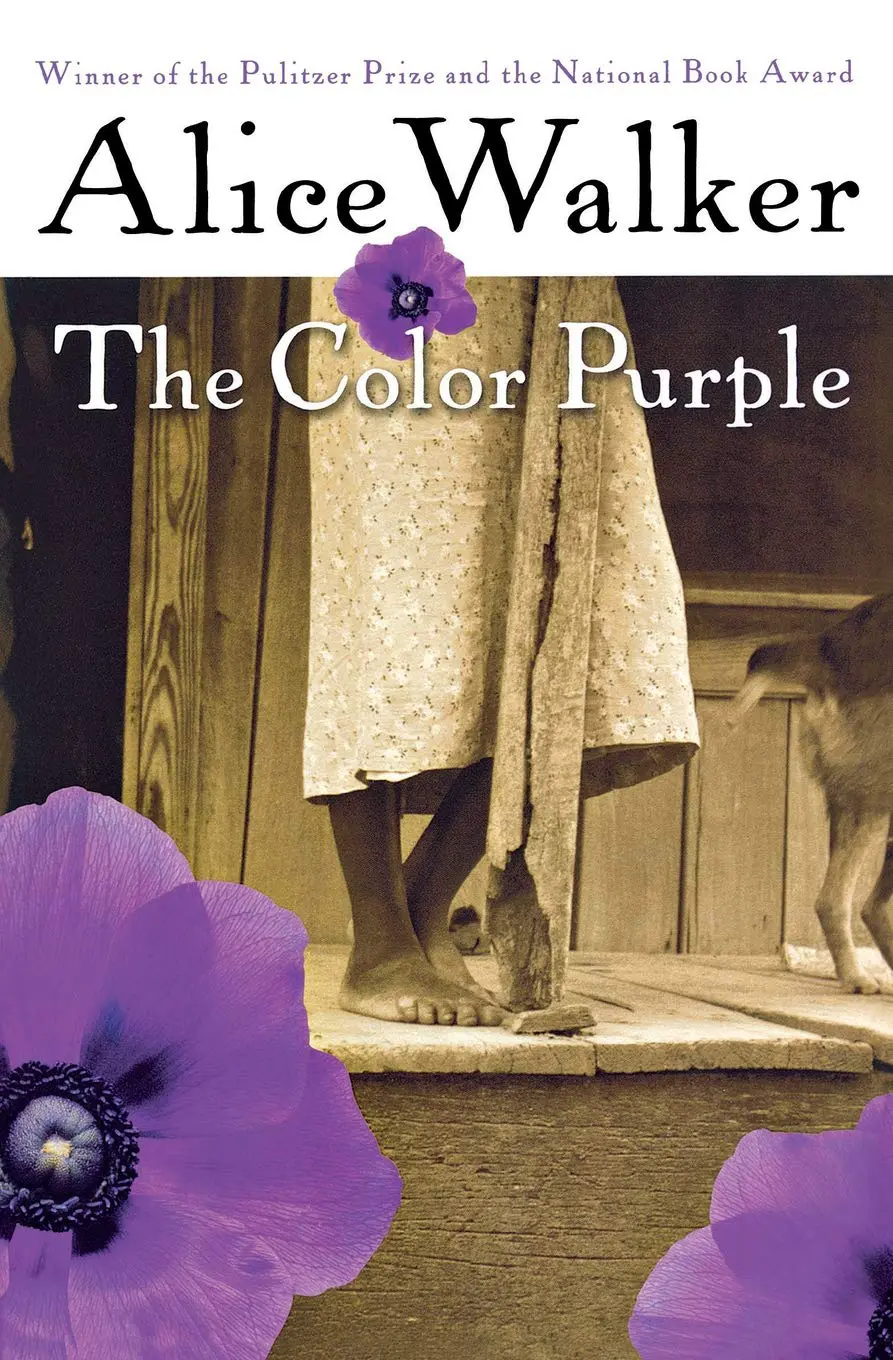
The Color Purple is told through letters, primarily written by Celie, a young Black woman in rural Georgia in the early 20th century. The letters begin when Celie is fourteen, and over the course of the novel they trace her life from a childhood of abuse through a loveless marriage to an older man she calls “Mister,” and eventually toward a sense of self-worth that she builds through her relationships with other women, particularly the singer Shug Avery.
Walker’s decision to write the entire novel as letters gives it an intimacy that a conventional narrative would not have. Celie writes to God because she has no one else to talk to. Her language is direct and unpolished, reflecting her limited education, but the precision of her observations and the depth of her feeling come through clearly. As Celie’s confidence grows over the course of the novel, her writing changes too, becoming more assertive and more nuanced.
The book is unflinching about the violence Celie experiences, from her stepfather, from her husband, and from the broader system of racial and gender oppression she lives within. Walker does not soften these realities, but neither does she reduce Celie to a victim. The novel is ultimately about Celie’s discovery that she has value, that she can create beauty (she starts a clothing business), and that love between women, in all its forms, can be a source of genuine liberation.
For founders, the business-building subplot is a small but genuine part of the book. Celie’s decision to start making pants, and the way this small act of economic independence changes her sense of herself, is one of the novel’s most satisfying threads.
The book won both the Pulitzer Prize and the National Book Award in 1983. It has been adapted into a Spielberg film and a Broadway musical, both of which are well-known, but the novel’s epistolary form gives it a power that the adaptations can’t fully capture. It reads quickly despite the difficult subject matter, because Celie’s voice is so immediate and engaging.
