
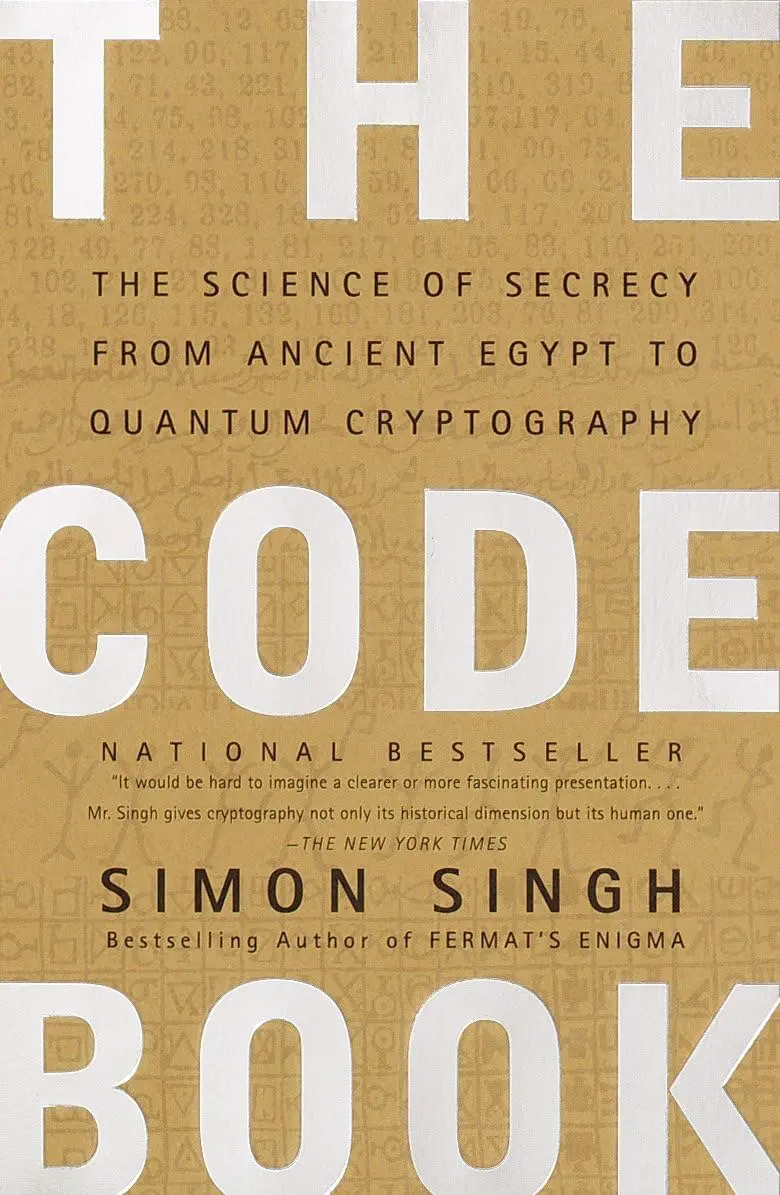
The Code Book works because Singh tells the history of cryptography as a series of arms races between codemakers and codebreakers. Each chapter covers a different era: ancient ciphers used by Julius Caesar, the Vigenere cipher that was considered unbreakable for 300 years, Mary Queen of Scots whose encrypted letters were decoded and used to convict her of treason, the Enigma machine that Germany used in World War II, and the development of public-key cryptography in the 1970s.
The Enigma chapters are the most gripping. Singh describes how Polish mathematicians first cracked the Enigma code, how their work was passed to British codebreakers at Bletchley Park, and how Alan Turing and his team built machines to decrypt German messages at a scale that may have shortened the war by years. The human stakes give the mathematics weight: getting the decryption right meant saving convoys from submarine attacks.
The chapters on public-key cryptography explain how Whitfield Diffie and Martin Hellman solved a problem that had stumped cryptographers for centuries: how can two people communicate securely without meeting in advance to exchange a secret key? Their solution, and its parallel discovery by the British intelligence agency GCHQ, is one of the intellectual achievements of the 20th century and the basis for all secure internet communication today.
Singh writes for readers who have no background in mathematics. He explains the concepts step by step, using analogies and diagrams. The result is a book that teaches you how encryption actually works, not just what it does.
For founders, especially those building products that involve user data, payment systems, or communication, understanding cryptography at a conceptual level is useful. You do not need to implement algorithms yourself, but knowing the principles behind the security infrastructure you depend on helps you make better architectural and product decisions.
At about 400 pages, the book is engaging throughout. Singh has a talent for making technical subjects readable without dumbing them down. The historical approach means you learn the science in context, which makes it stick.
