
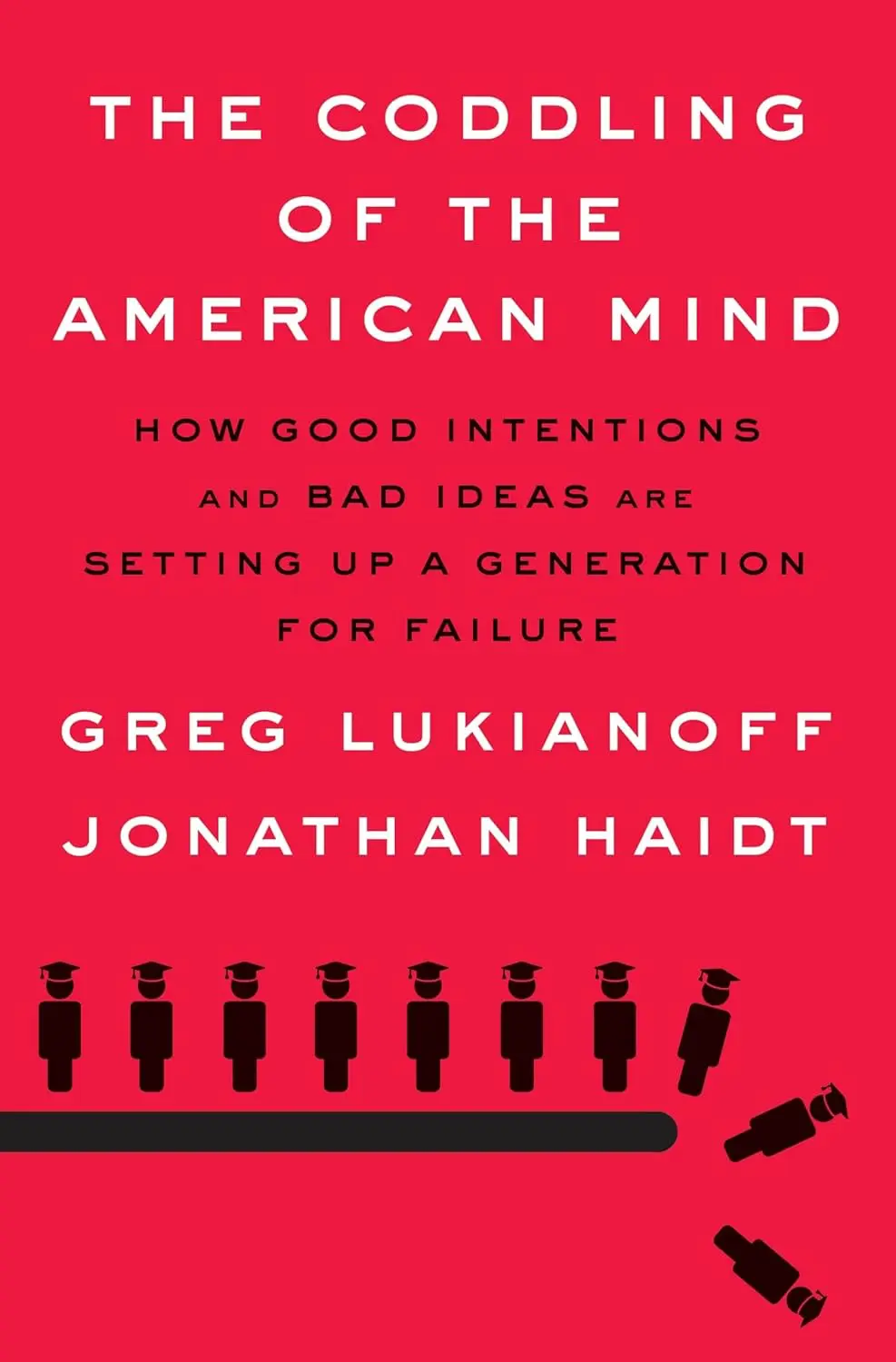
The book grew out of a 2015 Atlantic article that became one of the magazine’s most-read pieces. Haidt, a social psychologist, and Lukianoff, president of the Foundation for Individual Rights in Education, observed that starting around 2013, something changed on American college campuses. Students began requesting trigger warnings, safe spaces, and the disinvitation of speakers whose views they found threatening. Faculty started self-censoring. The authors wanted to understand why.
Their answer centers on three ideas they call the “Great Untruths.” The Untruth of Fragility: what does not kill you makes you weaker (the antifragile response is the healthy one, but many institutions now protect people from all discomfort). The Untruth of Emotional Reasoning: always trust your feelings (feelings are data, not truth, and treating every negative emotion as evidence of harm distorts judgment). The Untruth of Us Versus Them: life is a battle between good people and evil people (this tribalism makes cooperation impossible).
Haidt and Lukianoff trace the spread of these ideas through several factors: changes in parenting (less unsupervised play, more anxiety-driven oversight), social media (which amplifies outrage and social comparison, especially among teenage girls), political polarization, and well-intentioned but counterproductive institutional policies.
The book is controversial. Critics argue that the authors overstate the problem, that they are unsympathetic to genuine grievances about racism and inequality, and that their framing privileges the experiences of elite college students. The authors address some of these criticisms, but not to everyone’s satisfaction.
For founders, the relevant sections are about organizational culture and how well-meaning policies can backfire. Creating an environment where people are shielded from all discomfort does not produce resilience. It produces fragility. The same dynamic plays out in companies that avoid difficult conversations, tolerate poor performance, or refuse to give honest feedback.
Sam Harris and Joe Rogan have discussed the book extensively. At about 340 pages, it is well-researched and clearly argued. Whether you agree with all of the conclusions or not, the framework for thinking about resilience versus fragility in organizations is useful.
