
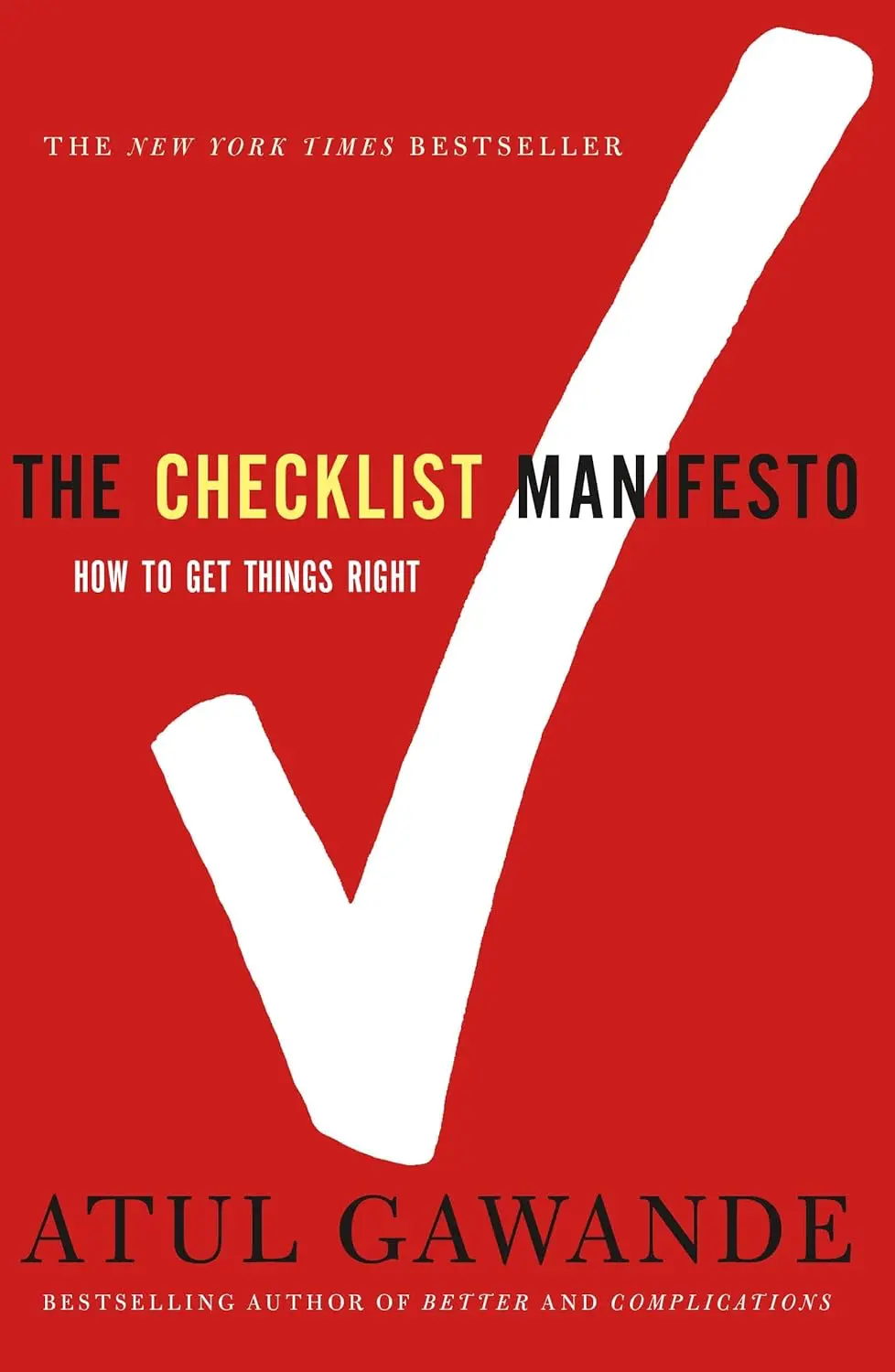
Gawande starts with a problem: modern work has become so complex that even highly trained professionals make avoidable mistakes. Surgeons forget to check for allergies. Pilots miss steps in emergency procedures. Building engineers overlook structural requirements. The failures are not from ignorance but from the sheer volume of steps that any complex task requires.
His solution is the checklist, and he traces its history from aviation (where pre-flight checklists became standard after a crash caused by pilot error in 1935) through construction (where coordination checklists manage dozens of subcontractors) to medicine (where a surgical safety checklist developed by the WHO reduced deaths and complications by over 30% in trials across eight hospitals worldwide).
Gawande distinguishes between two types of checklists. “Read-do” checklists are followed step by step during a task. “Confirm-do” checklists are run through from memory, then confirmed against the list. The key insight is that checklists work not by telling experts how to do their jobs, but by ensuring that the basics do not get skipped when attention is consumed by the complex parts.
The book is partly a medical narrative, partly a business argument, and partly a personal account of Gawande’s own experience implementing checklists in his surgical practice. He is honest about the resistance he encountered, even from himself. Checklists feel beneath the dignity of experts. And yet they work.
For founders, the applications are immediate. Onboarding processes, product launches, hiring workflows, investor meetings, and incident responses all benefit from checklists. The more complex and high-stakes the activity, the more a checklist helps. Tim Ferriss, Jack Dorsey, and Charlie Munger have all recommended this book.
At about 200 pages, The Checklist Manifesto is a fast read. Gawande writes with the clarity of a surgeon and the narrative skill of a journalist (he is a staff writer for The New Yorker). The argument is simple but convincing, and the examples are specific enough to be actionable.
