
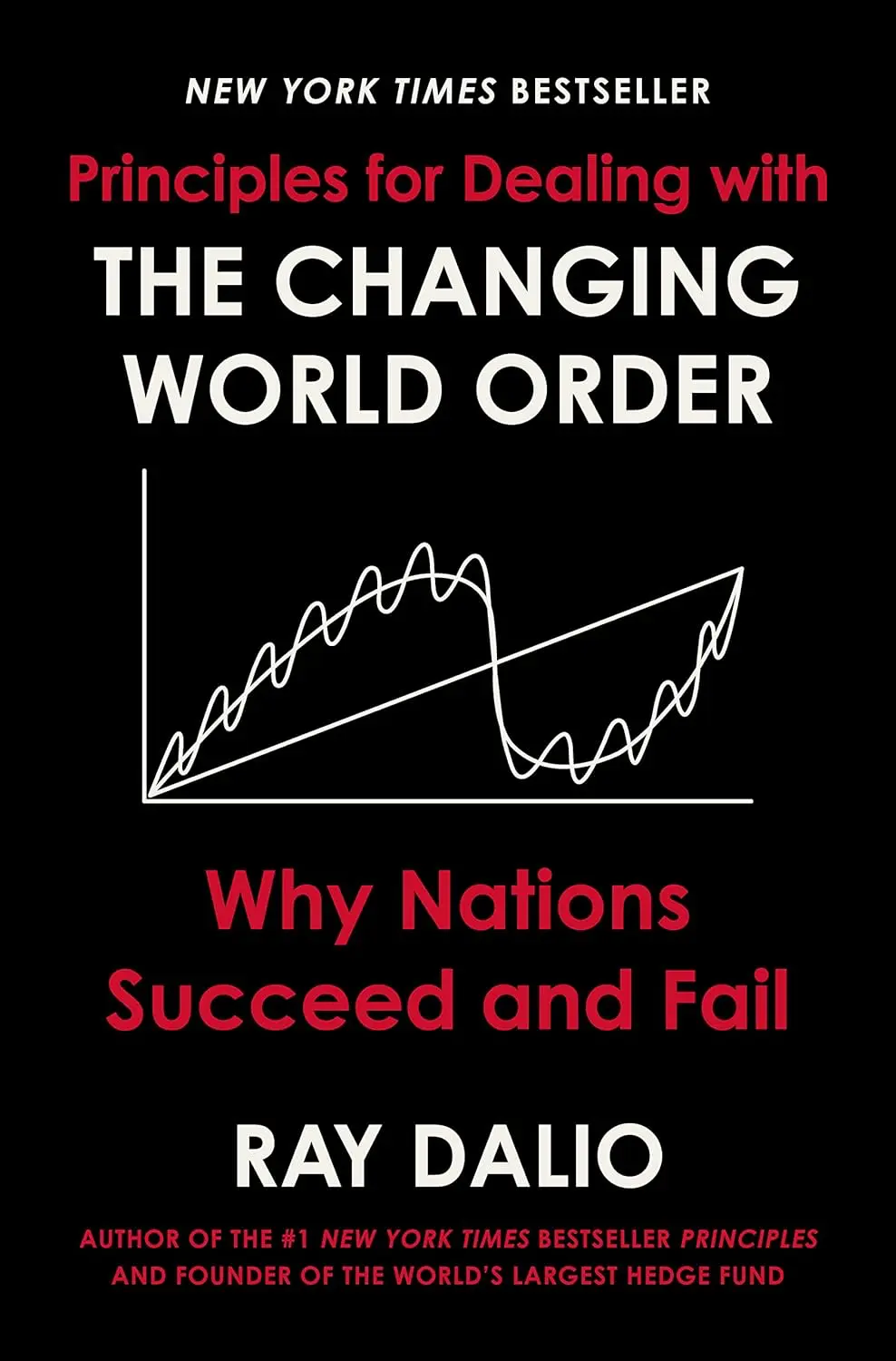
Around 2018, Ray Dalio noticed three things happening simultaneously that had not happened together in his lifetime: massive debt levels with near-zero interest rates, extreme political polarization within countries, and a rising power (China) challenging the existing global order (the United States). He had seen financial crises before, but this particular combination was different. The last time all three had occurred at once was between 1930 and 1945.
That realization sent him into a multi-year study of how empires rise and fall. The book is the result. Dalio examines the Dutch, British, American, and Chinese empires across roughly 500 years, identifying a repeating pattern he calls the Big Cycle. Empires rise through education, productivity, and innovation. They reach dominance and accumulate debt. Internal inequality grows. A new power rises. Conflict follows, and the cycle resets.
The framework is sweeping and deliberately simplified. Dalio scores each empire on eighteen measures of strength, from military power to reserve currency status, and plots them over centuries. The graphs show the same arc repeating: rise, peak, decline, replacement. The Dutch peaked in the 1600s, the British in the 1800s, and the Americans, by Dalio’s analysis, are now in the declining phase while China is ascending.
The financial sections are the strongest. Dalio understands debt cycles, reserve currency dynamics, and monetary policy at a level that comes from decades of running the world’s largest hedge fund. His explanation of how printing money erodes the value of a reserve currency, and how that erosion has played out across multiple empires, is one of the clearest treatments of the subject available.
The political and social sections are weaker. Dalio has been criticized for presenting China’s rise as more inevitable than the evidence supports, and for downplaying the structural problems within the Chinese system, including demographic decline, political repression, and debt opacity, that his own criteria would flag as concerns. Peter Zeihan, among others, has offered sharp counterarguments.
The book is long and repetitive. Dalio acknowledges this himself, noting that the patterns repeat because history repeats. Some readers will find the repetition reinforcing. Others will wish for a tighter edit. A companion video on YouTube, which summarizes the key arguments in about forty minutes, has been viewed tens of millions of times and may be the best entry point.
The book was a New York Times bestseller and has been widely discussed in finance and policy circles. Whether or not you agree with Dalio’s conclusions about where the cycle is heading, the historical framework is worth understanding.
