
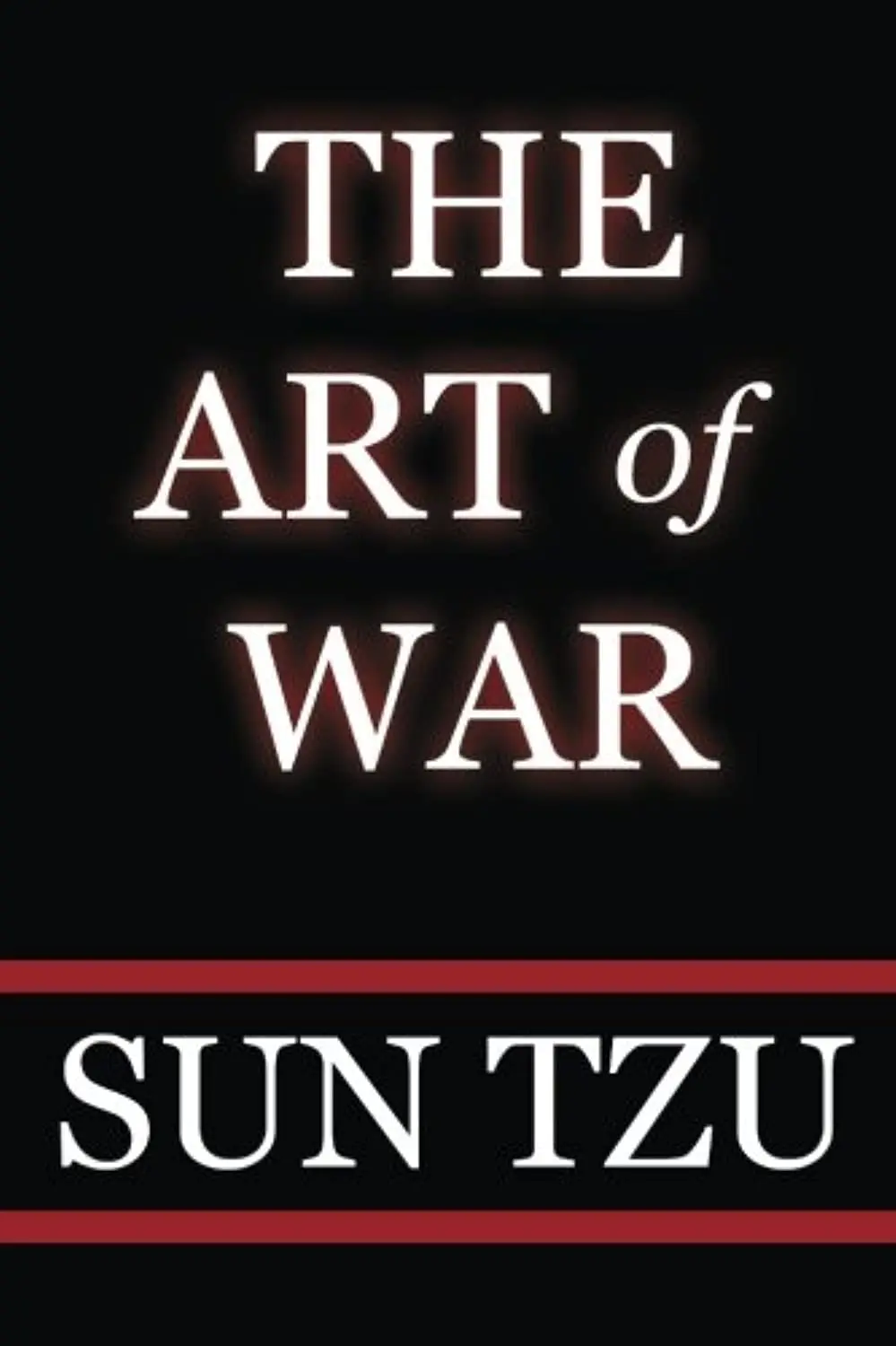
The Art of War is a short military treatise traditionally attributed to Sun Tzu, a Chinese general from the 5th century BC. The text is organized into 13 chapters covering different aspects of warfare: planning, waging war, attack strategy, disposition of forces, energy, weak and strong points, maneuvering, variations in tactics, the army on the march, terrain, the nine situations, attack by fire, and the use of spies.
The book is extremely compressed. Most translations run under 100 pages, and many sections are just a few sentences long. This brevity is part of its appeal: the ideas are stated with enough abstraction that they can be applied to contexts far beyond the battlefield. And people have been applying them to business, sports, law, and politics for centuries.
The most frequently quoted ideas include: know yourself and know your enemy, and you need not fear the result of a hundred battles. All warfare is based on deception. The supreme art of war is to subdue the enemy without fighting. Appear weak when you are strong, and strong when you are weak. These principles translate readily to competitive strategy, negotiation, and market positioning.
For business readers, the most applicable chapters are on planning (understanding the competitive terrain before committing resources), on weak and strong points (concentrating your strength against competitors’ weaknesses), and on the use of spies (the importance of information and intelligence gathering). The emphasis on winning without direct confrontation maps onto strategies like niche domination, positioning, and making competitors irrelevant rather than fighting them head-on.
The book has limitations as a business guide. Military strategy and business competition are not perfect analogies. Customers are not enemies, employees are not soldiers, and markets are not zero-sum battlefields. Reading The Art of War too literally in a business context can lead to an adversarial mindset that harms relationships and partnerships.
Phil Knight, Jack Ma, and Evan Spiegel have cited it as an influence. The best way to read it is as a collection of principles about strategy, positioning, and information advantage, then apply those principles selectively. At under 100 pages, it can be read in a single sitting and revisited whenever a strategic problem needs fresh thinking.
