
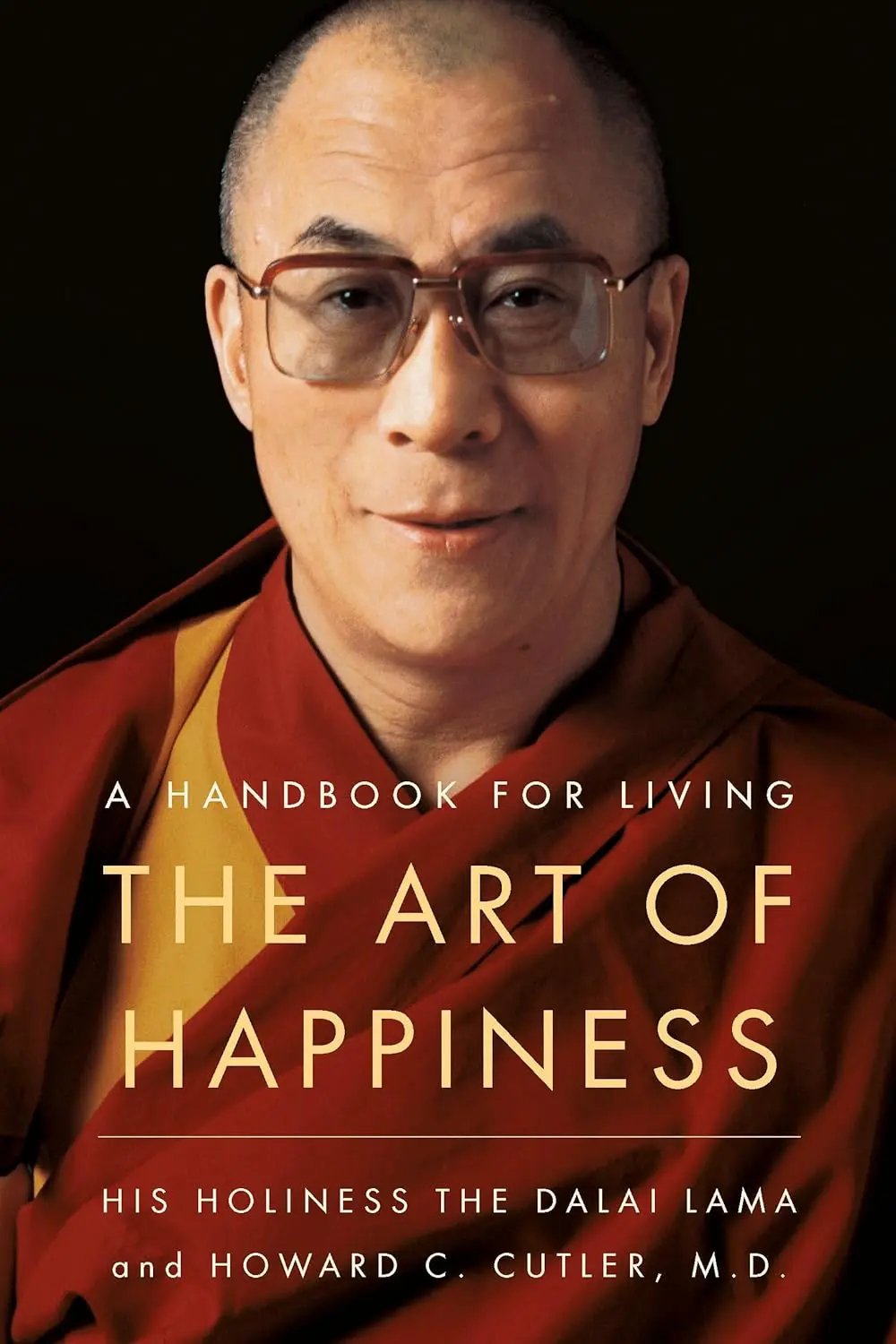
The Art of Happiness is structured as a series of conversations between Cutler, a Western psychiatrist, and the Dalai Lama. Cutler asks questions from a clinical perspective, and the Dalai Lama responds from a Buddhist one. The gap between their frameworks creates the book’s interest: they are approaching the same problems from different directions and sometimes arriving at similar conclusions.
The Dalai Lama’s central claim is that happiness is the purpose of human life and that it can be achieved through mental training. Not through accumulating possessions, accomplishments, or pleasant experiences, but through changing how the mind relates to experience. Suffering, in this view, comes not from events but from the mind’s habitual responses: attachment, aversion, and the insistence that things should be other than they are.
Cutler pushes back on this at various points. He asks about depression, about trauma, about situations where the mind seems genuinely stuck. The Dalai Lama does not dismiss these conditions, but he argues that even in difficult circumstances, the direction of mental training (toward compassion, equanimity, and acceptance) produces better outcomes than the alternative.
Practical suggestions include: shifting from self-focus to other-focus (compassion practices), training the mind to see situations from multiple perspectives before reacting, and accepting that suffering is part of life rather than fighting it as an aberration. These overlap with what cognitive behavioral therapy and positive psychology teach, which Cutler notes throughout.
For business readers, the book is not about productivity or strategy. It is about the inner state of the person making the decisions. Many founders operate in a state of chronic anxiety, comparison, and dissatisfaction that persists regardless of external success. The Dalai Lama’s framework offers an alternative orientation that some leaders have found genuinely useful.
At about 320 pages, the book reads smoothly. Cutler’s questions keep it grounded and prevent it from becoming a religious text. The tone is warm and accessible. It works best for readers who are open to the idea that how you relate to experience matters as much as what you experience.
