
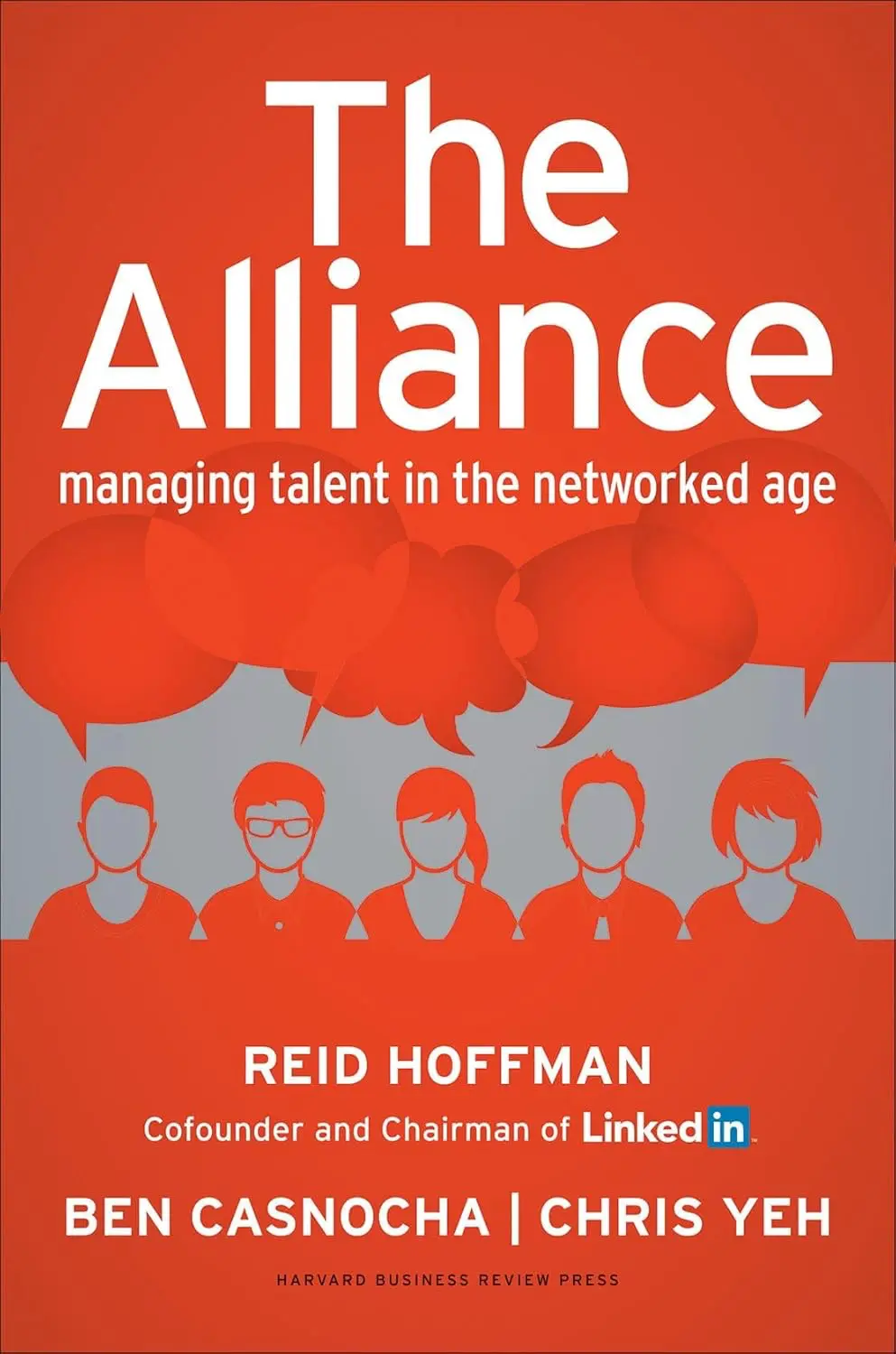
The Alliance starts from the observation that the old employment contract is dead. Companies no longer offer lifetime employment. Employees no longer expect to stay at one company for their career. But neither side has replaced the old deal with something honest. Instead, companies talk about “family” while laying people off, and employees talk about “loyalty” while updating their LinkedIn profiles.
Hoffman proposes replacing this fiction with an explicit alliance. When someone joins a company, both sides agree on a “tour of duty,” a defined period (typically two to four years) with specific objectives. During the tour, the company invests in the employee’s development, and the employee delivers agreed-upon results. At the end of the tour, both sides have an honest conversation about whether to start another tour, and if not, they part on good terms and maintain the relationship as part of each other’s professional network.
The book identifies three types of tours: Rotational (entry-level, structured, general development), Transformational (a specific mission that will change both the employee and the company), and Foundational (for people whose identity is deeply tied to the company’s mission, often founders and senior leaders).
Hoffman also covers the value of alumni networks. Companies that maintain positive relationships with former employees gain a recruiting pipeline, industry intelligence, and potential customers or partners. The book uses LinkedIn’s own alumni network as a case study.
For founders, the framework is useful because it makes hiring conversations more honest. Instead of promising something vague (“we value our people”), you can define what success looks like for a specific tour and what the employee can expect in return. This clarity reduces turnover surprises and helps both sides make better decisions.
Reed Hastings has endorsed the approach. At about 210 pages, the book is concise. The writing is clear and practical, with templates and conversation guides that can be used immediately. The main limitation is that the framework assumes a level of organizational maturity that very early-stage startups may not have.
