
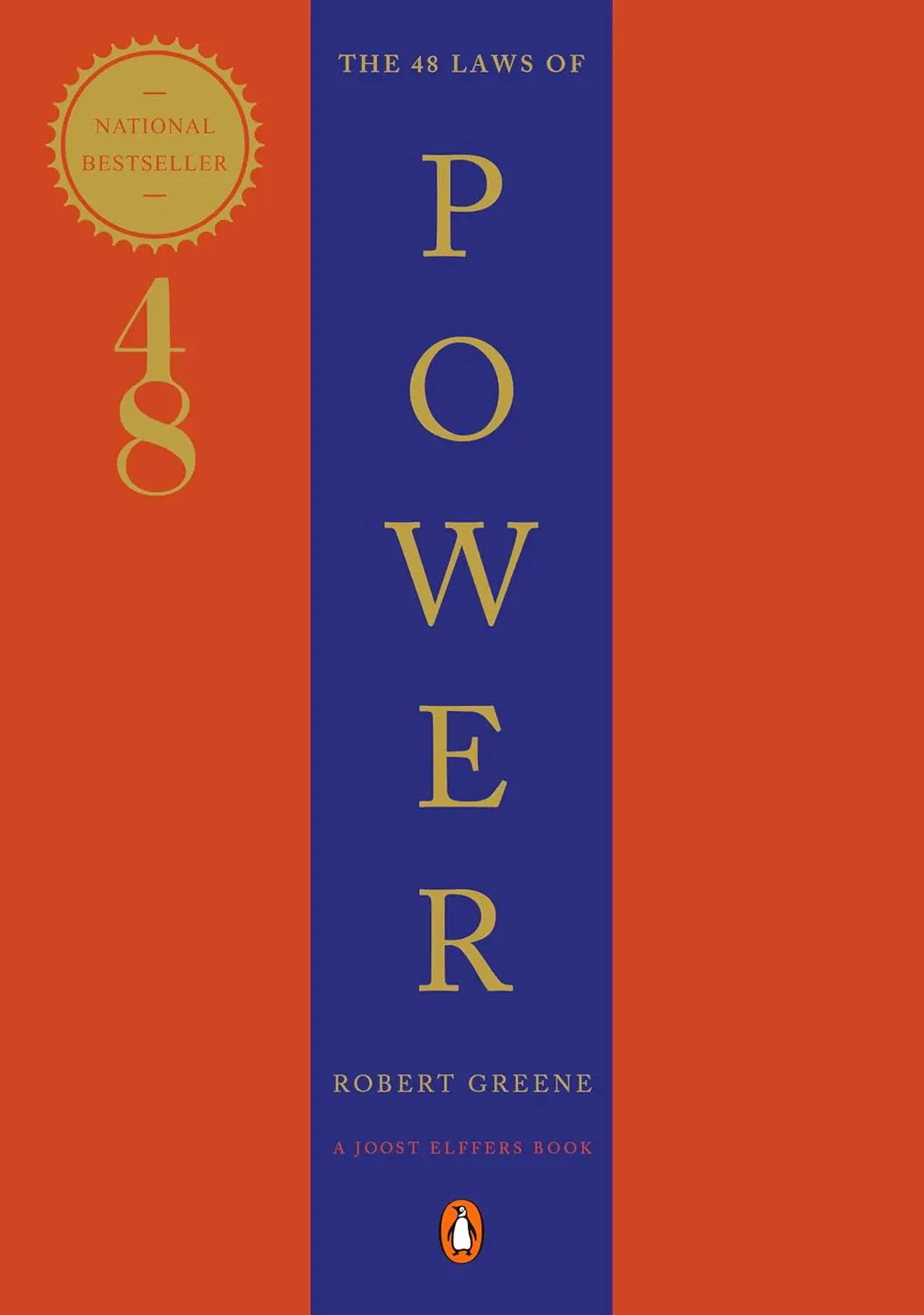
The 48 Laws of Power was published in 1998 and has since sold over 1.2 million copies. Greene structures the book as a series of laws, each one illustrated with historical stories spanning from ancient China and Renaissance Italy to 20th-century Hollywood and corporate America.
Some of the laws are straightforward: “Never outshine the master” (Law 1), “Conceal your intentions” (Law 3), “Always say less than necessary” (Law 4). Others are more provocative: “Use selective honesty and generosity to disarm your victim” (Law 12), “Crush your enemy totally” (Law 15), “Make other people come to you” (Law 8). Each law gets its own chapter with a historical example of the law being used successfully, a counter-example of it being violated, and Greene’s interpretation of why the law works.
The book is intentionally amoral. Greene does not argue that these laws are good or ethical. He presents them as descriptions of how power has actually worked throughout history. His position is that power dynamics exist whether you acknowledge them or not, and that understanding them is better than pretending they do not exist.
For business readers, some laws translate directly into professional situations. “Win through your actions, never through argument” (Law 9) is useful advice for anyone who has wasted time in meetings trying to convince someone with logic when a prototype would have been more persuasive. “Enter action with boldness” (Law 28) speaks to the advantage of decisive action over hesitation in competitive markets.
The book is polarizing. Some readers find it cynical or Machiavellian. Others treat it as a practical guide to navigating organizations, negotiations, and competitive environments. The truth is probably somewhere in between. Not every law applies to every situation, and following some of them blindly would make you an unpleasant person to work with. But as a map of how power operates in groups, the book is difficult to match.
Greene’s writing style is dense and anecdotal. At nearly 500 pages, the book is best consumed a few chapters at a time rather than cover to cover. Many readers keep it as a reference, returning to specific laws when they encounter situations where those dynamics are at play.
