
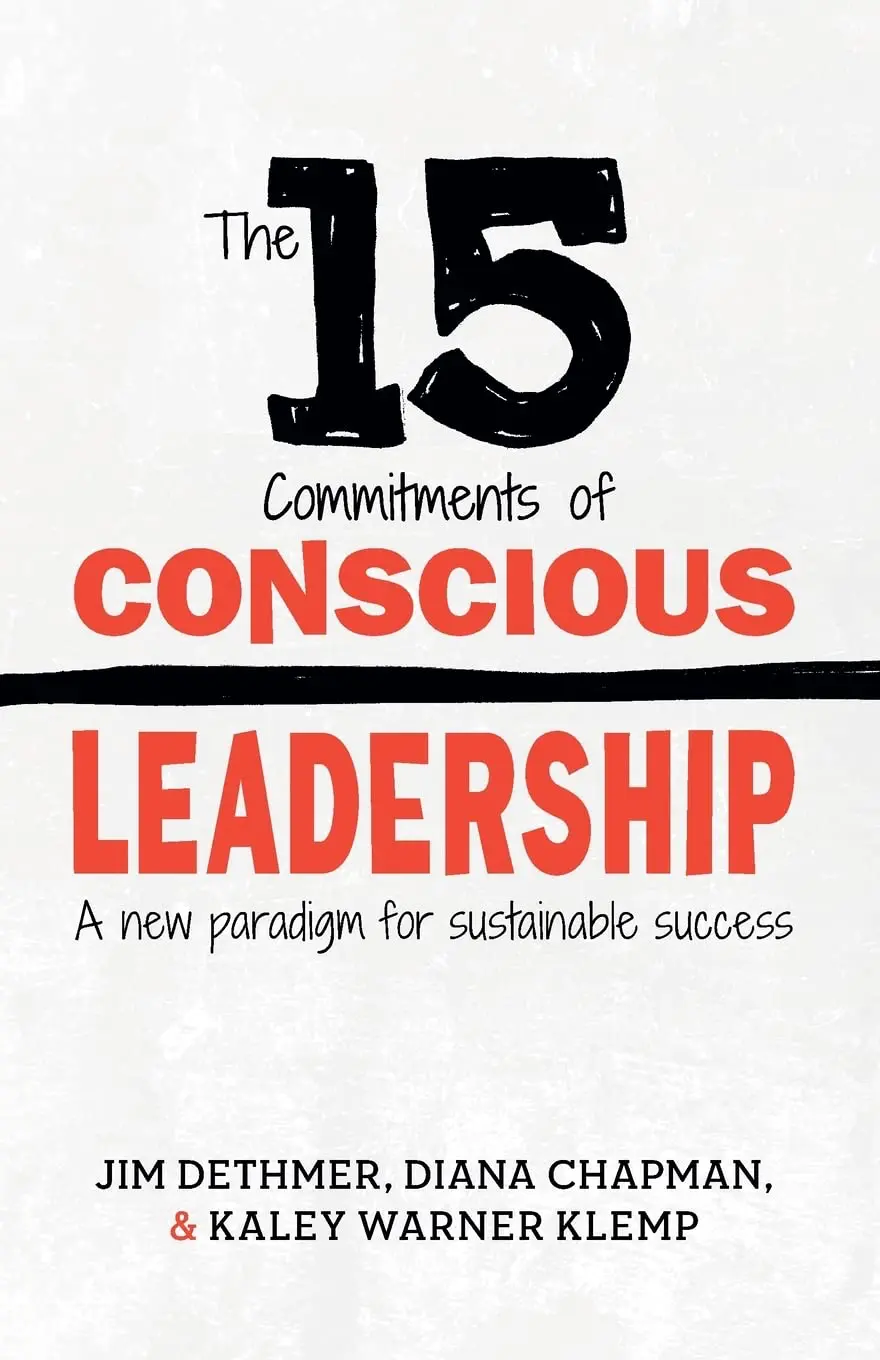
The concept is simple enough to draw on a napkin. Imagine a horizontal line. Above the line, you are open, curious, and willing to learn. Below the line, you are closed, defensive, and committed to being right. At any given moment, a leader is in one of these two states. The skill is not staying above the line permanently, which is impossible, but learning to notice when you have dropped below it and choosing to shift.
Jim Dethmer, Diana Chapman, and Kaley Klemp are executive coaches who work with CEOs and leadership teams at companies in Silicon Valley and beyond. The book codifies the framework they use in their coaching into fifteen commitments, each one a specific practice that moves a leader from reactive to conscious.
Some of the commitments sound familiar: take responsibility, speak candidly, listen generously. Others are less conventional. Commitment four is about feeling all feelings through to completion rather than suppressing or acting on them. Commitment nine is about living in a state of play and rest rather than chronic stress. Commitment thirteen is about experiencing the world as an ally rather than an adversary.
What keeps the book from reading like a list of platitudes is the specificity of the practices. The authors do not just tell you to take responsibility. They define what responsibility looks like at the sentence level. Instead of saying “you made me angry,” you say “I’m angry.” Instead of saying “we have to do this,” you say “I choose to do this.” These shifts sound small, but anyone who has sat in a meeting where every sentence is phrased as a complaint about external forces will recognize how much of organizational dysfunction lives in this kind of language.
The book has circulated widely in startup and tech leadership circles. Brian Chesky of Airbnb and other well-known CEOs have referenced the above-the-line/below-the-line framework. The reason it travels well in those environments is that startup leadership involves constant emotional intensity, investor pressure, team conflict, product failure, and very little external structure to absorb the stress. The framework gives leaders a way to check their own state before making decisions under pressure.
The writing is clean and practical. Each commitment gets its own chapter with concrete examples and exercises. It reads quickly and repays rereading, because the gap between understanding the concepts and actually practicing them is where the real work begins.
