
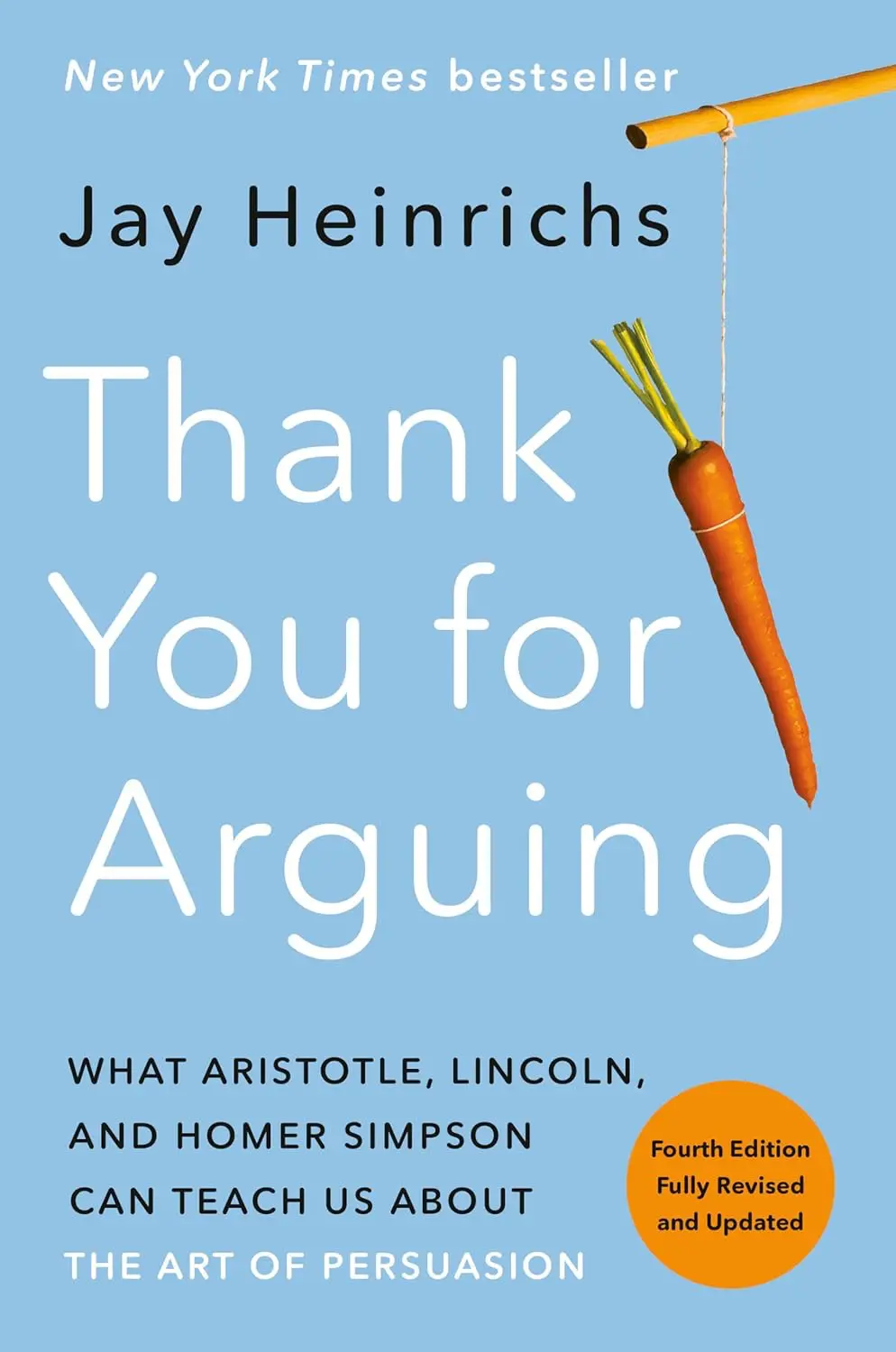
Thank You for Arguing is Jay Heinrichs’s guide to classical rhetoric, updated for modern audiences with examples from politics, advertising, television, and daily life. The book covers the techniques that Aristotle, Cicero, and other classical rhetoricians identified for persuading audiences, and shows how those same techniques are still used by politicians, advertisers, lawyers, and anyone else whose job involves changing minds.
Heinrichs organizes the material around Aristotle’s three modes of persuasion. Logos (logic) covers the structure of arguments, including inductive and deductive reasoning, the use of examples, and how to identify and exploit logical fallacies. Ethos (character) covers how to establish credibility, how to appear trustworthy and competent, and how to use your identity and values as persuasive tools. Pathos (emotion) covers how to connect with an audience’s feelings, how to use storytelling to create emotional resonance, and when emotional appeals are appropriate versus manipulative.
The book is unusually entertaining for a book about rhetoric. Heinrichs uses Homer Simpson, Jon Stewart, political speeches, and his own family arguments as case studies, which keeps the material lively and concrete. He also introduces practical tools: how to detect when someone is committing a logical fallacy, how to reframe an argument when you’re losing, how to use concession strategically, and how to choose the right moment to make your case.
For founders, who pitch, negotiate, and argue for a living, the rhetorical toolkit is directly useful. The chapter on ethos is particularly relevant for building credibility with investors and customers: Heinrichs explains how appearing slightly reluctant to make a claim is more persuasive than appearing eager, and how admitting a weakness before being forced to strengthens your overall position.
The writing is casual and often funny. The book has been updated through several editions, with each one adding new examples from current events. Some readers will want more depth on the classical sources; others will appreciate that Heinrichs keeps things practical and entertaining. It works well as both a first introduction to rhetoric and as a reference for specific persuasion challenges.
