
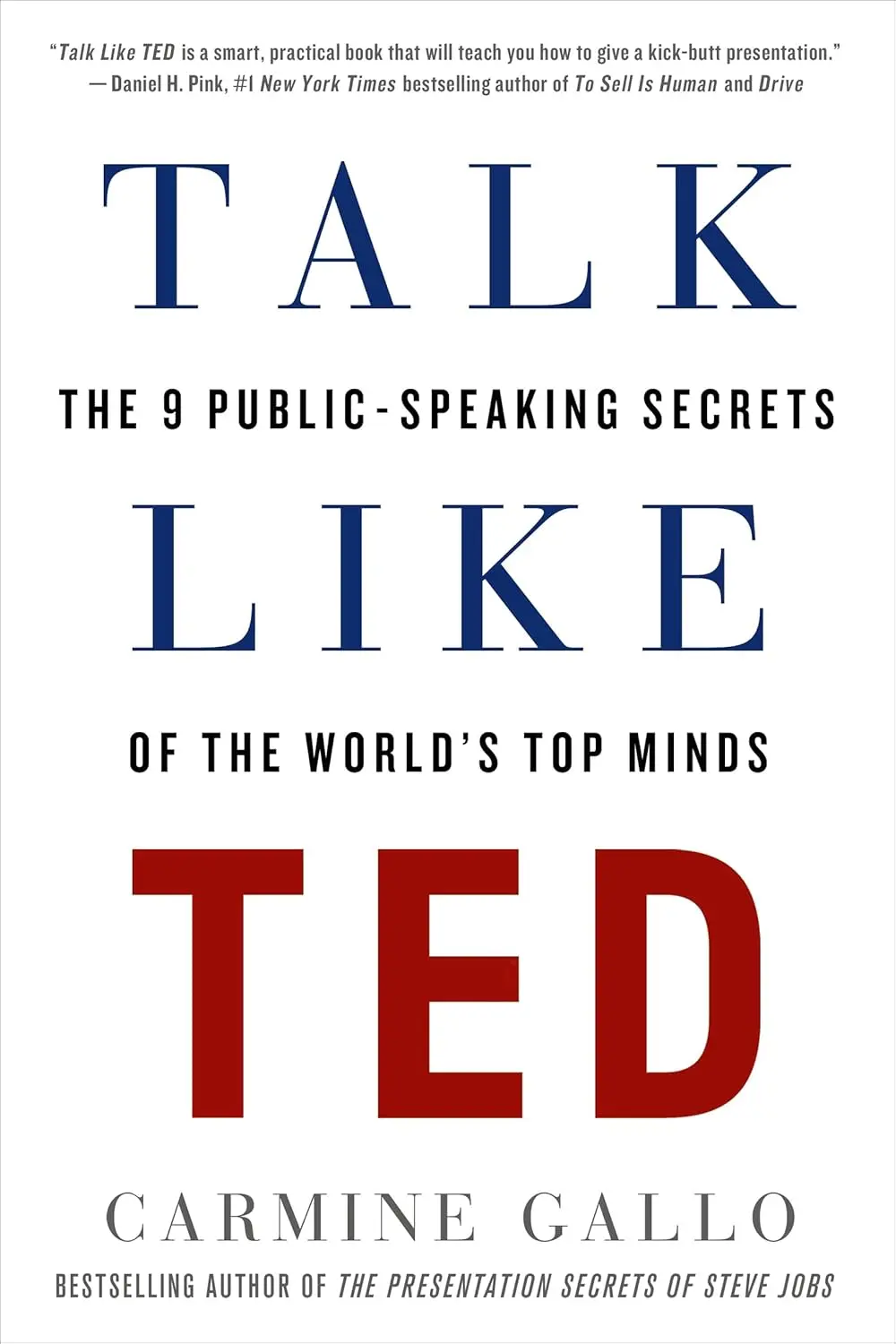
Talk Like TED is Carmine Gallo’s analysis of what makes the best TED talks work. Gallo watched over 500 TED presentations and identified nine common elements, grouped into three categories: emotional (tell stories, deliver jaw-dropping moments, use humor), novel (teach something new, deliver information in unexpected ways), and memorable (stick to the 18-minute rule, paint mental pictures with sensory language, be authentic).
Each element gets its own chapter with examples from specific TED talks. The storytelling chapter analyzes how Bryan Stevenson, whose TED talk is one of the longest-standing most-viewed, builds his presentation entirely around personal stories rather than data or arguments. The novelty chapter looks at how Bill Gates released mosquitoes into the audience during a talk about malaria to create a memorable moment. The authenticity chapter profiles speakers who connected with audiences by being vulnerable about their own struggles.
Gallo also covers the mechanical side of delivery: how to use your voice (vary pace, volume, and pitch), how to use gestures (open body language, purposeful movement), how to use visuals (fewer words on slides, more images), and how to practice (rehearse enough that you can speak naturally without reading). The 18-minute rule, which TED enforces on all speakers, gets its own analysis: Gallo cites research showing that cognitive fatigue increases significantly after about 20 minutes.
For founders who present at conferences, pitch to investors, or speak to their teams, the book provides a checklist of elements to incorporate. The specific examples make it easy to see what good looks like, and the techniques are concrete enough to practice. The 18-minute constraint is useful even outside of TED talks: if you can’t make your point in under 20 minutes, you probably need to clarify your thinking.
The writing is clear and the book is organized for easy reference. Some readers find the analysis too surface-level, arguing that what makes a great talk is harder to decompose into a checklist than Gallo suggests. That’s a fair point. But as a practical guide for improving your presentation skills, the nine elements give you a useful framework to work from.
